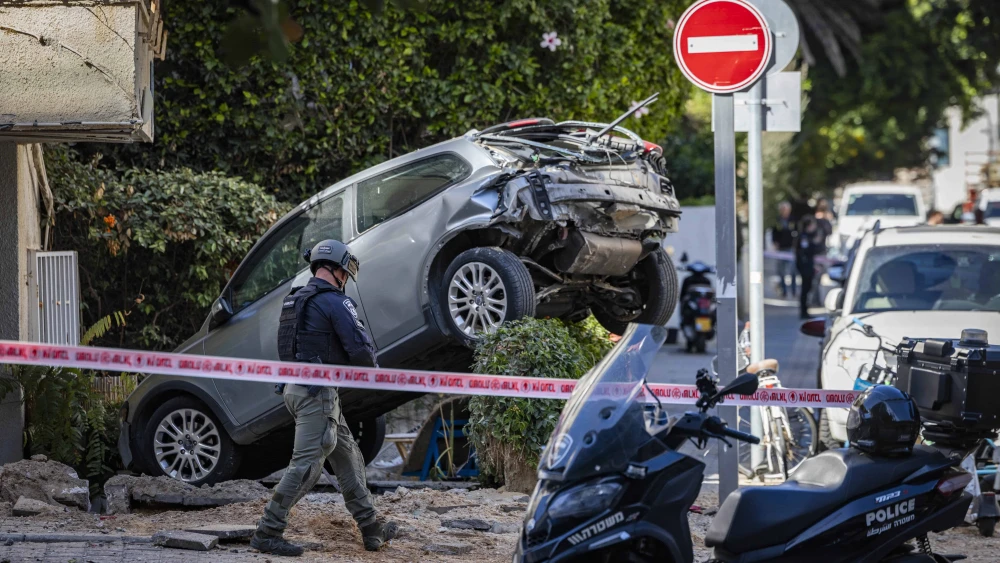
Iran has fired missiles carrying cluster-munition warheads at Israel, raising concerns among observers about a possible violation of the laws of war.
Chief Superintendent Doron Lavi, head of the Israel Police’s bomb disposal unit, said more than 10 such missiles have been launched since the conflict began on Feb. 28, The New York Times reported on Wednesday.
Cluster munitions carry warheads that burst into smaller bomblets, or “submunitions” that can cause widespread and indiscriminate harm when used against civilians.
For this reason, legal experts said international law barred countries from using cluster munitions in populated areas.
Legal experts told the Times that using cluster weapons near civilians may violate international humanitarian law because the bomblets
cannot be targeted and can leave “unexploded duds,” remnants that remain dangerous long after fighting ends.
More than 100 countries have banned cluster munitions since 2008, the Times reported. Iran and Israel haven’t joined the ban. Neither have major powers, including the United States, Russia and China.
Footage from Or Yehuda, a city near Ben-Gurion International Airport, on March 4 appeared to show a submunition exploding on a street. Another clip from March 5 showed bomblets spreading across the night sky during a missile attack, an analyst who reviewed the footage told the Times.
Iran used cluster bombs against Israel during the June 2025 war, but the IDF’s international spokesman, Lt. Col. Nadav Shoshani, said the Islamic Republic has drastically increased their use in the current war.
After a missile strike on the city of Beit Shemesh killed nine on March 2, he condemned the Iranian regime.
“Since the beginning of ‘Operation Roaring Lion,’ the Iranian regime has been targeting civilians. We know this is their strategy,” Shoshani said.