Newsletter
Newsletter Support JNS

Absentee ballots key as Likud holds 30-seat lead, Ra’am drops to four

With nearly 4 million votes counted, the focus is now on the hundreds of thousands of so-called double-envelope votes

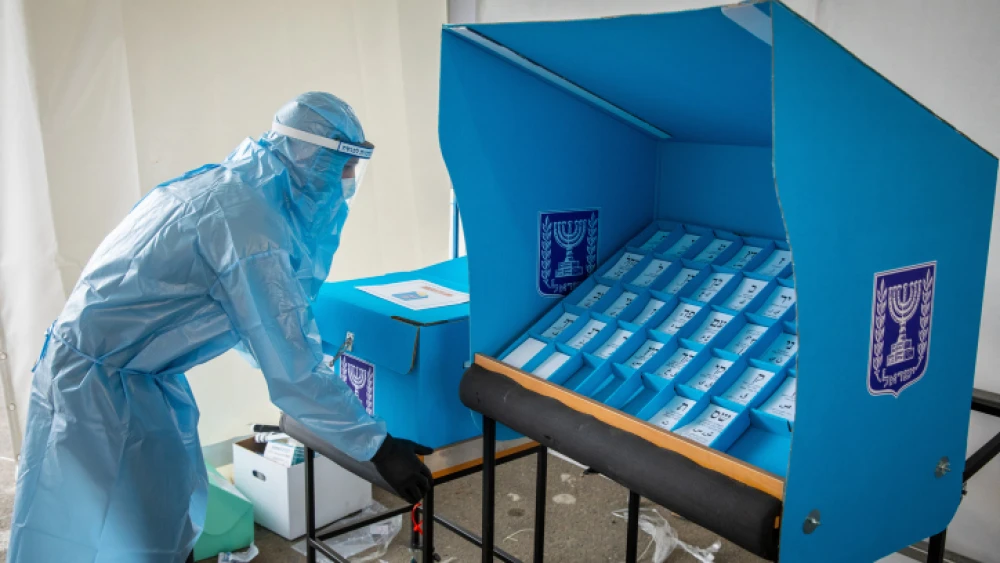
A polling station in Jerusalem for those with COVID-19, March 23, 2021. Photo by Olivier Fitoussi/Flash90.

Israel’s Central Election Committee on Thursday began counting the hundreds of thousands of “double envelopes,” or ballots cast outside assigned polling stations. These absentee votes are estimated to be worth as many as 12 Knesset seats, meaning they could significantly affect the outcome of Tuesday’s election.

As of 8:40 a.m., some 93.4 percent of the non-absentee votes had been counted. Currently, the right-wing bloc has 52 mandates and the center-left bloc has 56. The Yamina and Ra’am parties thus appear to be potential kingmakers.

Voter turnout in this year’s election was 67.2 percent—the lowest in the last four election campaigns.

Central Election Committee head Orly Adas said the final results are likely to come in on Friday.

We “will continue to remove threats and strengthen the defense of Israel’s northern residents,” the army said.
The subject of Tehran’s nuclear project was deferred to further negotiations after Iran and the U.S. signed an initial memorandum of understanding.
The Alpine country said it welcomes the signing of the framework memorandum and will host American and Iranian delegations at a mountaintop resort.
The future of Israel’s defense array includes AI training systems, battlefield health monitoring devices and advanced water purification solutions.
“The light in his eyes, his love for the people of Israel, and his call never to despair continue to illuminate our path to this day.”
“The stock market just hit a record high, and oil prices are ‘tumbling’ down,” said the president.