France’s minister for Europe and foreign affairs on Monday doubled down on President Emmanuel Macron’s call for an arms embargo on Israel, adding that this is also meant to protect Israelis.
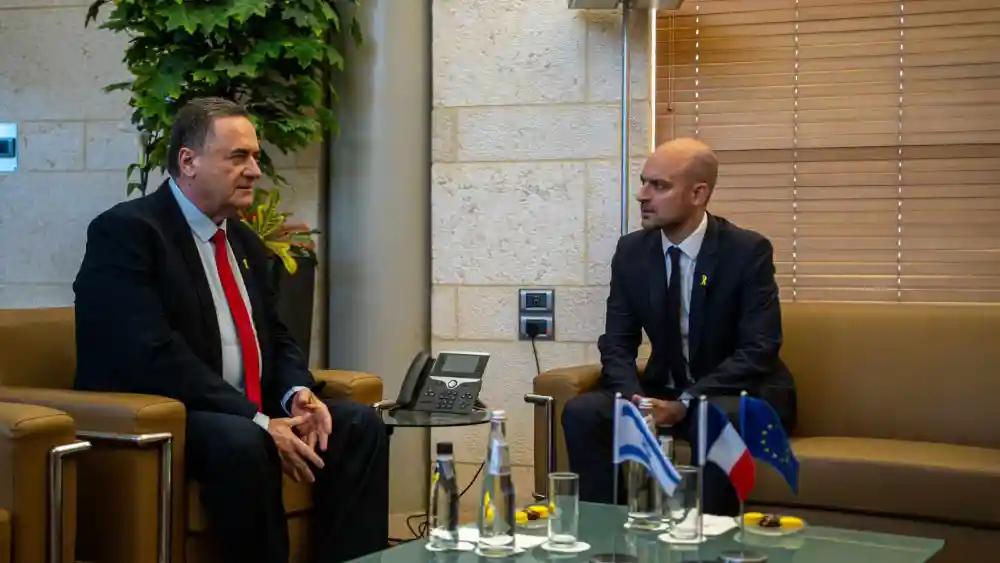
Jean-Noël Barrot, who visited Israel Monday to attend commemoration services for the victims of Hamas’s Oct. 7 massacre in Israel last year, said this at a press conference in Jerusalem following an unusually harsh exchange last week between Macron and Israeli Prime Minister Benjamin Netanyahu on the issue of an arms embargo.
“To ensure Israel’s security and that of Israelis, the use of force must give way to dialog and diplomacy. For this reason, France, like most of the countries in the world, is calling for a ceasefire in Gaza and Lebanon. And when one calls for a ceasefire, one cannot simultaneously provide arms to the warring parties. It’s a question of coherence,” Barrot said.
Macron in his remark did not cite Israel’s alleged interests in calling for an embargo on it, saying only that it was to “return to a political solution.”
In an interview aired on Friday, Macron called for an embargo on arms deliveries to Israel if they may be used in Gaza. Netanyahu said this was shameful, leading to the French president’s office accusing the Israeli leader of “excessive” rhetoric.
Netanyahu and Macron spoke on the phone Sunday, expressing no regret or change in their previously stated positions, officials from both countries said.
CRIF, the umbrella organization of French-Jewish communities, on Monday wrote in a statement: “The call to deny Israel weapons does not promote peace but plays directly into the hands of Hamas and Hezbollah.”
CRIF criticized Macron, saying it “deeply regrets” his call for an embargo.