The Jewish community of Australia is hoping that its new prime minister, Anthony Albanese, will continue to support Israel on the world stage and combat anti-Semitism in the country. This comes despite concerns about past comments made by Albanese that were critical of Israel.
In the May 21 elections, Albanese of the Labor Party beat out his rival, incumbent Scott Morrison, who was backed by the Liberal Party and the Nationals.
The Executive Council of Australian Jewry, which represents the community, said in a statement: “We congratulate Anthony Albanese and the ALP [Australian Labor Party] on being elected to government and welcome his commitment to bring Australia together. The ECAJ looks forward to working with the new government. Whilst we may not always agree with each other, we anticipate that the relationship will always be based on mutual respect.”
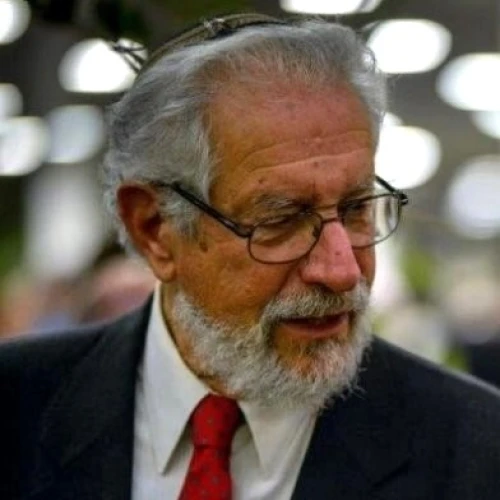
“There was a lot of fear in the Jewish community because he has been very critical of Israel in the past, but all his recent comments point to a friendlier approach that he says will be taken,” said Rabbi Shmueli Feldman, who serves as the chair of Chabad Australian Capital Territory (Chabad ACT) in Canberra, the country’s capital. He added that Albanese “has also condemned the BDS movement.”
According to a report last July in The Sydney Morning Herald, Albanese criticized members of his own political party who were in favor of boycotting Israel, calling them “unproductive.”
Feldman said Albanese has also spoken to him about anti-Semitism that has been rising in Australia—Australia recorded a 35% increase in anti-Semitism for the year ending Sept. 30, 2021—and that the prime minister has committed to stopping it in Australia.
“He promised an Australia where all its minorities, including Jews, are protected and said he will keep up the fight against anti-Semitism,” said the rabbi.
In a statement, Jeremy Leibler of the Zionist Federation of Australia, said “we congratulate Labor on its victory. Labor has always been a great friend of the Australian Jewish community and an integral part of the bipartisan consensus on Israel. Mr. Albanese is committed to the Australia-Israel relationship, and to a negotiated, peaceful and democratic two-state outcome to the Israeli-Palestinian conflict. These are priorities shared by the Australian Jewish community, and we look forward to working closely with Mr. Albanese and his government.”
Both the ECAJ and the Zionist Federation pointed out that the Jewish community lost, as the ECAJ put it, “a number of long-standing friends in Parliament,” in the recent election.