Israel’s former deputy ambassador to Egypt Ruth Wasserman Lande on Monday described Cairo’s recent threat to revoke the Camp David Accords as “significant,” but said that an immediate cancellation is unlikely.
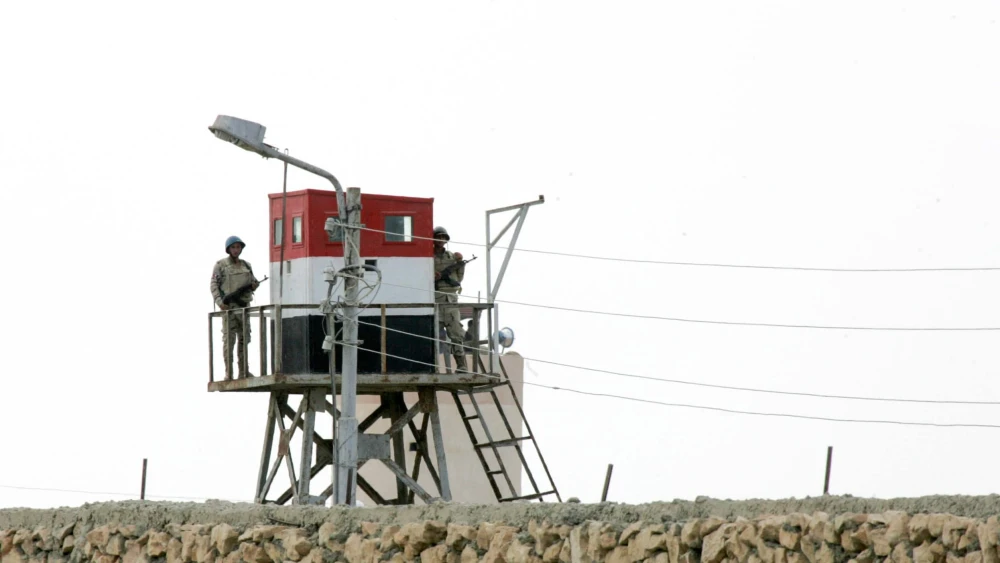
“I wouldn’t hastily assume an imminent cancellation, though the latest developments are substantial,” the lawmaker told Gadi Ness on Radio North 104.5 FM on Monday. “Egypt is conducting military drills with Israel as the reference scenario and deploying forces in the Sinai Peninsula,” she said. Israel’s request for clarification “isn’t hysteria but rather a measured evaluation of a real military buildup that requires clarification,” she added.
According to the London-based Al-Araby Al-Jadeed, Egyptian military officials have warned Israel that any breach of the Camp David Accords will prompt an equivalent response from Egypt.
The warning comes amid ongoing discussions about the future of the Gaza Strip.
Under the Camp David Accords, Egypt must maintain control over its side of the border while keeping the area free of heavy weaponry. Israel is reportedly seeking to renegotiate certain terms of the accords, while Egypt remains open to discussions—provided they occur at an appropriate time and do not endanger the broader agreement.
Signed in 1978 and brokered by the U.S., the Camp David Accords led to the historic 1979 peace treaty between Israel and Egypt.