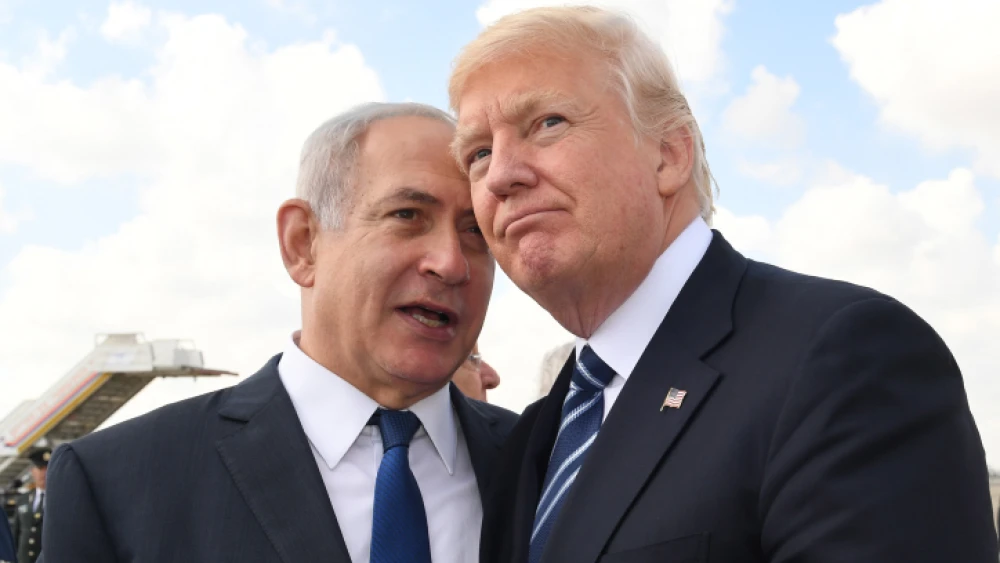
Senior American officials are extremely frustrated over the ongoing political deadlock in Israel. Trump administration officials familiar with American-Israeli relations said in private discussion with Israel Hayom recently that the political stalemate was leading to a significant missed opportunity from Israel’s perspective.
The officials didn’t expand on the specific steps the administration would currently be taking if there was a government in Israel, but the statements were made in the context of the Middle East peace deal the White House has formulated.
“Israel could have been in a better situation. We could have done much more,” said one of the officials.
The officials emphasized that U.S. President Donald Trump, U.S. Ambassador to Israel David Friedman and outgoing special U.S. Mideast envoy Jason Greenblatt care about Israel, have already done a great deal for the Jewish state since Trump took office and would like to continue doing so.
“With that,” the officials said, and considering the U.S. presidential campaign next year, “we don’t know if they will remain in their positions one year or five.”
The officials further intimated that Israeli leaders need to take into account the unique opportunity provided by the Trump presidency, but refrained from saying so explicitly.
The American officials were careful to avoid implying that the United States was intervening in Israeli politics. They also said that “everything is under control, and there won’t be a change to the peace plan as a result of the developments.”
It appears, meanwhile, that the White House is leaning towards postponing the release of its peace plan until the political picture in Israel becomes clearer.
In discussions the administration has held on the subject, the general view was that it would be pointless to reveal the plan while the Palestinians were likely to reject it outright and there was no government in Israel with the authority to address it.
The U.S. Embassy in Israel declined Israel Hayom‘s request for a response.
Meanwhile, Greenblatt and Friedman on Monday held their first meeting with Blue and White leader Benny Gantz. The sides said they “discussed various issues, among them the importance of U.S.-Israeli relations, the security challenges in the region and the efforts to promote the peace process.”
This article first appeared in Israel Hayom.