Newsletter
Newsletter Support JNS

Hezbollah nominates prime minister as Lebanon wallows in fiscal, political crisis

“I don’t have a magic wand, and I can’t work miracles,” said Lebanese businessman Najib Mikati, who has served in the role twice before.

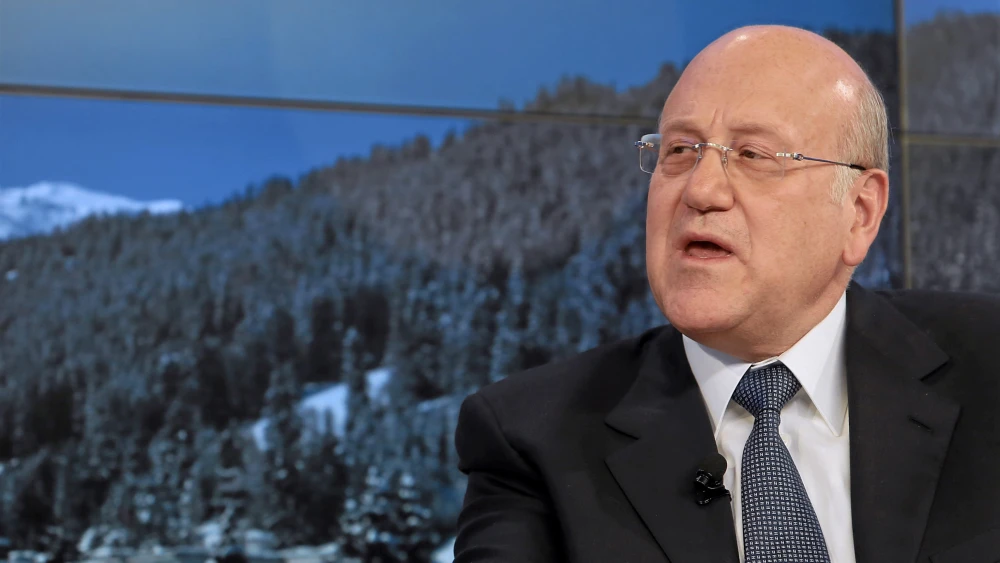
Lebanese Prime Minister Najib Mikati at the World Economic Forum in Davos, Switzerland, Jan. 25, 2013. Photo by Monika Flueckiger/Swiss-Image.ch via Wikimedia Commons.

Hezbollah appointed Lebanese businessman Najib Mikati as prime minister-designate after gaining the approval of parliament on Monday.

“I don’t have a magic wand, and I can’t work miracles,” said Mikati after his nomination, reported Reuters. He said he at least had “the necessary international guarantees” to move forward.

Mikati now must try to form a government amid the country’s rapidly descending economic and political crisis.

The 65-year-old has been prime minister twice: from April 2005 to July 2005, he served in a caretaker government, and he was again prime minister from 2011 to 2014. He is the third person to be nominated since the government resigned following the massive Beirut explosions last August that killed more than 200 people and left the city in ruins.

Prices in the country have been skyrocketing and salaries dropping, forcing more than half the population into poverty. Hezbollah is trying to appear to be solving the crisis even though it is part of the problem.

The governor’s office is awaiting information from the federal government about whether there are any “poison pills that could harm New York’s education system,” a spokesman told JNS.
“It will take at least a decade to rehabilitate,” said Orit Sulitzeanu, CEO of the Israeli Association of Rape Crisis Centers.
Texas American Muslim University at Dallas founder and board chairman Shahid A. Bajwa told JNS the program is “actively engaging” with the state education board after receiving a cease-and-desist letter halting operations.
The crowdsourced encyclopedia hasn’t repaired the “content contamination” that the banned editors left behind, according to Shlomit Lir, of University of Haifa.
“Antisemitism is more flagrant than it’s been at any time since my father was growing up,” Rep. Brad Sherman told JNS.
Dan Wyman declined to predict how much a 1947 photo album produced in a Jewish displaced-persons camp after the Holocaust might fetch.