Newsletter
Newsletter Support JNS

Israel approves construction of 780 homes in Judea and Samaria

The European Union condemns the move, ordered by the Israeli prime minister on Jan. 11, as “contrary to international law.”

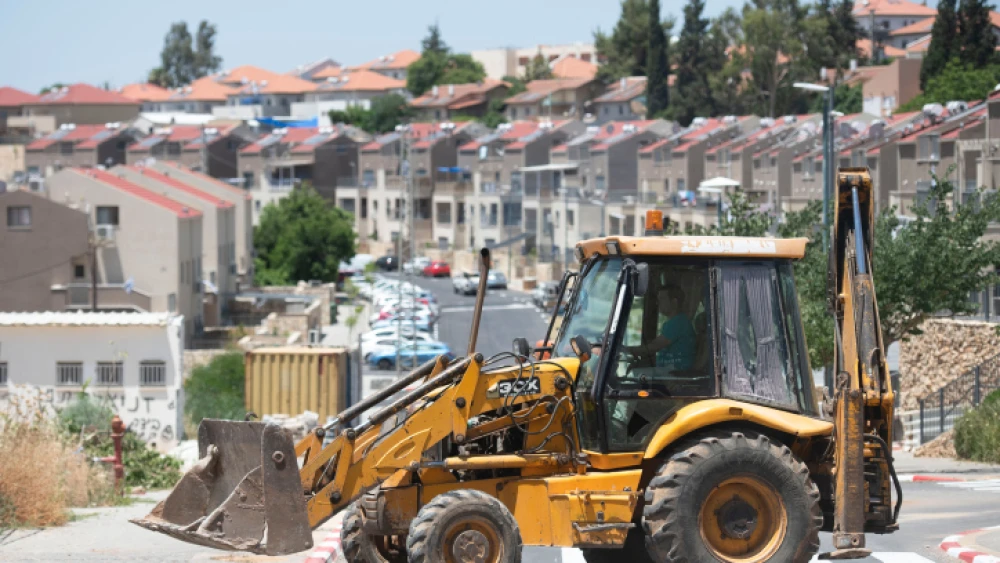
A view of the town of Karnei Shomron in Samaria on June 10, 2020. Photo by Sraya Diamant/Flash90.

The Israeli government on Sunday approved plans to build 780 new homes in Judea and Samaria, drawing criticism from the European Union, according to Reuters.

One hundred of the units will be built in Tal Menashe, a settlement in northern Samaria that was home to Esther Horgen, a 52-year-old mother of six killed on Dec. 21 by a Palestinian terrorist while she was jogging in the forest near her house. More than 200 units will be built in Nofei Nehemia/Rehelim as well as approximately 400 units in Beit El, Evyatar, Shavei Shomron, Oranit, the Barkan Industrial Zone, Karnei Shomron and Givat Ze’ev.

Israeli Prime Minister Benjamin Netanyahu gave the order for the construction on Jan. 11.

In a statement, the European Union said Israel’s decision to advance the plans “is contrary to international law and further undermines the prospects of a viable two-state solution.”

Israel and the United States dispute the illegality of construction in Judea and Samaria. The U.S. State Department declared on Nov. 18, 2019, that such construction was not necessarily a violation of international law.

A small business owner in the Big Apple told JNS that she is being hurt by tariffs more than by the credit rating.
Jay Greene, author of a new report on the subject, told JNS that the unions communicate in an “overwrought and extreme” way about Israel.
“Why are we to trust the U.N.’s own vetting procedures?” Adam Kaplan, of USAID, asked a congressional committee.
The pro-Israel group “has become increasingly problematic for many American Jews and for many candidates running for office,” Lauren Strauss, of American University, told JNS.
Sharon Liberman Mintz, of Jewish Theological Seminary, told JNS that the 1526 Haggadah “is one of the most exciting books that I have ever had the pleasure to turn the pages of.”
Tehran combines a narrative of victory with one of victimhood to shape public opinion. Israel is trying to catch up in the battle for public perception.