Newsletter
Newsletter Support JNS

Israel eases war emergency restrictions for some regions

The new Home Front Command guidelines will take effect in areas considered less prone to missile impacts.

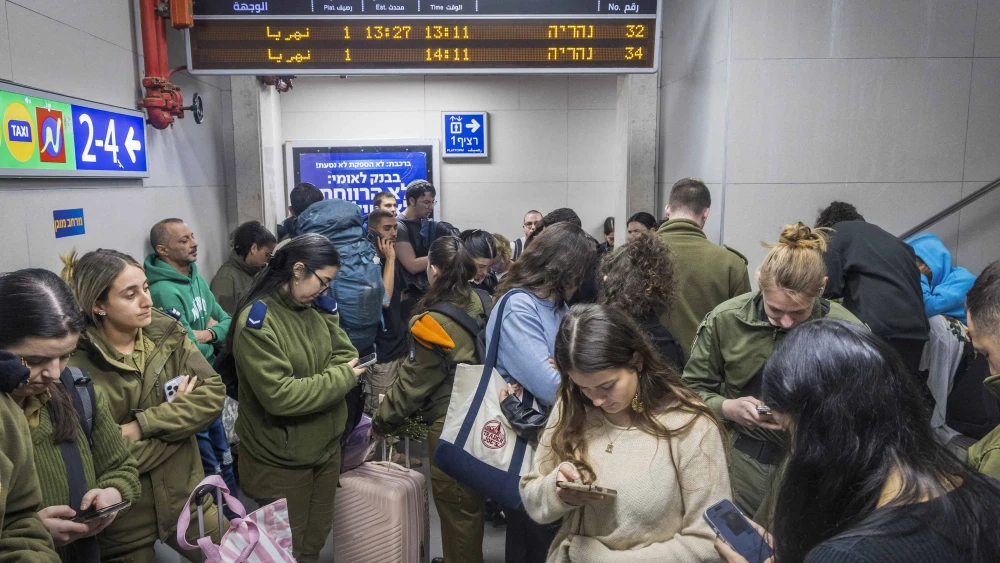
People take shelter at a train station in Haifa as a siren warns of incoming missiles, on March 10, 2026. Photo by Yossi Aloni/Flash90.

The Israel Defense Forces’ Home Front Command on Saturday updated its guidelines amid the war for specific regions of the country, to take effect at 6 a.m. on March 16.

Until that time, the current defensive guidelines will remain unchanged, the IDF said in a statement.

The policy for the following regions will shift from “limited activity” to “partial activity”: the Arava, Beit She’an Valley, Dead Sea area, “Gaza Envelope,” Jordan Valley, Judea, Samaria, Southern Negev, Western Lachish region and Western Negev.

The less stringent guidelines permit educational activities, gatherings of up to 50 people outdoors and 100 people indoors, and regular work activities, provided a standard protected space can be reached within the required time for the area when air-raid warnings are received.

Since the war with Iran began on Feb. 28, the Home Front Command has restricted public gatherings and civilian movement across the country, resulting in closures of schools and many workplaces considered nonessential.

Iran and Hezbollah in Lebanon have fired hundreds of projectiles at the Jewish state, killing 14 civilians and wounding nearly 2,800, according to the Israeli Health Ministry.

More than half of respondents said the Hamas-led massacre will influence their voting decision in the upcoming elections.
Manhattan Borough President Brad Hoylman-Sigal has asked New York Gov. Kathy Hochul to issue a posthumous pardon for Adams, a Polish-Jewish immigrant who was convicted and deported back to Europe, where she was later murdered by the Nazis.
Protests against the agreement signed in Washington broke out in Beirut, with supporters of the Shi’ite organization blocking a major road.
The terrorist organization arrested and kidnapped people from the streets in a brutal crackdown on dissenters.
Bahrain said it had been targeted by Iranian drones.
Turkey has historically denied genocide allegations against the Ottoman Empire’s conduct during World War I.
Benny Gantz, JNS editor-in-chief Jonathan S. Tobin, Gilad Erdan, Mosab Hassan Yousef, Nissim Black and leading voices in security, diplomacy, media, law and Jewish communal affairs headline the summit’s third day in Jerusalem.