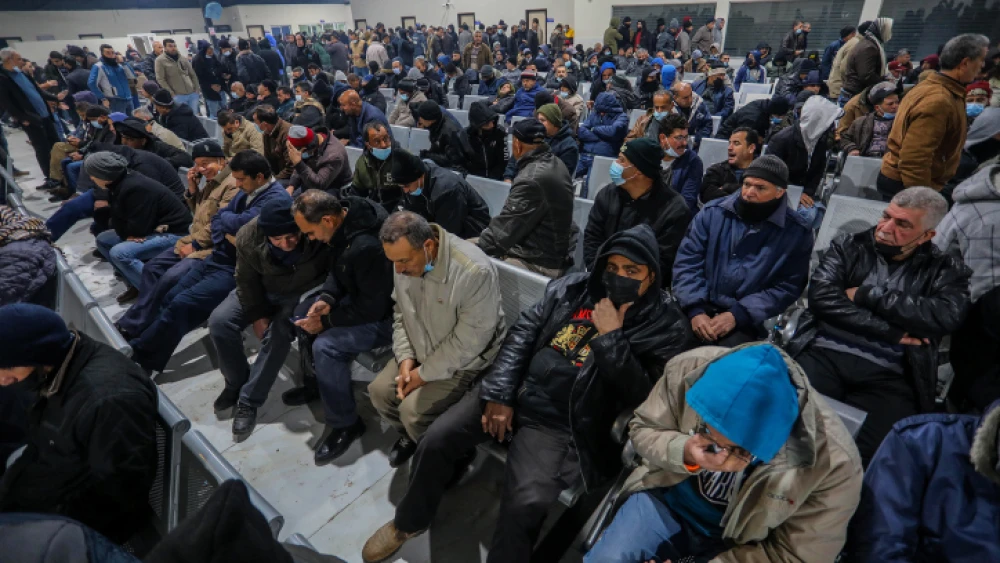
Israel’s Coordinator of Government Activities in the Territories announced on Saturday the closure of the Erez Border Crossing between Israel and Gaza, following the launch of two rockets at Israel by Gazan terrorists on Friday night.
The border crossing is to remain shut from Sunday until further notice, pending a security situation assessment.
Maj. Gen. (res.) Giora Eiland, former head of Israel’s National Security Council, told Army Radio on Sunday the move “could hurt Gaza more than a bomb. I give this response to rocket fire a good chance of success. It’s clear to everyone that if there will be a day or two of quiet, the crossing will reopen. That is in everyone’s interest.”
According to a report on Saturday by Al Jazeera, senior Hamas member Mushir al-Masri passed a message to Israel via mediators, warning that shutting the crossing would lead to “an increase in the escalation.”
On March 27, the Israeli government expanded the number of Gazan workers with permits to work in Israel from 12,000 to 20,000, according to Ynet.
The decision was explained on March 1 by Israeli Defense Minister Benny Gantz as part of a broader Gaza policy.
“Since ‘Operation Guardian of the Walls’ [in May 2021], we created a new equation of deterrence,” said Gantz. “We are building up our force and our operational plans, and we are creating a new civilian equation directly vis-à-vis the residents of Gaza. We plan to expand the civilian humanitarian policy, including an immediate expansion of the number of employees who head out to Israel [for work],” said Gantz.