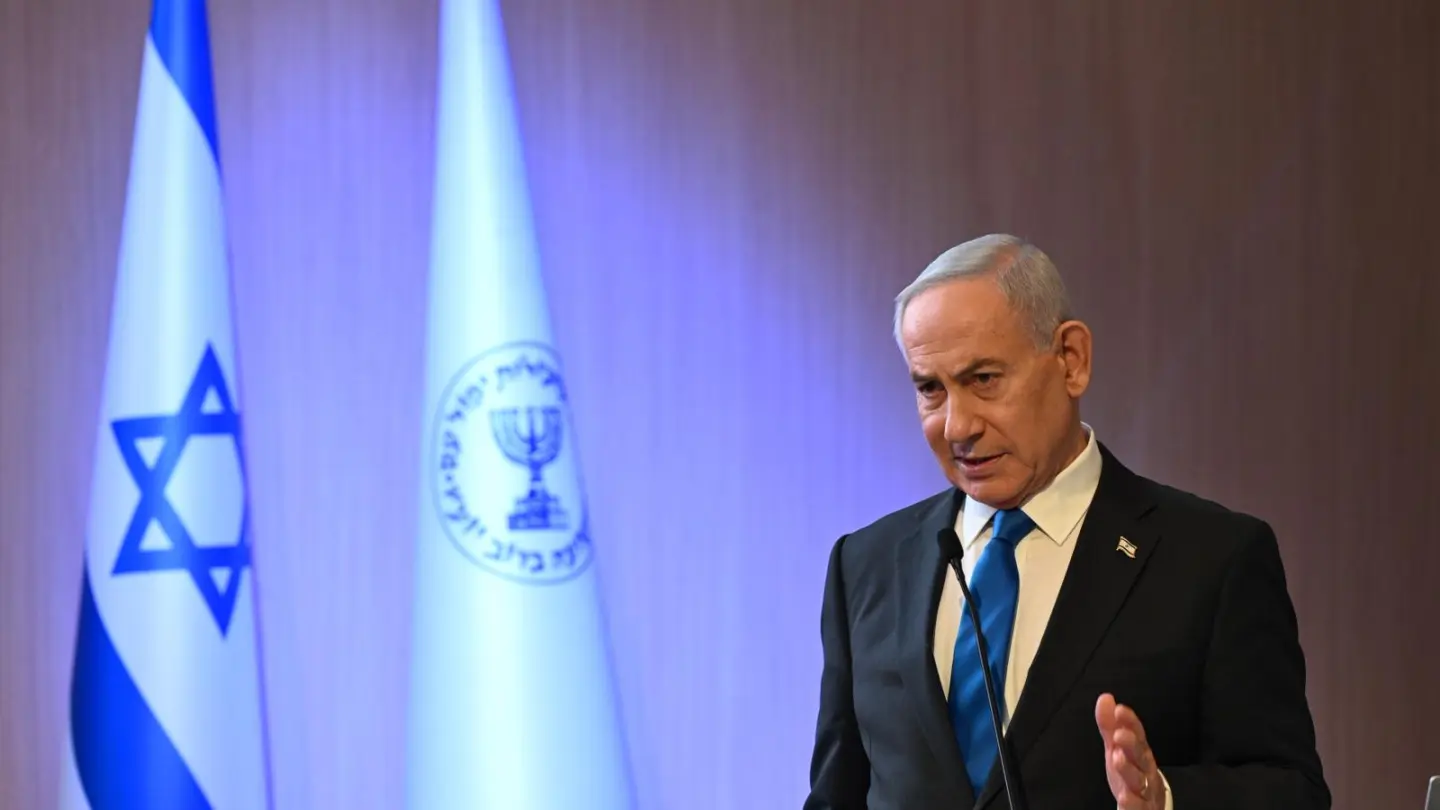
The High Court of Justice on Wednesday issued a temporary court order blocking State Comptroller Matanyahu Englman from investigating the failures leading to Oct. 7, 2023, the day the terror group Hamas mounted a surprise attack on Israel from the Gaza Strip.
The Dec. 31 injunction ordered the comptroller to stop calling people to provide testimony, details or documents related to the catastrophe. It also prevents the comptroller’s office from publishing any reports connected to its investigation.
In addition to the blanket ban, the injunction listed specific topics the State Comptroller may not investigate, including, among others: security preparations at the Nova music festival; protection of civic spaces and cities in the south; border protection in the Gaza Strip before the outbreak of the war; and work processes in the intelligence community and the political echelon before Oct. 7.
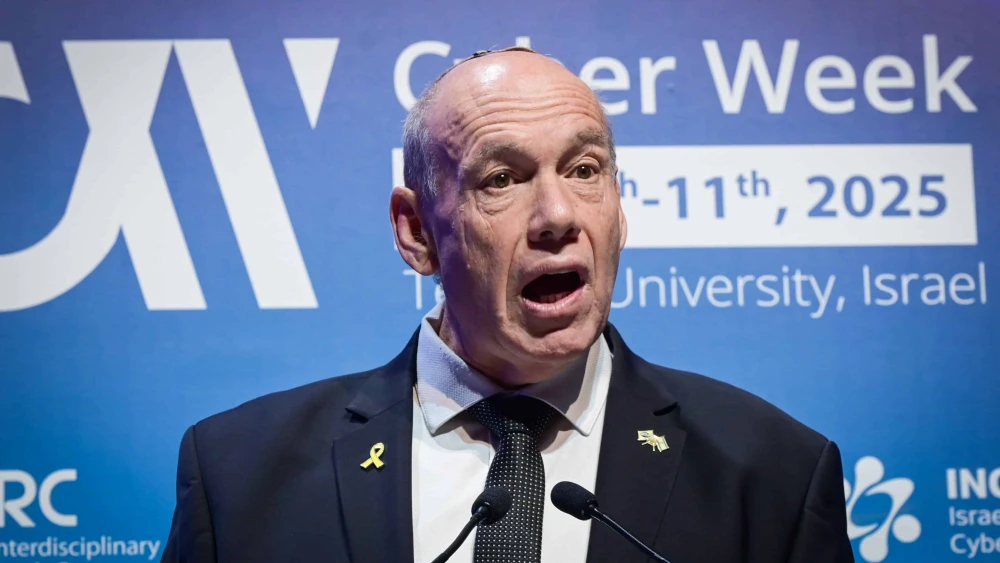
Englman began his audit in Jan. 2024, focusing mainly on the actions of the political echelon, the Israel Defense Forces and the Israel Security Agency, (Shin Bet). However, it has met with a wall of non-cooperation by the relevant parties, particularly the IDF and Shin Bet, with individuals refusing to participate.
The Supreme Court justices, Dafna Barak-Erez, David Mintz and Alex Stein, made their decision after deliberating on two petitions claiming the State Comptroller didn’t have the authority to investigate Oct. 7 and violated the rights of those being investigated.
The petitioners were the Chief Military Attorney in the Military Advocate General’s Office, and the Movement for Quality Government in Israel, an NGO.
The State Comptroller argued that under the law it had the authority to audit any subject it sees fit. It also said that the investigation was conducted according to prior agreements between the IDF and the Shin Bet, mediated by the court itself.
Regarding the rights of individuals, the State Comptroller insisted it was “meticulously safeguarding the procedural rights of the audited bodies and the subjects of the audit,” in accordance with the relevant laws.
In a statement, the Chief Military Attorney’s Office complimented the court’s decision to stop the investigation: “This decision reflects the importance that the court attributes to the need for a careful and balanced examination of the issue, while safeguarding the rights of IDF service members and the principles of due process.”
The Movement for Quality Government, praising the decision, said that only a State Commission of Inquiry could look into an event of the magnitude of Oct. 7. It claimed that the State Comptroller’s investigation was intended to prevent such a commission.
Others attacked the court’s decision. Knesset Member Simcha Rothman of the Religious Zionism Party, who chairs the Constitution, Law and Justice Committee, said the justices had acted in a destructive and “megalomaniac” manner.
“The State Comptroller draws his authority directly from a Basic Law, equal in its rank and status to the Basic Law that grants authority to the court,” he tweeted on Wednesday.
“He is supposed to be the one who also scrutinizes the judges and the judicial authority. The High Court of Justice’s decision today, intended to hide from the public what happened on Oct. 7, is a blatantly illegal decision,” said Rothman.
The court’s decision sparked angry reaction from coalition members, as it came on the heels of the controversial court decision on Dec. 14 to cancel the government’s firing of the attorney general.
Some coalition members urged disobedience of the court’s rulings.
Likud MK Avihai Boaron, who in 2023 said he could not envision a scenario in which the government would not obey a Supreme Court ruling, told Israel’s Channel 14 on Wednesday that the government is reaching the point where it should disobey.
Israeli Diaspora Affairs Minister Amichai Chikli tweeted on Wednesday, “The Supreme Court, under the leadership of the clown [Supreme Court President] Yitzhak Amit, is turning into a circus.”
He called on Netanyahu and Israeli Justice Minister Yariv Levin “to declare clearly and unequivocally that any ruling given without any basis in Knesset legislation will not be respected.”
The investigation into the Oct. 7 massacre has become a political football in Israel.
The opposition has called for a State Commission of Inquiry into the Hamas attack, the members of which are selected by the president of the Supreme Court, as is typically the case.
Israeli Prime Minister Benjamin Netanyahu’s government has resisted, saying such a commission would be biased.
In a move to compromise, Netanyahu’s government submitted a proposal for the creation of a “special state commission of inquiry” whose members would be selected in equal parts by the opposition and coalition.
The bill to set up such a commission passed a preliminary reading in the Knesset plenum on Dec. 26.
Coalition members have compared the special commission to the one U.S. President George W. Bush created in late 2002 to investigate the attack on the Twin Towers in New York City on Sept. 11, 2001.
“Following the greatest disaster in our history, we are acting exactly as the United States acted after the greatest disaster in American history,” said Netanyahu on Dec. 22.
“If one truly wants to reach the truth, if one truly does not want to allow a cover-up, how can one oppose this,” he said.
However, the opposition accuses the government’s proposed mechanism of being “political.”
Opposition leader Yair Lapid of the Yesh Atid Party, in a video post on X on Dec. 22, said that those who were “directly responsible for the disaster will appoint a whitewash committee whose only purpose is to clear themselves of guilt.”