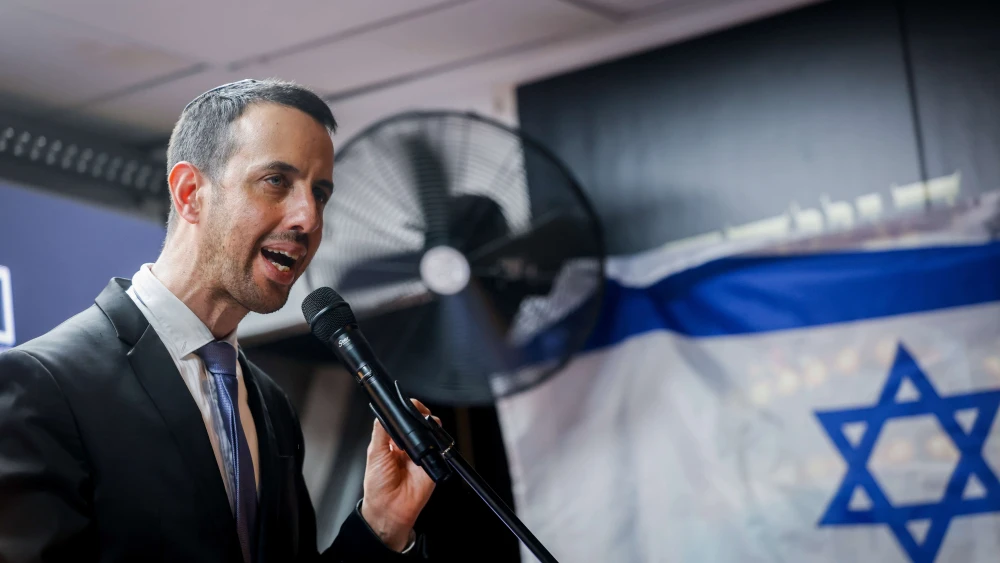
Lawmakers of the Knesset Caucus for the Fight Against Antisemitism and the Delegitimization of the State of Israel convened on Monday to discuss the Jewish state’s “national vision” for the upcoming term of U.S. President-elect Donald Trump.
The meeting was led by Likud Party MK Ariel Kallner in partnership with the Jerusalem Center for Security and Foreign Affairs (JCFA) think tank, according to a statement released by the caucus.
Kallner, who leads the caucus, said: “This morning’s horrific attack in Samaria reminds us that the war for our existence on all fronts is still ongoing,” referring to Monday’s deadly shooting near Kedumim.
According to the Likud Party lawmaker, Jerusalem must establish a national vision for the Middle East and U.S.-Israel relations rooted in “political realism rather than utopian ideas” such as the Oslo Accords.
The idea of dividing the Land of Israel and creating a Palestinian state must be “permanently removed from the agenda, as its implementation would bring only blood, sweat and tears,” the coalition member added.
“My vision and that of the State of Israel should be: Israel and the United States as partners. A strategic partnership between Israel and the United States will only strengthen both sides, with Israel becoming a nation capable of addressing regional challenges independently, while the United States maintains its global interests,” concluded Kallner.
JCFA President Dan Diker explained that Israel has become a leading force in the Middle East, particularly in light of its recent military successes against Hamas and Hezbollah terrorist leaders.
However, Diker warned that the country is now facing an “eighth front"—international legal, political, media and social terrorism, including threats from hostile elements in the United States and Europe.
The JCFA chair concluded by emphasizing that the Jewish state “must lead the coalition of ‘the good’ in the fight against all forms of terrorism, together with our partners in the incoming U.S. administration.”
During the discussion, JCPA experts highlighted the challenges facing Israel in the wake of the Hamas-led Oct. 7, 2023, massacre, which they said should be presented to the new administration in Washington as part of a broader regional vision.
The experts added that antisemitism and anti-Israel sentiment have become significant weapons in the hands of the Jewish state’s enemies and urged the formulation of a comprehensive strategy to address this.