


The Israeli Cabinet on Monday approved a 900 million shekel ($246 million) project to expand natural gas exports to Egypt.
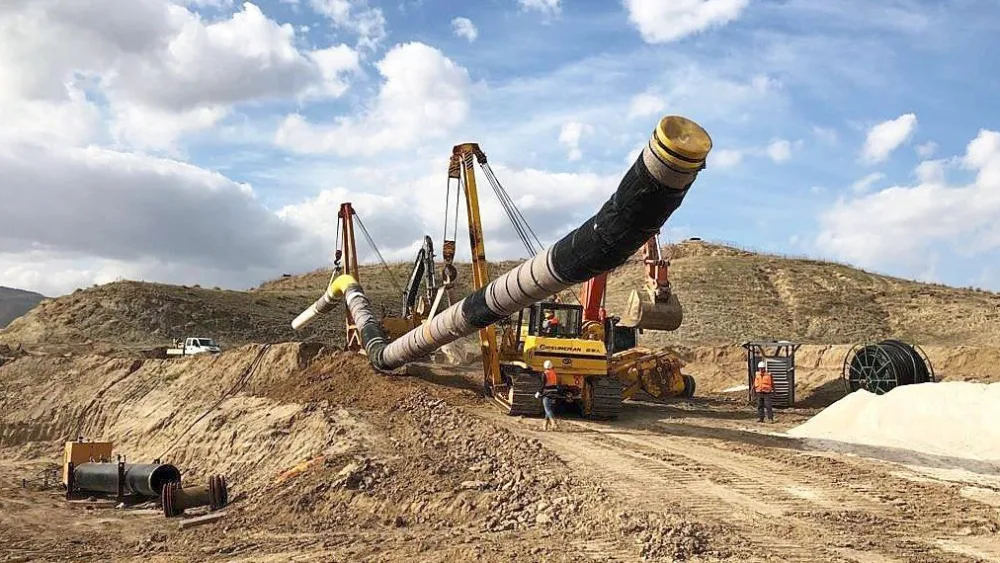
A 65-km. (40-mile) pipeline will be constructed along a route between Ramat Hovav, south of Beersheva, and Nitzana, near the Sinai border via Ashalim, allowing for an additional 6 billion cubic meters (BCM) of natural gas to be exported to Egypt each year.
The sale of the additional gas is expected to generate 200 million shekels ($55 million) in annual revenue for Israel Natural Gas Lines and hundreds of millions of shekels each year for the government in royalties and taxes.
It will be built by Nativ, a state-owned company that is responsible for the gas system throughout Israel.
“The current decision increases the potential for cooperation between Israel and Egypt in the field of natural gas in preparation for decisions on exports that will have to be made soon,” said Energy and Infrastructure Minister Israel Katz.

“Cooperation between the countries will strengthen the economy, strengthen the well-being of the citizens of the State of Israel and strengthen regional stability, and I will continue to work for its expansion in the fields of natural gas, renewable energies, hydrogen and energy storage,” the minister continued.
Israel’s Channel 13 last week reported that the government was holding secret talks with the Palestinian Authority on a proposal to develop a gas reservoir located off the coast of Gaza to benefit the Palestinians living in the enclave.
The Gaza Marine I gas reservoir is located about 36 km. (22 miles) off the Gaza coast and contains an estimated 33 BCM of natural gas. Gaza Marine 2 contains an additional 3 BCM of natural gas.
These talks took place with the approval of Prime Minister Benjamin Netanyahu and Defense Minister Yoav Gallant and are part of the political and security process stemming from recent summits in Jordan’s Aqaba and Egypt’s Sharm el-Sheikh.
An obstacle for the Israelis to the development is that the P.A. is not recognized as a state with legal authority to develop the gas reservoirs. A possible solution is for Egypt to sponsor the project, so Jerusalem has held discussions with Cairo about the project.



