Newsletter
Newsletter Support JNS

Israel’s Labor Party leader exits politics ahead of upcoming election

In a first since its inception in the 1960s, Labor is not expected to secure the four Knesset seats required to pass the electoral threshold.

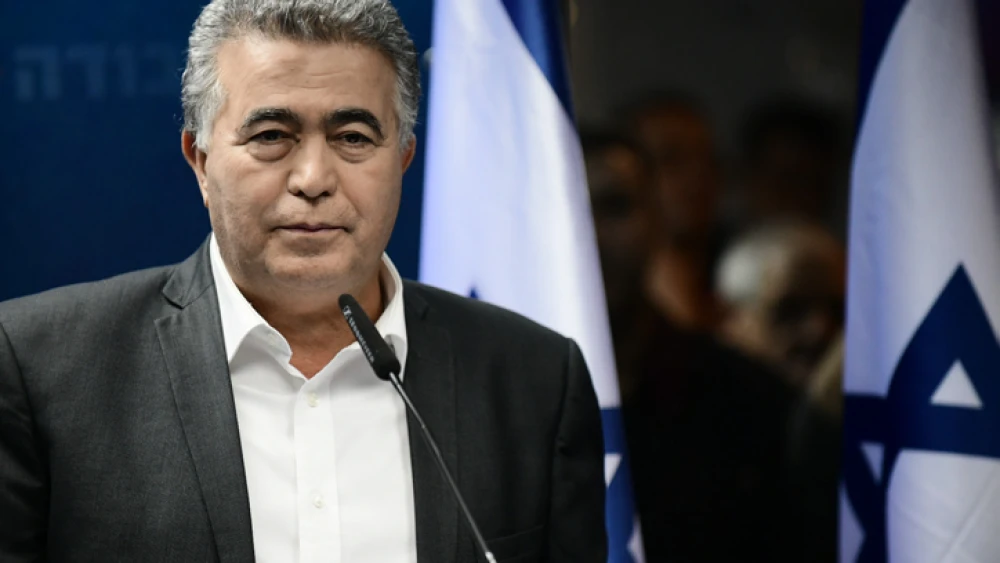
Labor Party leader Amir Peretz at an election event in Tel Aviv on Dec. 31, 2019. Photo by Tomer Neuberg/Flash90.

Israeli Labor Party leader Amir Peretz announced on Wednesday that he would be stepping down as party chairman after overseeing the political faction’s worst-ever performance in the last election.

Opinion polls show that Peretz, who currently serves as the country’s economy minister, as having lost the support of many Labor Party voters after breaking his campaign promise not to join a government led by Israeli Prime Minister Benjamin Netanyahu.

In a first since its inception in the 1960s, Labor is not expected to secure the four Knesset seats required to pass the electoral threshold.

“Out of a sense of responsibility, I am announcing that in the upcoming elections, I won’t lead the Labor Party, and I won’t head the party in the Knesset,” Peretz wrote on Facebook. “At this time, the Labor Party needs renewal and must choose a new chairman and leadership.”

This article first appeared in Israel Hayom.

“Why are we to trust the U.N.’s own vetting procedures?” Adam Kaplan, of USAID, asked a congressional committee.
The pro-Israel group “has become increasingly problematic for many American Jews and for many candidates running for office,” Lauren Strauss, of American University, told JNS.
Sharon Liberman Mintz, of Jewish Theological Seminary, told JNS that the 1526 Haggadah “is one of the most exciting books that I have ever had the pleasure to turn the pages of.”
Tehran combines a narrative of victory with one of victimhood to shape public opinion. Israel is trying to catch up in the battle for public perception.
Two people wounded and two homes damaged in Rehovot in Iranian missile barrages.
The U.S. Army has “flattened” Iran’s air defenses and defense industrial base, including the factories and production lines supporting missile and drone programs, the American defense secretary said.
