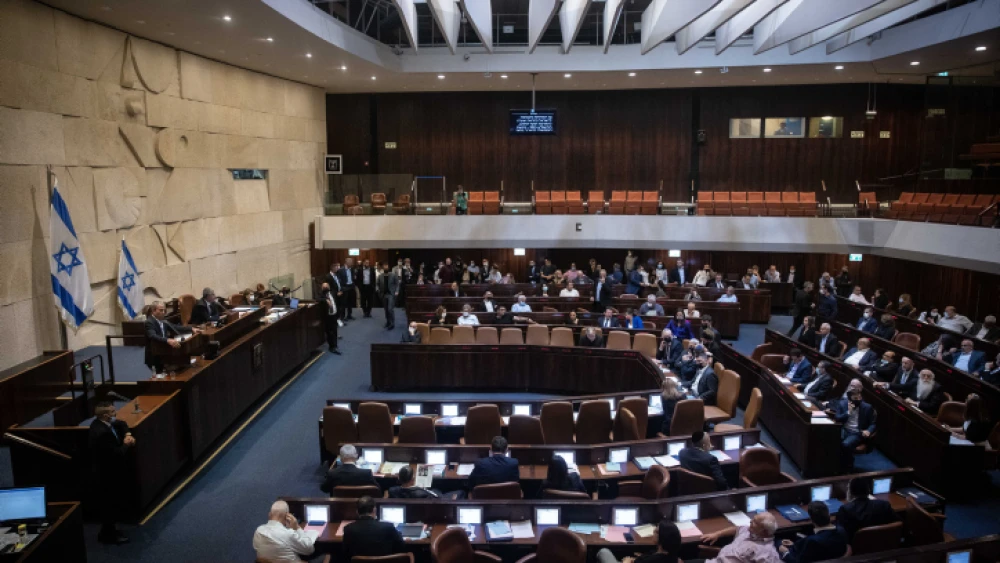
Knesset lawmakers returned from their three-month recess on Monday, kicking off the parliamentary winter session as Israeli Prime Minister Benjamin Netanyahu’s coalition still lacked a formal majority.
Netanyahu, Israeli President Isaac Herzog, Knesset Speaker Amir Ohana and opposition leader Yair Lapid (Yesh Atid Party) will address the opening ceremony, which is scheduled for 4 p.m. local time.
The winter session, which will run through spring, is expected to be stormy, with drafting or exempting ultra-Orthodox men from mandatory military service potentially the most disruptive issue for the coalition.
A draft bill, which is expected to regulate exemptions of Haredi yeshivah students from service, is expected to be presented soon by Knesset member Boaz Bismuth, chair of the Knesset Foreign Affairs and Defense Committee.
Netanyahu’s ultra-Orthodox coalition partners Shas and United Torah Judaism formally left the government in July over the issue, leaving the prime minister without a clear majority in the Knesset.
However, the ultra-Orthodox parties have helped Netanyahu pass some legislation over the past months to avoid triggering a national election.
According to Israel’s Channel 12 News, the Haredi factions continue to boycott votes in the Knesset plenum, and no legislation was put on the agenda following the opening ceremony on Monday afternoon.
According to political sources cited by Ynet on Monday, several of Netanyahu’s advisers have urged him to call a vote immediately after the recess, in the wake of the U.S.-brokered hostage deal with Hamas.
While his consultants argued that the timing would give Netanyahu a boost and allow him to capitalize on the peace deal, the premier has decided against elections at this time, according to the Ynet report.
The coalition is required to pass the state budget by the end of March to prevent the automatic dissolution of the Knesset. Netanyahu reportedly seeks to fast-track the process and approve the budget already before January.
Asked by Israel’s Channel 14 on Saturday if he would run in the next election, the Jewish state’s longest-serving leader answered in the affirmative, adding that, “with the help of the public,” he would win a seventh national vote.
An Oct. 15 survey carried out by Direct Polls for Channel 14 found that Israelis deem Netanyahu most suitable to serve as the country’s prime minister, with 58% support. Former prime minister Naftali Bennett came in second with the support of only 22% of the respondents.