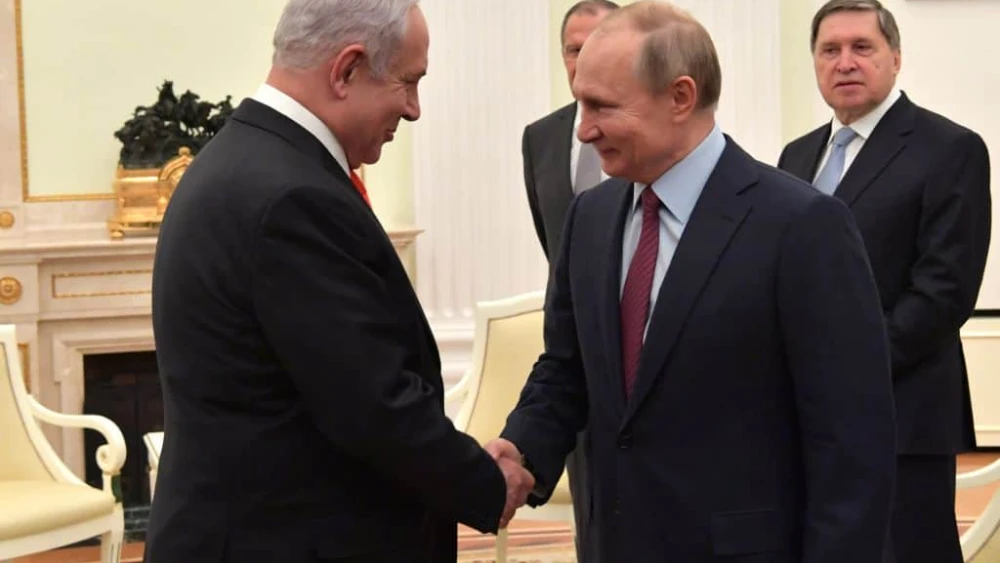
Israeli Prime Minister Benjamin Netanyahu and Russian President Vladimir Putin discussed the subject of Iran during a telephone conversation on Monday evening, according to a statement from Jerusalem.
The brief statement did not elaborate further, but according to the Kremlin Putin restated Moscow’s willingness to help negotiate a solution to the Iranian nuclear issue, and stressed the importance of upholding Syria’s sovereignty and territorial integrity.
Iran’s Deputy Foreign Minister Kazem Gharibabadi said on Friday that nuclear talks in Istanbul with Germany, Britain and France earlier in the day had been “serious, frank and detailed.”
On the backdrop of a report in June that Tehran is violating its non-proliferation commitments, the three European powers threatened to trigger a so-called “snapback mechanism” by the end of August, reinstating U.N. sanctions on the Islamic Republic.
The face-to-face negotiations were the first since Israel launched a preemptive strike on Iran on June 13, targeting key nuclear and military sites.
Meanwhile, U.S. Special Envoy for Syria Tom Barrack confirmed on Thursday his participation in a landmark meeting between Israeli and Syrian officials in Paris.
A government source told JNS that Jerusalem had been represented by Strategic Affairs Minister Ron Dermer while Foreign Minister Asaad al-Shaibani led the Syrian delegation.
The talks came less than a week after Barrack announced that Israel and Syria had agreed to a ceasefire following several days of massacres carried out by Sunni jihadists loyal to Damascus against the Druze minority in Sweida Province.