


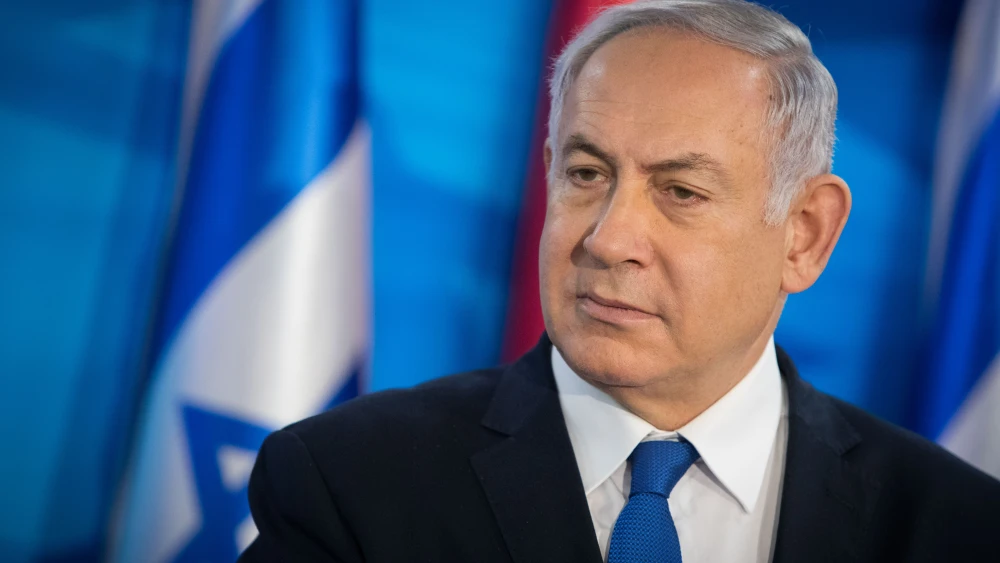
“We’re very close to losing the battle,” Israeli Prime Minister Benjamin Netanyahu tells Israel Hayom in a special interview days before the Knesset election. “We found a factor we hadn’t noticed until last night. That factor is that what we have here is opposite of 2015.”
“Whereas in 2015, the left was complacent, and the right was enlisting to vote; today, the opposite is happening. The right is complacent, and the left is enlisting to vote. When polls ask how many people intend to vote, the left gets 100 percent. Not 99.2 percent to 100 percent. Everyone is going to vote. And on the right, we’re seeing notable lower percentages than that, around 80 percent. The difference in percentages is equivalent to about five seats,” says Netanyahu.
The prime minister seems worried, even stressed—a description he prefers for his enemies. One night last week, Netanyahu was sitting with his campaign advisers, including expert pollsters, and after an in-depth review of the polls, they concluded that the problem on the right, particularly with Likud, was insouciance.
Netanyahu thinks this is an issue that will decide the election, or at least, he is intentionally giving off that impression. “Significant percentages of non-voters could cost us two more seats. With gaps like these, there’s a possibility we could lose the bloc, and the gap between us and Lapid-Gantz could increase by five more seats,” he says.
When Israel Hayom asks him if this factor is going to lead to a Likud loss, Netanyahu replies: “We’ll definitely lose [if people don’t vote.]”
One person who has paid a high price in this thuggish election is Netanyahu’s son, Yair. Netanyahu backs him up: “My son is always facing a wave of slander, and he doesn’t accept the convention that allows his image to be trampled. Even when he was still a kid, he was the subject of parody. He isn’t willing to bow down.”
“These attacks are coming from my political critics. I’m sorry he has to live a life of political storms. They are murdering his character. They are putting him on the firing line. I wouldn’t recommend that anyone suffer these injuries.”
Since the main issues on the election agenda—after accusations of treason and even psychosis—are economy and security, Israel Hayom asked the prime minister whom he would pick for finance minister and defense minister.
“That is of no interest. I’m not dividing up the spoils because of now they’re going to them [the left] if the right doesn’t get its act together,” he says.
“If Likud voters don’t come to their senses, we’ll lose the election. The Likud/right-wing voters don’t realize that not only isn’t the election in our pocket, right now it’s actually in theirs [the left]. Because they are fighting tooth and nail. Our people are sitting around, sanguine. If they don’t realize that they have to go and vote,” says Netanyahu,all our achievements will be lost.”



