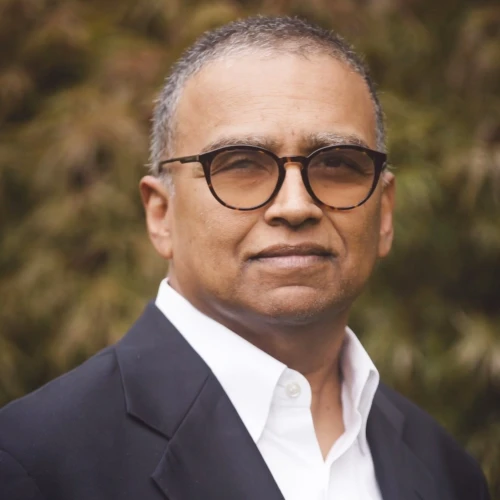
“The war has reminded our youth of their responsibility to support the country,” says Rabbi Dr. Kenneth Brander, president and yeshivah dean of Ohr Torah Stone.
“They believe that there can be a merger of the sword and the word, the values of the Torah and the responsibility to fight, not because we want to fight but because our lives are in danger, because the country is in danger,” he told JNS on Sunday.
The Ohr Torah Stone movement, founded in 1963 by Rabbi Shlomo Riskin in Efrat in Judea, is a Modern Orthodox network of 32 institutions, including six high schools from where all male and half of the female graduates serve in the army.
The organization has developed emissary programs, interfaith initiatives and two hesder yeshivot where students study Torah for a year and a half and then serve in the army, one-third of them in commando units.
Ohr Torah Stone defines itself as a national religious and women’s empowerment organization that works with the Israel Defense Forces to expand opportunities for women to serve in key units.
Ohr Torah Stone has lost 16 alumni in the Oct. 7, 2023, Hamas onslaught on Israel and the ensuing war. Another 35 bereaved families are part of the organization’s network.
On Sep. 17, President Isaac Herzog visited Ohr Torah Stone’s Neveh Shmuel Yeshiva High School in Efrat, which lost nine alumni and two students’ fathers in the war, to show his support.
“I have tried to go to every funeral and shivah [seven-day mourning period]. Now that we’ve marked a year since Oct. 7, there are also anniversaries where we deal with the losses once again,” Brander said.
Ohr Torah Stone has prioritized mental health issues and allocated about $750,000 to ensure that mental health professionals are available at each institution.
“We are worried not only about the mental health of the bereaved families. In one of our schools, we lost nine students. In some cases, one educator could have lost three or four students in one of his classes. He is a bereaved educator. This is happening in many places in Israel, not only in our organization, but I have to deal with it at OTS,” he explained.
“We created an infrastructure to protect teachers, students, alumni and emissaries. We have nearly 150 people in private therapy sessions and offer music and art therapy,” Brander said.
“Some of our schools have put together music videos with bereaved families and students who were friendly with soldiers that fell. Evacuated families from Kiryat Shmona in the north who now live in the Etzion Bloc in Judea received beautiful tapestries for their sukkahs with food,” he continued.
“We created 32 mosaics featuring every community attacked on Oct. 7. They were all designed by the students,” he added.
In July, 12 children were killed, and dozens more people wounded, when a Hezbollah rocket from Lebanon hit a soccer field in the Druze town of Majdal Shams in the Golan Heights.
OTS sent a group to Majdal Shams to visit the Druze community. “I met with the head sheikh. I wanted him to know that we are one. We all live in Israel and irrespective of how we worship, we are all part of one country. That’s why I and many of my colleagues went up, to show that we are one family,” Brander told JNS.
Hours before the start of Yom Kippur, Staff Sgt. Maj. Tzvi Marantz was killed in action in an ambush in northern Gaza, becoming the 16th OTS alumnus killed since Oct. 7 last year.
“I know Tzvi’s mother quite well; she is in charge of our English program at our Neveh Shmuel school. At the shivah, she reminded me that the last time I saw her she was carrying groceries and I rushed to help her, but she refused and said she could handle it. I told her that I hoped now that she is carrying other burdens, she would let us help her carry them. I got the impression that she is open for that conversation,” Brander said.
“It’s our responsibility not to wait for people to come to us, it is our responsibility for us to go to them and see what we can do for help. Naturally, we will also do things for remembrance but the war isn’t over, we are here to make sure we take care of the families,” he added.
Brander’s 19-year-old son will be enlisting in the IDF in the coming months. “I feel what other parents are feeling. I sent a letter right after Rosh Hashanah to all parents saying we are here for them and we are offering therapy if there is a need for it,” Brander said.
Regarding the strife within Israel regarding the ultra-Orthodox refusal to serve in the army, Brander said his students want to do what feels right to them, and often it involves serving in combat and commando units.
“They feel it’s their responsibility to the country and the people of Israel. We have to do it in the most moral way we know how. We always get questions about how to fight this war morally,” he said.