Twenty years after the signing of the fateful Oslo Accords between Palestinian Liberation Organization Chairman Yasser Arafat and Israeli Prime Minister Yitzchak Rabin, Knesset Members are heavily debating the merits of the peace process and the two-state solution paradigm.
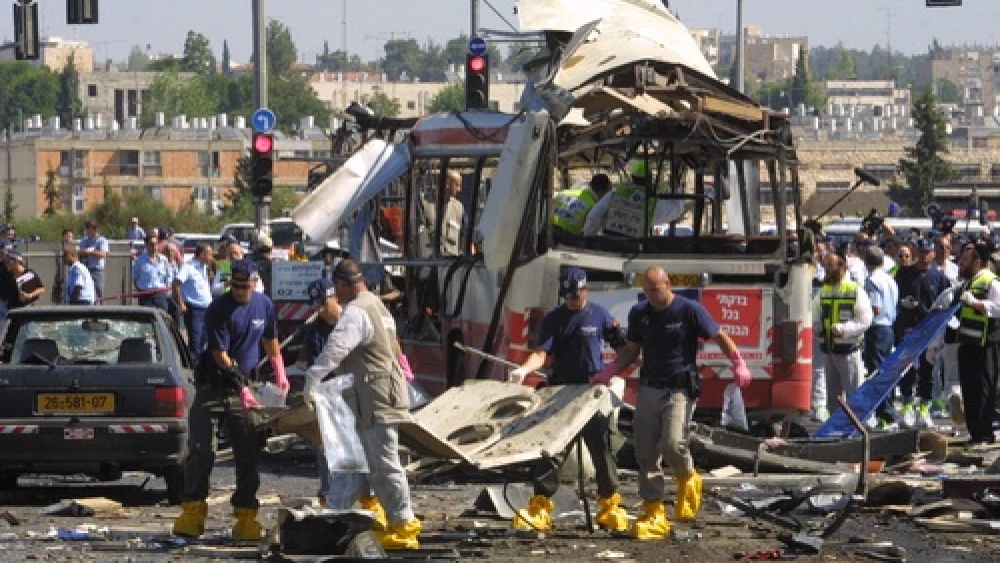
Parliamentarians from both Israel’s left and the right agree that the process has not yielded the results anyone would have hoped for, including the deaths of more than 1,000 Israelis and 3,000 Palestinians, and agree that the Israelis and Palestinians are more skeptical than ever about the prospects for a negotiated settlement.
Where Knesset members disagree is on whether the process was flawed from the outset, and on whether the principles that led to the signing of the interim peace agreement should still be applied. Consequently, the 20-year anniversary of the Oslo Accords—signed Sept. 13, 1993—is not a celebration of the agreement’s outcome, but rather a debate on its merits.
“The main lesson is that the paradigm of the left, that land for peace will bring security to the region, has failed, and this is the time to think clearly that we should not endorse a Palestinian state,” Member of Knesset and Deputy Defense Minister Danny Danon (Likud) told JNS.org.
Member of Knesset Hilik (Yehiel) Bar, Secretary General of the Labor Party and Deputy Speaker of the Knesset, said to think about the alternatives to the Oslo Accords and to Israeli-Palestinian conflict negotiations “is foolish, unfair, and it will not happen.”
“There is no other option than to have a Jewish state and a Palestinian state that is based on the 67 borders,” Bar told JNS.org.
Currently, details of the new round of Israeli-Palestinian conflict negotiations, which were announced in July, are largely being kept from the public. The negotiations are being advanced by Secretary of State John Kerry and Martin Indyk, former U.S. Ambassador to Israel. Indyk has come under scrutiny for serving on the board of the New Israel Fund, a left-leaning NGO that heavily funds anti-settlement and anti-religious activity.
While Israeli Prime Minister Benjamin Netanyahu and Palestinian Authority President Mahmoud Abbas appear to be entertaining the possibility that a peace settlement can be reached through the current round of negotiations, most Israelis and Palestinians alike are not paying much attention.
In an unusual turn of events, members of Israel’s governing coalition and the prime minister’s party are coming out against negotiations, while members of the opposition are supporting the government’s initiative.
“The prime minister said clearly that he supports negotiations without preconditions. Yet he hasn’t said where he stands on the outcome of negotiations,” said Likud’s Danon.
“I think the Israelis are waking up and they have understood that the idea is not valid anymore, and we see more and more Israelis shifting. We should not endorse any idea that we will give land to the Palestinians,” he said.
Labor’s Bar, however, believes it is the very distrust between Israelis and Palestinians that makes segregating Israel into two separate states a necessity. Bar insists that if peace efforts had played out only slightly differently, the creation of an independent Palestinian state in the West Bank provinces of Judea and Samaria could have resulted.
“We had three major attempts to make peace,” said Bar. “One was Rabin, Arafat. The treaty was signed. But as we know, Rabin was shot down by a Jewish terrorist. There is no way to know what would have happened if Rabin were still alive.”
The second attempt was between Prime Minister Ehud Barak and Arafat, according to Bar. During those negotiations, Barak offered Arafat more than 95 percent of the West Bank for a Palestinian state. Arafat famously rejected the offer, and embarrassed mediating U.S. President Bill Clinton in the process.
“Arafat chose to die as a shahid (martyr), not as a peacemaker. That was his choice,” Bar said.
In the third round, between Prime Minister Ehud Olmert and Abbas, “Both sides say that it was Olmert’s legal complications within Israel that prevented the negotiations from going all the way,” Bar said.
While the three rounds of negotiations ultimately resulted in increasing distrust, an intifada, Israeli military operations, and a unilateral Israeli withdrawal from Gaza, Bar suggested that Israeli-Palestinian conflict negotiations may still deliver results.
“This current Knesset has a very clear majority for the two-state solution. I think that more than 70 Knesset Members would vote for a two-state solution if brought for a vote,” Bar told JNS.org.
“The status quo is unsustainable,” he said.
Other Knesset members are not as optimistic that negotiations will cure decades of unrest.
“Everytime you try a certain medicine and it doesn’t work, you need to either realize the medicine doesn’t work or reanalyze the disease,” said Deputy Transportation Minister Tzipi Hotovely (Likud).
“Oslo was based on three incorrect assumptions,” Hotovely said. “The first assumption is that the conflict is about territory. The second assumption is that Arabs and Jews should not live together, and that segregation and separate states can create peaceful existence. The third assumption was that the conflict was about 1967.”
“[Prime Minister Ariel] Sharon proposed segregation, with the unilateral disengagement from Gaza,” she said. “The result was radicalism. Hamas took over. Gaza didn’t become Singapore like many hoped it would. Instead, rockets started falling on Sderot.”
As to whether the current peace talks will yield results, Hotovely is certain they won’t.
“I’m sure Bibi Netanyahu has goodwill, but the talks will fail. The reason is because the conflict is not about [Israeli territorial expansion in] 1967, it is about Israel’s independence in 1948,” Hotovely said. “The conflict is not about territory. The conflict is religious. It may be difficult for liberals to realize that the conflict may not have a logical solution.”
“We’ve been there, we’ve done that. We’ve tried it. It failed. We need to try something else,” she said.
Meanwhile, the debate on Oslo continues.
Download this story in Microsoft Word format here.
Corrections: This initial version of this story misspelled Member of Knesset Tzipi Hotovely’s name as “Hotevely” on all four occasions that her name was mentioned. Additionally, a paragraph that now states, “While the three rounds of negotiations ultimately resulted in increasing distrust, an intifada, Israeli military operations, and a unilateral Israeli withdrawal from Gaza...” initially incorrectly stated “intifadas,” in plural form. The first intifada took place before the Oslo Accords.