Thousands of tons of debris salvaged from the Temple Mount have yielded ancient seals, pottery and other fragments of Jerusalem’s past—and a research backlog that could take decades to unravel. For the Temple Mount Sifting Project, washing history out of discarded earth has proved only the beginning: Some of its most significant discoveries emerge years later, when researchers recognize what the recovered objects may reveal.
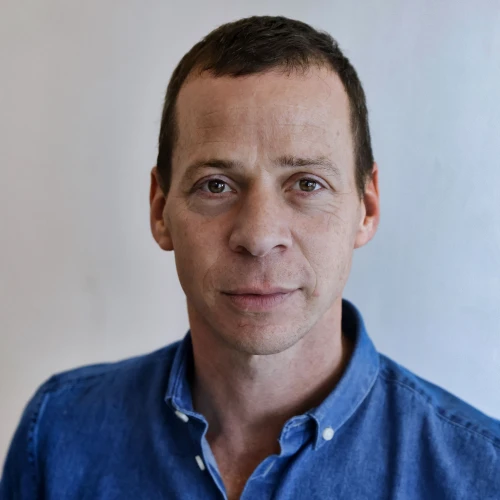
A study of a First Temple-period seal impression that may be connected to an official in the biblical account of King Josiah is expected to appear in the Israel Exploration Journal by the end of 2026, according to Temple Mount Sifting Project co-founder and director Zachi Dvira.
The clay impression, recovered by the project, bears the name “Yeda‘yah (son of) Asayahu.” Researchers have tentatively linked the father’s name to Asaiah, an adviser to King Josiah mentioned in 2 Kings and 2 Chronicles. The identification remains a possibility, not an established match.

“We just got the peer review correction that we have to do,” Dvira told JNS. The forthcoming research paper will expand on findings presented at an archaeological conference earlier this year.
The seal impression, found in 2025, is one of approximately 35 First Temple-period seal impressions recovered by the project. Its significance lies partly in the name, partly in its Temple Mount provenance—and partly in what such objects reveal about the administration of ancient Jerusalem.
Seal impressions were a means of securing documents, packages and containers. An official pressed a seal into clay attached to a closure; opening the contents would break or disturb it, leaving evidence of unauthorized access.
“It’s like a signature,” Dvira said.
Researchers also examine the reverse sides of these objects. Fabric impressions can indicate what the clay once secured. Dvira said the project’s comparatively high proportion of sealings with such impressions, considered alongside evidence from other ancient Near Eastern temples and palaces, suggests a connection to treasury administration.
The proposed biblical connection requires greater caution. Dvira argues that Asayahu’s uncommon name, the Temple Mount origin of the soil and the setting of the biblical account strengthen the possibility that the inscription refers to the son of Josiah’s adviser.
“We think [there are] good chances that this is the same person,” he told JNS, clarifying that the seal belonged to the man’s son, not to Asaiah himself.
A matching name and plausible historical setting, however, do not establish identity. The forthcoming publication will allow other scholars to evaluate the researchers’ argument in greater detail.

From discarded earth to archaeological project
The project grew out of Waqf construction work in 1999 associated with the entrance to the Al-Marwani Mosque, also known as Solomon’s Stables. Large quantities of earth were removed from the Temple Mount without the archaeological oversight needed to record their layers. Some of the material was dumped in the Kidron Valley.
The excavation exceeded the scope of the permission granted by the Israel Antiquities Authority and proceeded without the required archaeological supervision, in violation of Israel’s Antiquities Law, according to reports.
Dvira, then an archaeology student, organized friends and fellow students to examine the discarded material. He had already been considering whether soil removed during renovations could provide information about a site that had never undergone systematic archaeological excavation.
Together with archaeologist Gabriel Barkay, one of his professors, Dvira obtained a permit and began the sifting project in 2004. Barkay died in January 2026. Dvira said he had assumed much of the project’s leadership as his colleague’s health declined.
The work carries an unavoidable limitation: Recovering an object does not restore the original archaeological layer in which it lay.
A controlled excavation records relationships among objects, structures and soil deposits. Discarded, mixed earth cannot provide the same precision. Researchers instead compare artifacts with securely dated finds elsewhere and examine patterns across the collection.

History through a screen
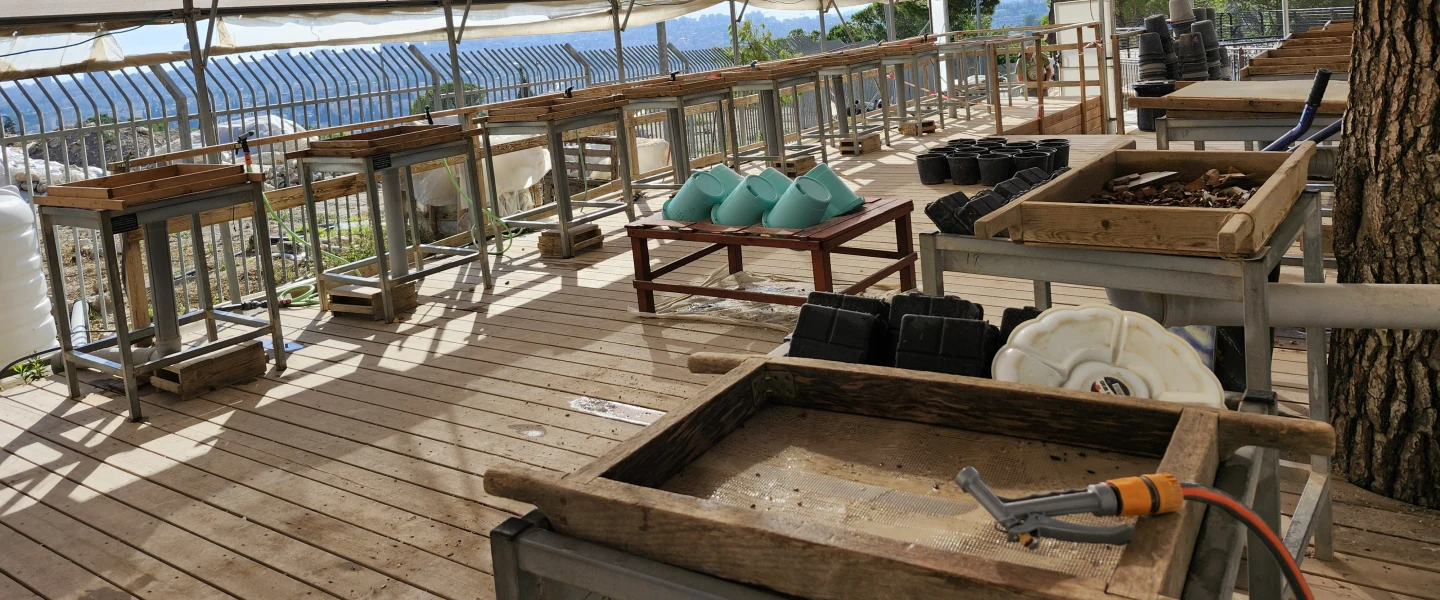
At the sifting site, the soil is washed through screens, exposing fragments that can easily escape notice in dry earth. Staff inspect and sort the material before specialists study it.
Visitors can take part themselves, helping the project recover artifacts rather than simply watching archaeologists at work. The two-hour program includes an introductory talk, a brief film overview, guidance on sifting, hands-on work with the soil and a closing explanation of the group’s finds. No archaeological experience is needed.
Dvira said wet sifting has greatly increased the recovery of small artifacts, including seals and seal impressions. The project’s facilities have also processed material from other excavations.
One particularly notable example was a seal impression of King Hezekiah recovered while the team provided wet-sifting services for Eilat Mazar’s Ophel excavation in 2009. Its identification emerged through research several years later. It did not come from the Temple Mount soil—a distinction Dvira emphasized.
Other discoveries likewise emerge long after an object leaves the screen.
Dvira disclosed that researchers are studying a stone seal they suspect may be associated with Alexander Jannaeus, the Hasmonean ruler and high priest. Initially thought to belong to the First Temple period, it was reassessed during laboratory research as a Second Temple-period object.
“We’re still studying this,” he said. The identification is preliminary, and the project has not published its findings.
Decades of research ahead
The project’s annual operating budget is approximately 1.8 million shekels, divided roughly equally between the sifting site and research laboratory, Dvira said.
That keeps the operation running but does not provide enough capacity to advance all its research. Alongside directing scholarship and fundraising, Dvira handles administrative and information-technology duties that the organization cannot afford to assign to additional staff.
He estimates that the remaining recovered soil will require another three to four years of sifting. Completing the broader analysis and final publication is a much larger challenge.
“With a proper budget,” he told JNS, “we could finish the processing of the final publication within five years.” At the current pace, he estimates it would take 25 years.
For Dvira, the next major discovery may already be sitting in storage, awaiting specialist attention.
“So many topics, so many categories of finds were not yet studied,” he said.