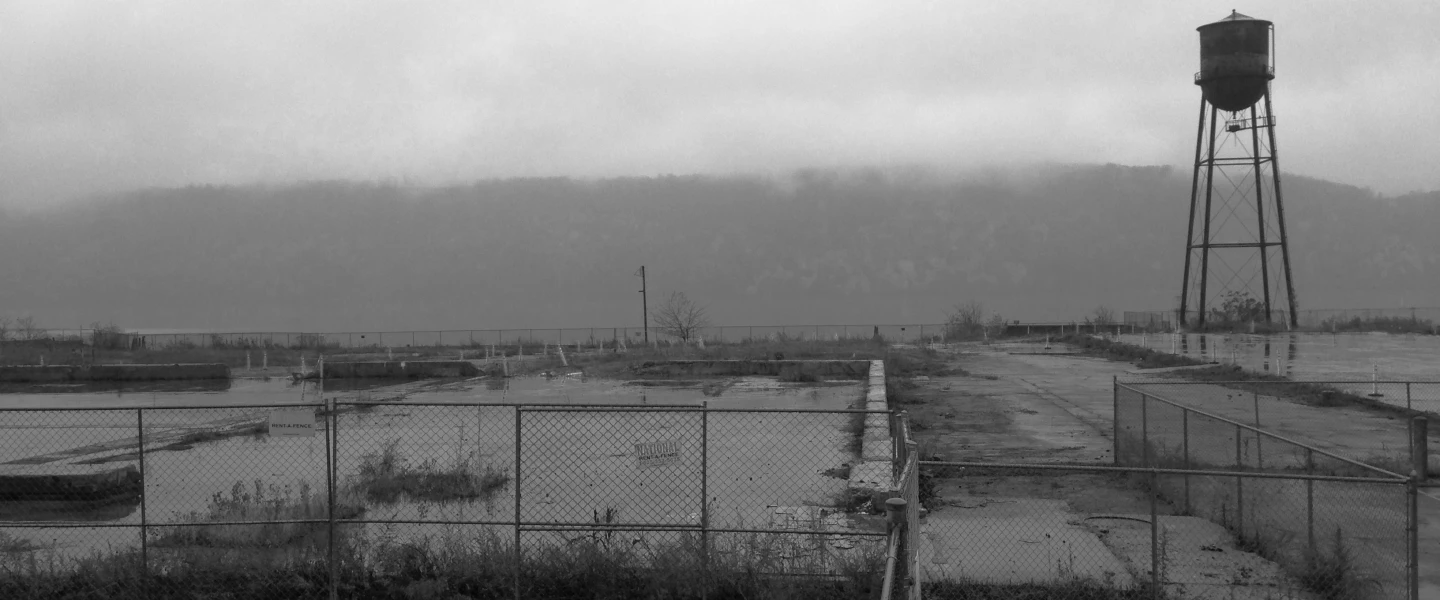
Hastings-on-Hudson is a bucolic village of about 8,500 people and one of 10 such hamlets north of New York City along the Hudson River’s eastern bank, known collectively as the Rivertowns.
Main Street slopes down to the river’s edge, where there is a park, a playground and a couple of restaurants. The local train station takes commuters straight into Midtown Manhattan from Hastings, which is known as “the Brooklyn of the Rivertowns” for its large number of artists, writers and academics.
But things have been anything but idyllic for students and their parents at Farragut, the public middle school in Hastings. Last month, as the school year was getting underway, they learned that an eighth grade social studies class would include a lesson on genocide, which would use Gaza as the sole example.
A day before back-to-school night, parents received a syllabus for the class that didn’t mention the Holocaust or any other atrocity. Only the one purported to be occurring in Gaza.
William McKersie, superintendent of the Hastings-on-Hudson Union Free School District, which operates an elementary school, a middle school and a high school, received complaints from upset parents. The district removed the lesson from the eighth grade syllabus, but not before the proverbial match had already been ignited.

After the district withdrew the Gaza section of the curriculum, Westchester for Palestine, a group with a small social media following and which includes the local Jewish Voice for Peace chapter, decried “censorship” that bowed to “global Zionist power.”
Many attendees of public meetings of the education board, who identified themselves as parents of Hastings middle schoolers, said that they were upset.
“When I first saw the syllabus, I instantly thought that this is activism masquerading as education,” a mother said at a Sept. 9 board meeting, just two days after the syllabus was distributed.
“The inclusion of Gaza is at best biased,” a father said at the meeting. “There is no way to bring something like this up without considering how it affects the community.”
Another mother said that “educated and informed Jewish adults struggle to talk about Gaza, respectfully. How can you possibly think that this teacher is capable of doing it with this age group?”
“How can a Jewish child, particularly one who identifies as a Zionist, possibly feel safe hearing their peers talk about Israelis?” she added. “I sincerely hope the district reconsiders covering this topic with this age group.”
Westchester for Palestine urged supporters to show up at the Oct. 6 education board meeting. “Don’t allow U.S. education to ignore the racial supremacy philosophy of Zionism,” it told its 2,750 Instagram followers. “Let’s do better for our children and stand up to a colonial curriculum. Teach about Palestine and all colonized people.”

Paul Feiner, a Democrat, has served as supervisor of Greenburgh, a town which includes the village of Hastings, for 35 years and is running unopposed in next month’s election. He told JNS that he received about 500 letters from concerned citizens.
Nearly all were outraged that the Holocaust was omitted from the class plan, that Gaza was included without context and that the Strip was included at all. Whether civilian deaths in Gaza after Oct. 7 qualify as “genocide” is a subject of contentious debate and shouldn’t be presented as fact, the overwhelming majority of the letter writers told him.
Trying to teach Gaza as a “genocide” to eighth graders “could create more antisemitism, because you have middle schoolers and the teacher focusing on the Israel-Gaza dispute,” Feiner told JNS.
“A lot of Jewish students will be the center of attention in their classes,” he said. “It’s unfair to bring Jewish students into something they have no control over.”
“They will be blamed for actions they’re not responsible for,” he told JNS. “I’m very upset.”
The Oct. 6, education board meeting was packed with people, who came to speak during the public comment period. Many said in their remarks at the meeting, which ran for about three-and-a-half hours, that they had traveled from surrounding towns, even from Rockland County across the Hudson River, to attend.

Some attendees said that they were parents of Hastings students. Some self-identified as Jews and others as Muslims.
Several, who advocated for including Gaza in the eighth grade curriculum, wore hijabs or keffiyahs draped over their shoulders. Some spoke about the pain of Palestinian and Lebanese family members, who are living in war zones, and urged that the Palestinian experience “not be erased” by the Hastings school system.
Speakers who identified as Jewish spoke in strong terms about how the episode has impacted them and the town.
Omitting the Holocaust from the first iteration of the syllabus reflects “a toxic mix of ignorance and ideological distortion,” said an attendee, who told the board that he had a son in the eighth grade at the school and another of his children graduated from Hastings High School.
“Already the course has torn at the seams of our community. It has torn us apart, not brought us together,” he said. “It’s just such a fraught issue.”
Another person, who self-identified as a Hastings resident with children in the middle and high schools, said that including Gaza in a “genocide” unit is “about lies.”
“This is about ignorance and about something much more sinister,” he said. “Would you have a flat earther teach geography? A Klansman teach African-American history?”
“I ask you not to endanger our children,” he said at the meeting. “I ask you to not destroy our community.”
A Jewish mother of a Hastings student, who asked to remain nameless due to safety concerns, told JNS that people came to the meeting “from all over Westchester and Rockland County” and that the incident “really shook people up.

She told JNS that Jewish residents of Hastings are “very on edge and concerned for their children and families.”
“I have attended Hastings Board of Education meetings off and on for 20 years,” she told JNS. “I have never experienced anything where non-residents of Hastings participated, and certainly not to the degree of last week.”
“That, I am sure, has never happened before,” she told JNS. “This seemed to be a rallying cry for Westchester for Palestine—especially on the eve of Oct. 7, and that a local board meeting was co-opted in such a way.”
Some who posted to a Facebook group for Hastings residents saw the omission of the Holocaust from the syllabus as Jew-hatred. “No. It’s not a mistake,” one wrote.
The school made a “mistake” in the way it handled the incident, the superintendent said at the October education board meeting and in two letters, which he shared with JNS, that he sent to parents and Hastings residents.
McKersie also said that a new teacher had added it to the syllabus prior to its review.
In a Sept. 9 letter, which he sent to all Hastings households, McKersie wrote that “the exploring equity eighth grade curriculum syllabus sent home to families last week for the genocide and human rights unit by mistake did not include all of the case studies that will be covered in the class.”
“Both the Holocaust and the Cambodian genocide are important parts of the course and should have been listed in the syllabus,” he wrote.

But in a letter that he sent on Oct. 5, he said that Gaza is on the list of topics to be taught in the course at Farragut Middle School, which is highly ranked and has about 520 students.
“As originally intended, Gaza is addressed in one lesson as a current event that is changing in real time and is debated by scholars and governments,” McKersie wrote. “It is not intended as a comprehensive history of the region.”
In an Instagram post, Westchester for Palestine cited that announcement as evidence that it had succeeded in getting Gaza back on the syllabus.
At the education board meeting the day after the superintendent’s Oct. 5 letter, several people who self-identified as parents of Hastings students said that they were confused about whether Gaza would be taught in the middle school.
At that meeting, McKersie said that he was frustrated with the entire imbroglio.
“For the past approximately four weeks, our district focus has been on one topic in one unit, in one course, in one semester, in one grade, and it cannot be the focus of our district,” he said at the meeting. “Our students deserve better than that, and we need to move forward.”
JNS sought comment several times from McKersie. He emailed JNS links to the two letters that he sent to the wider community.
Alisa Berger is executive director of the Harvard University Graduate School of Education’s Deeper Learning Institute and was founding co-principal of the New York City iSchool, a public high school in Manhattan. She was also director of leadership and organizational learning at the New York City Department of Education and is author of the book “The Essential Guide for the Fearless School Leader.”
Berger told JNS that she is surprised that Gaza and genocide were part of an eighth grade curriculum.
“Most teachers would not want to touch this with a 10-foot pole, certainly not at the middle school level,” she said.
Berger is unaware of Gaza or complex Middle East issues being taught in any public middle school, she told JNS.

Jews in Hastings, who spoke anonymously with JNS, said that they are anxious about being targeted. Even the rabbi of a local synagogue would not speak publicly about the local conflict, and nobody from the grassroots group Hastings Against Antisemitism was willing to talk to JNS on the record.
The Jewish mother, who told JNS that the incident “really shook people up,” said that “I know all of us are intimidated, between the shootings, the graffiti, the riots around the country, the interruption of the vigil in New York City” on Oct. 7 in Union Square park.
“Thus, the reason we want to remain anonymous,” she told JNS.
Many Jewish families, who felt emboldened to speak up at the September board meeting, are shutting down after what happened at the October meeting, she said.
“I guess that was their goal,” she told JNS.
Front of mind for many remains what happened in April to Slices pizzeria, a beloved local joint on Main Street in the village.
Two men claiming to represent the Palestine News Network targeted Isaac Garson, who is Jewish and who owns the shop, by getting in his face with a video camera in front of his restaurant, video footage that circulated on social media appears to show.
The two, who carried anti-Israel signs, are shown demanding that he say “Palestine” when he says that he wants peace everywhere.
Many locals later turned out to demonstrate support for Garson after the incident. He said a few weeks later, when a JNS reporter visited his restaurant, that he had received an outpouring of support from people from across the United States, England and Israel.
After the Slices confrontation, the mayor and chief of police of Hastings asked Steve Goldberg, director of education at the Holocaust and Human Rights Education Center in nearby White Plains, to give a presentation about the languages and symbols of hate to police officers and area officials in cooperation with Westchester’s district attorney.

The longtime Hastings resident told JNS that the antisemitic graffiti and stickers periodically found in Hastings are not unusual these days.
“There isn’t a school around that hasn’t had an incident of swastikas. They’ve probably always been around but we’re more aware of it now,” he told JNS. “There is no greater incidence in Hastings than in any other place.”
Goldberg is currently developing an online platform for teaching about the Holocaust at the request of the New York state commissioner of education, he said.
He was also asked to assist the Hastings superintendent and other officials in updating the eighth grade curriculum after the firestorm ignited by including Gaza as the example of genocide, he told JNS.
His involvement was to consult in discussions about what it is appropriate to teach 13- and 14-year-olds, who at that point in their education have studied only U.S. history, not world history, Goldberg said.
The 2023 New York-area Jewish population study, which the UJA-Federation of New York commissioned, does not break down population estimates to the village level, but the Rivertowns area of central Westchester, which includes Hastings, has an estimated Jewish population of about 7,000, per the study.
Feiner, the Greenburgh supervisor, told JNS that in past years, the area was 10% Jewish. He thinks that number is lower today.
The next scheduled Hastings school board meetings are slated for Oct. 20 and Nov. 3.
McKersie, the superintendent, said that he plans to convene two round-table discussions.
But none of the local Jews who spoke with JNS believes that the conflict in this usually-peaceful village is likely to end anytime soon.