Newsletter
Newsletter Support JNS

Progress on bill to create envoy for Abraham Accords

The House Foreign Affairs Committee unanimously approved the legislation.

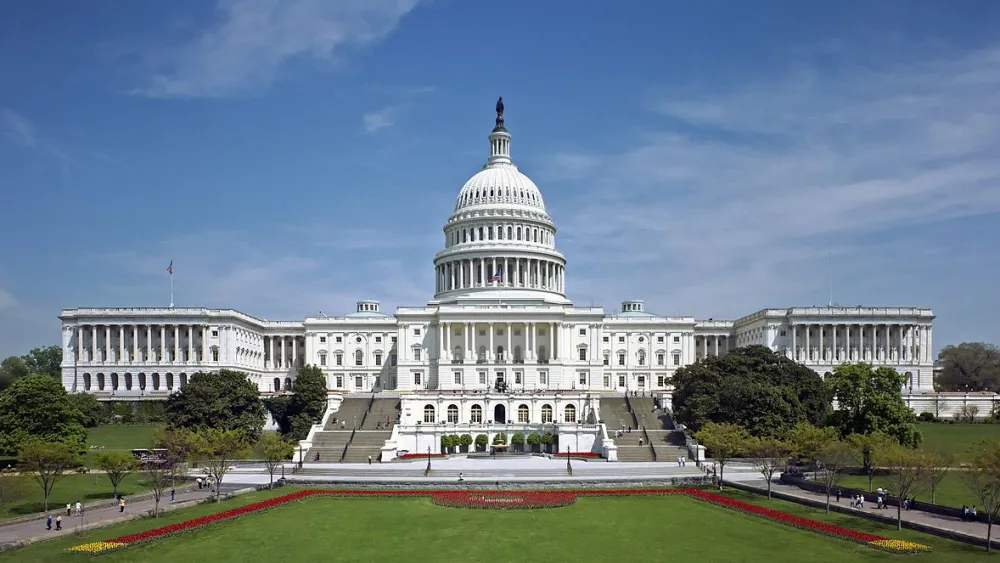
The U.S. Capitol building. Credit: Martin Falbisoner via Wikimedia Commons.

A proposed law to establish an ambassador-level envoy to work on expanding the Abraham Accords just cleared an important hurdle in Congress.

H.R. 3099 was approved by the House Foreign Affairs Committee through a voice vote without receiving any objections. Numerous legislators emphasized that the position would be critical for bringing Saudi Arabia into the accords.

Rep. Mike Lawler (R-N.Y.), a co-sponsor of the bill, said that “establishing a special envoy wholly devoted to this purpose will also demonstrate a clear U.S. commitment to cultivating the growth of the Abraham Accords. … It is a reaffirmation of our commitment to supporting peaceful and productive bilateral relationships in the Middle East, and hopefully far beyond the region.”

The top candidate for the potential job has been reported as Dan Shapiro who served as the Obama administration’s ambassador to Israel from 2011 to 2017.

Just as the lawmakers sought to broaden the influence of one Middle East nation they also pushed to limit another. A second bill approved alongside H.R. 3099 would prevent the United States from recognizing Syria as long as leader Bashar Assad remained in power.

In a draft report delivered to the U.S. president, the commission also called for improved religious accommodations for U.S. service members.
Salah Salem Sarsour, accused of concealing Israeli military court convictions on immigration forms, argued his detention was part of a Trump admin effort to target the pro-Palestinian movement.
CENTCOM stated that the strikes targeted missile, drone and radar facilities after the Islamic Republic attacked a cargo ship in the Strait of Hormuz, calling the assault a violation of the ceasefire.
Now that the primaries are over, “we hope that everyone will come together and be united,” Christine Quinn, chair of the executive committee of the New York State Democratic Party, told JNS.
An Iranian official warned on Friday that the safety of ships passing through the Strait of Hormuz without Iran’s permission “cannot be guaranteed.”
“We have put the train back on the tracks and going in the right direction,” said Yechiel Leiter, Israeli ambassador in Washington. “Final destination? Peace between our two countries.”
Benny Gantz, JNS editor-in-chief Jonathan S. Tobin, Gilad Erdan, Mosab Hassan Yousef, Nissim Black and leading voices in security, diplomacy, media, law and Jewish communal affairs headline the summit’s third day in Jerusalem.