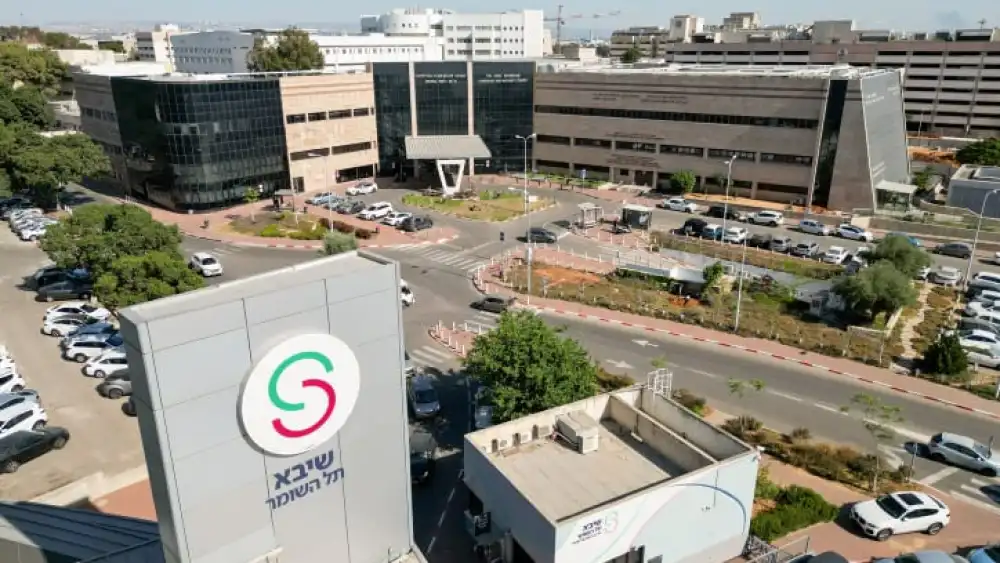
A new report published in the medical journal HaRefuah and indexed by the National Library of Medicine on Feb. 25 describes how Sheba Medical Center in Israel responded to a shortage of clinical teaching opportunities by overhauling its training model.
“The Sheba Model Designed to Increase the Number of Medical Students in Israel Through a Combination of Expansion of Teaching Hours, Simulation and the Opening of Designated Academic Clinics–Summary of 4 Years of Operation,” focuses on three key steps.
“Additional teaching hours in the afternoon and evening; shifting clinical teaching to simulation training; and additional clinical teaching in ambulatory clinics,” the authors wrote.
The change was prompted by a shortage of medical staff in Israel, leading Sheba to create a new Education Authority in 2021.
The model produced measurable results, per the authors. The study noted that “the number of teaching weeks at Sheba has increased from 500 in the base to 876 weeks in the 2025 academic year.”
The article said the center plans to further grow capacity to “1,000 teaching weeks in the hospitalization departments” by 2026.
“The increase in clinical teaching hours in the afternoon and evening also caused a significant increase in teaching outputs in the morning,” the authors noted.
They reported that “a program was launched to establish clinics as part of the ambulatory services in the afternoons” with “267 students in the fields of neurology, infectious diseases and gastrointestinal diseases” participating so far. It concluded that this “shows that it is possible to double the teaching capacity of the medical center.”
The authors called on all hospitals and the Israeli Ministry of Health to adopt the model.