Israeli rights groups have urged Prime Minister Benjamin Netanyahu to reverse the cancellation of daily afternoon prayers at the Temple Mount during Ramadan, which began last week.
In a letter sent some two weeks ago that was first reported this week, the Beyadenu NGO and its partner groups criticized annual restrictions on Jews visiting Judaism’s holiest site during Ramadan as a “rollback of Israeli sovereignty” at the site and a violation of freedom of worship.
In a first, Israeli authorities last week extended morning visiting hours for Jewish worshippers by one hour, but non-Muslims remain barred from visiting in the afternoon hours during the entirety of Ramadan.
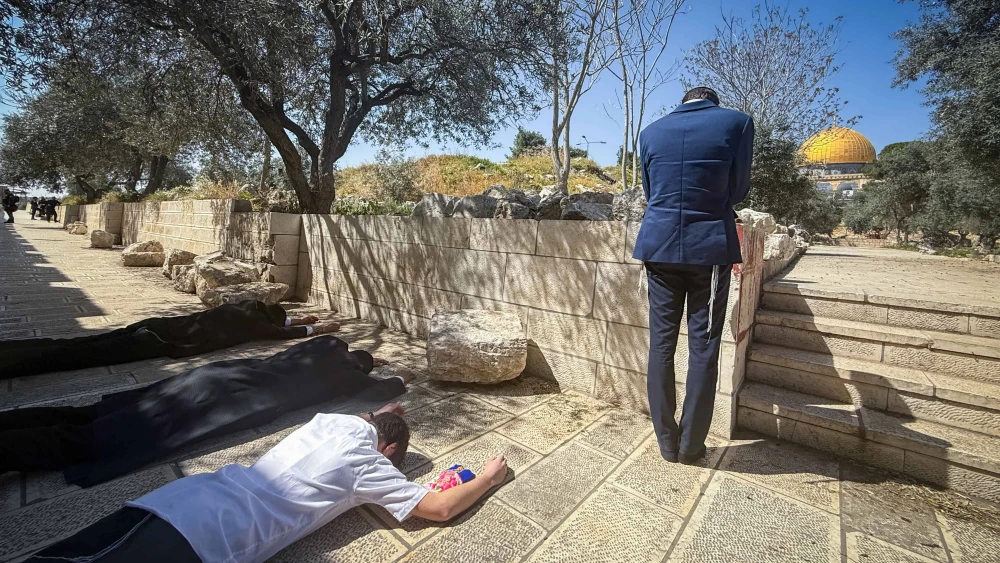
The afternoon restrictions have led to the cancellation of the Mincha prayer service on the Temple Mount, “which has become a regular fixture in recent years,” Beyadenu and its partners noted.
“The decision to curtail Jewish access to the Temple Mount, particularly in the wake of the October 7 attacks, sends the wrong message and risks rewarding terrorism,” stated Akiva Ariel, acting CEO of Beyadenu.
“Israel must not agree to a policy that effectively shuts Jewish prayer out of the Temple Mount during the midday hours,” Ariel said in a press release, adding, “Sovereignty is tested precisely in difficult times.”
Yosef Rabin, head of the Shofar B’Tzion NGO, said, “It is inconceivable that the government of Israel would cancel an organized and set prayer service at the holiest site in Judaism for an entire month.”
Rabin proposed what he called a “technical” compromise for Ramadan: allowing a quorum of 10 Jewish worshippers to enter the compound daily at 12:30 p.m. for approximately 20 minutes to pray Mincha.
However, the plan, described as an emergency measure aimed at preventing a complete suspension of services, was not accepted.
‘Historic change’
The letter to Netanyahu, signed by several prominent Temple Mount advocates, said recent years had seen a “historic change” allowing expanded Jewish prayer at the site. The signatories argued that the changes should not be reversed during Ramadan, a period that often brings heightened tensions in Jerusalem’s Old City.
Among their key demands, the activist groups called for maintaining existing visiting hours for Jews and preventing any reduction in access.
They also urged authorities not to close the compound to Jewish visits at the conclusion of Ramadan, as they say has happened during past years.
In addition, the organizations called for a reinforced police presence to prevent incitement, including the display of terror flags, incitement on social media, and illegal overnight stays at Temple Mount mosques.
The letter pressed for full freedom of worship, including allowing prayer books, prayer shawls and tefillin (phylacteries) to be brought to the Mount.
“Standing firm on our rights on the Temple Mount during Ramadan is a demonstration of national strength that will prevent incitement and strengthen our national security,” the letter to the premier added.
Copies were sent to top security officials, including National Security Minister Itamar Ben-Gvir, Israel Police Commissioner Daniel Levi and Israel Security Agency (Shin Bet) Director David Zini, Beyadenu said.
The 1967 status quo agreement with the Jordanian-run Islamic Waqf Islamic trust that manages the mosque built on the ruins of the Temples allows for Jewish visits at the site but bans them from worshipping there.
This status quo has increasingly been tested in recent years, with Jewish rights activists pushing the boundaries and police at times appearing to tolerate visible prayer, in particular since Ben-Gvir took office in 2022.
Israel Police Jerusalem District Deputy Subdistrict commander Arad Braverman told reporters last week that the goal is to allow “everyone, [regardless of religion], to reach the Temple Mount,” excluding rioters.
Thousands of Israeli security personnel were deployed across Jerusalem and the surrounding areas on Friday as authorities went on alert for the first mass prayers of Ramadan, often a period of heightened tensions.
Around 80,000 Muslims worshippers ascended the Mount, mostly Arab-Israelis, but including up to 10,000 Palestinians from Judea and Samaria.