


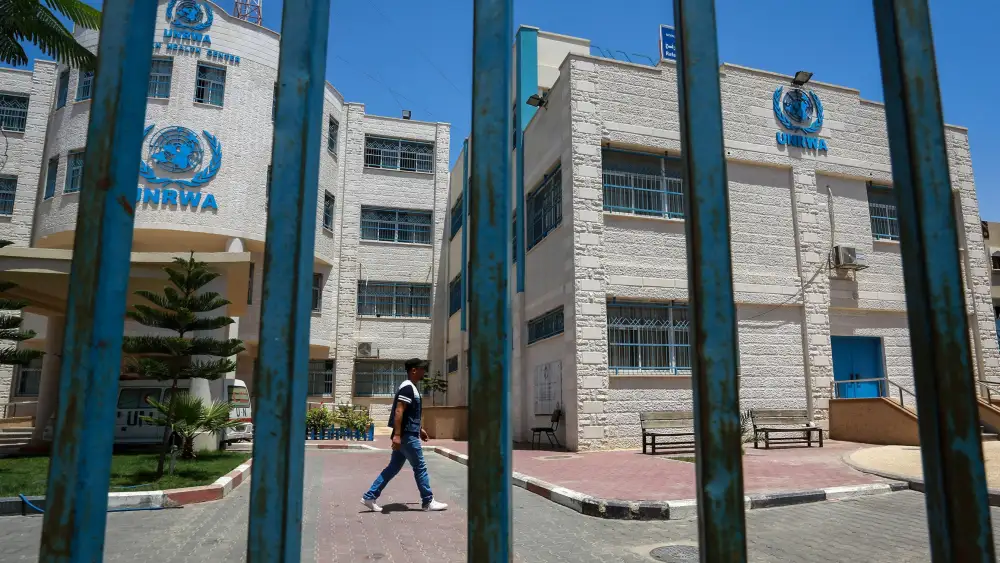
Just as questions surround what role, if any, the U.S.-backed Gaza Humanitarian Foundation would have in the Strip under U.S. President Donald Trump’s peace deal, the U.N. Relief and Works Agency for Palestine Refugees, which Israel has accused of ties to Palestinian terror, has an unclear future.
The Jewish state has documented UNRWA’s terror ties, including staff members at the U.N. agency who participated directly in the Oct. 7 attacks. Washington and the European Union cut funding to the agency, although some states have resumed supporting it.
Israeli legislation that went into effect in late January bars UNRWA from operating throughout internationally recognized Israeli territory and bans communication between UNRWA and Israeli officials.
The Trump administration’s 20-point peace plan for Gaza states that aid distribution in the Strip is to proceed “through the United Nations and its agencies, and the Red Crescent, in addition to other international institutions not associated in any manner with either party.”
The plan doesn’t mention UNRWA specifically. Other agencies of the global body, including the World Food Programme and Office for the Coordination of Humanitarian Affairs, have delivered aid, and Israeli officials have often said that those U.N. entities could fulfil the role UNRWA played in Gaza.
The United Nations has repeatedly stated that no other entity can replace UNRWA’s work in Gaza.
Tom Fletcher, U.N. under-secretary-general for humanitarian affairs and emergency relief coordinator, told reporters on Thursday that the Trump peace plan “has excellent language in it on the importance of the U.N. role at the heart of the humanitarian response.”
“We’re being guided by that,” Fletcher said. He noted what he said is the “indispensable role of UNRWA in delivering our operations across our work to support Palestinian civilians.”
When asked if UNRWA would operate in Gaza in the future, Fletcher said that “the whole U.N. humanitarian family is mobilized to do everything we can to get aid through.”
“We will make a judgment day to day on what is needed on the convoys, where we can best save lives, but we’ll be doing that as one U.N. family,” he said. (JNS sought comment from the Israeli mission to the United Nations.)
An UNRWA spokesman told JNS on Thursday that about 6,000 truckloads of food have been pre-positioned in Egyptian and Jordanian warehouses “for many months” and are ready to be delivered when borders open and aid can flow.



