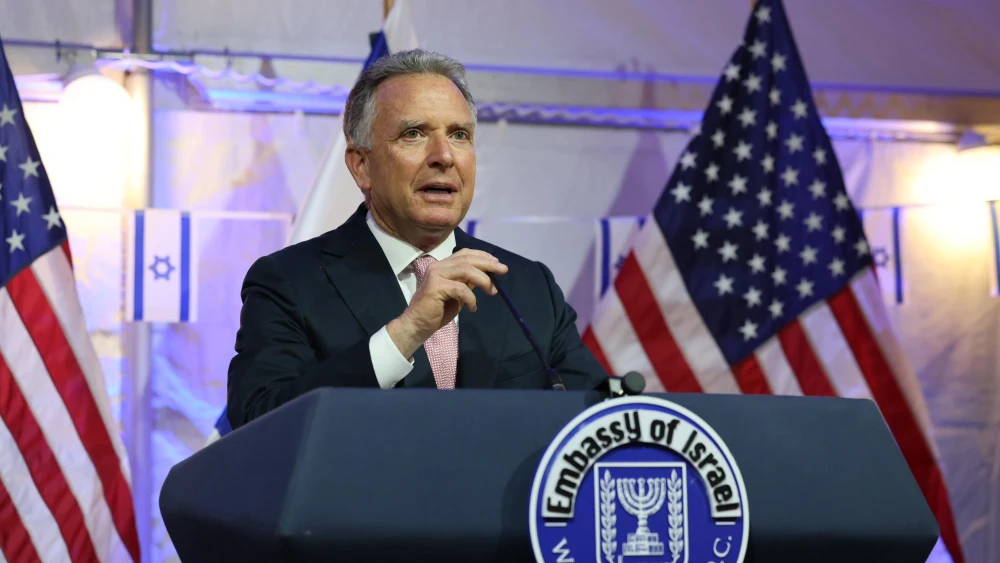
Steve Witkoff, U.S. special envoy to the Middle East, announced the start of Phase 2 of the Trump administration’s 20-point Gaza peace plan on Wednesday.
This phase is intended to shift “from ceasefire to demilitarization, technocratic governance and reconstruction” of Hamas and Gaza.
“Phase 2 establishes a transitional technocratic Palestinian administration in Gaza, the National Committee for the Administration of Gaza, and begins the full demilitarization and reconstruction of Gaza, primarily the disarmament of all unauthorized personnel,” Witkoff said.
“The United States expects Hamas to comply fully with its obligations, including the immediate return of the final deceased hostage,” he said. “Failure to do so will bring serious consequences.”
The text of the 20-point plan called for all living and deceased hostages to be released within 72 hours of its announcement in September and an amnesty for all “Hamas members who commit to peaceful co-existence and to decommission their weapons” once “all hostages are returned.”
The body of Ran Gvili, a 24-year-old staff sergeant in an Israel Police special patrol unit who was killed in action on Oct. 7, is still being held in Gaza, reportedly by Islamic Jihad.
The transition plan for Gaza includes the creation of a “technocratic, apolitical Palestinian committee” that will be “responsible for delivering the day-to-day running of public services and municipalities for the people in Gaza” and a Board of Peace, chaired by U.S. President Donald Trump, which will supervise the committee.
The Palestinian Authority announced its support for the technocratic committee on Wednesday.
“The Palestinian presidency reiterates the importance of linking the institutions of the Palestinian Authority in the West Bank and the Gaza Strip, and not creating any administrative, legal or security arrangements that would entrench duplication, division, separation or fragmentation, while upholding the principle of one system, one law and one legitimate weapon,” the authority stated.
Witkoff thanked Egypt, Qatar and Turkey for their role in mediating the ceasefire agreement. He did not mention Israel.
Earlier on Wednesday, the Israel Defense Forces accused Hamas of continuing to violate the ceasefire after firing on Israeli soldiers in the southern Gaza Strip.
On Sunday, Hamas said it would be willing to dissolve its government in favor of a technocratic Palestinian administration, but provided no timeline and has previously rejected calls to disarm.
The terrorist group has yet to respond to Witkoff’s announcement.