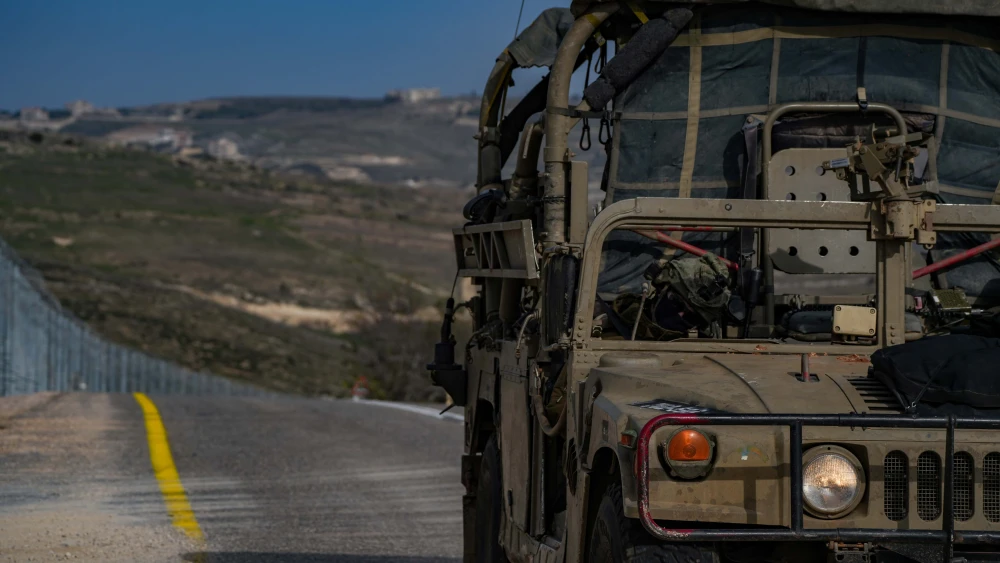

Our historical review reveals a fascinating, albeit sobering, picture: Modern warfare has rendered the contemporary soldier the most overloaded in human history. Israeli soldiers take the lead by a landslide. This has become even clearer since Oct. 7, 2023, with some Israel Defense Forces soldiers serving hundreds of days in actual combat.
In centuries past, combat warriors may have had to serve for decades, but the vast majority of their time was spent on marches, training and the agonizing boredom of waiting. Actual combat days were rare, often occurring only a handful of times per year. As technology advanced, the geographical distance between battles shrank, and combat became denser and far more intense.
The Vietnam War marked a dramatic turning point, largely due to the introduction of the helicopter. Suddenly, an American infantryman experienced roughly 240 combat days in a single year. To put that in perspective, the average Western soldier in World War II saw only about 40 days of actual combat throughout the entire duration of the six-year conflict.
In terms of cumulative combat mileage, the Israeli fighter sits at the apex of the global hierarchy, mainly due to the continuation of fighting as part of the army reserves. Very few combatants in the Western world possess operational experience that spans 20 years at such consistent intensity. Unlike the U.S. soldier who fought in Vietnam—typically a 19-year-old on a single tour—the Israeli is a “professor of combat,” accumulating battle days throughout his entire adult life.
Beyond the raw statistics, the uniqueness of the Israeli soldier lies in the concept of the citizen-soldier. In contrast to the warriors of ancient times, who were forged primarily through sheer physical training, the Israeli soldier reaches a stage where experience becomes his primary weapon. As they age, these soldiers often transition into roles tailored to leverage their seasoned judgment while accounting for the physical tolls of time.
This creates a fascinating contrast with historical precedents. In Ancient Greek warfare, the older, more experienced warriors were often placed in the front lines serving as the superior, hardened force to meet the enemy head-on, while the younger men were positioned behind them.
In the IDF, the paradigm is distinct: The conscripted, regular service units act as the initial response force. They are the tip of the spear during immediate escalations. However, it is the reservists who constitute the primary maneuver force. These civilian veterans bring a more calculated, cautious approach to the battlefield, utilizing decades of cumulative tactical wisdom to navigate the complexities of modern urban and open field warfare.
The advantages of these reservists extend far beyond their military tenure; they bring with them a wealth of expertise cultivated in the civilian sector. This cross-pollination of skills creates a force multiplier that a standing army of young conscripts simply cannot replicate.
An engineer in civilian life, now serving in the reserves, views a combat zone through a different lens, instinctively identifying which structures are structurally sound for cover and where hidden structural risks might lie. Similarly, those with high-level organizational experience bring a degree of management maturity that fosters cognitive flexibility. They excel at out-of-the-box problem-solving and logistical improvisation in complex scenarios where a rigid, regular military hierarchy might otherwise struggle to adapt.
Reservists can find themselves chairing a corporate board meeting in the morning and leading a high-stakes operational mission by nightfall. It is important to note, however, that this constant oscillation between two worlds—this seamless yet jarring transition—comes with a profound personal and psychological price.
Israeli soldiers run a marathon composed entirely of sprints. They may not fight for four consecutive years like a Soviet soldier in 1942, but they engage in high-intensity combat across vast stretches of their lives.
While a soldier in Ukraine may face harsher physical conditions, enduring freezing winters and static trench warfare under heavy artillery, the Israeli soldier grapples with a different exhaustion: the relentless “back-and-forth” of reserve duty, where intensity bursts from zero to 100 in an instant.
In most militaries, a combatant deploys to a distant land and eventually returns to a disconnected reality. For Israelis, the front line and the home front are inextricably linked. From a psychological perspective, this creates an acute risk of burnout. The frequent, extreme transitions between high-intensity warfare and civilian routine leave little room for processing the kind of psychological buffer that American soldiers might find on remote bases or during long sea voyages home.
This makes the IDF’s wear-and-tear unique in military history. This exhaustion is not a passing event; it is an integral part of civilian identity and, by extension, national resilience. Yet despite these immense pressures, motivation remarkably remains at an all-time high. The younger generation is even exceeding the benchmarks of current active personnel, writing an unprecedented chapter in the history and the art of war.