Newsletter
Newsletter Support JNS

Israel Police chief: ‘Officers cannot become part of a political game’

Responding to two recent confrontations, one violent, between police and Knesset members, Israel Police Commissioner Yaakov Shabtai says such incidents will not be tolerated.

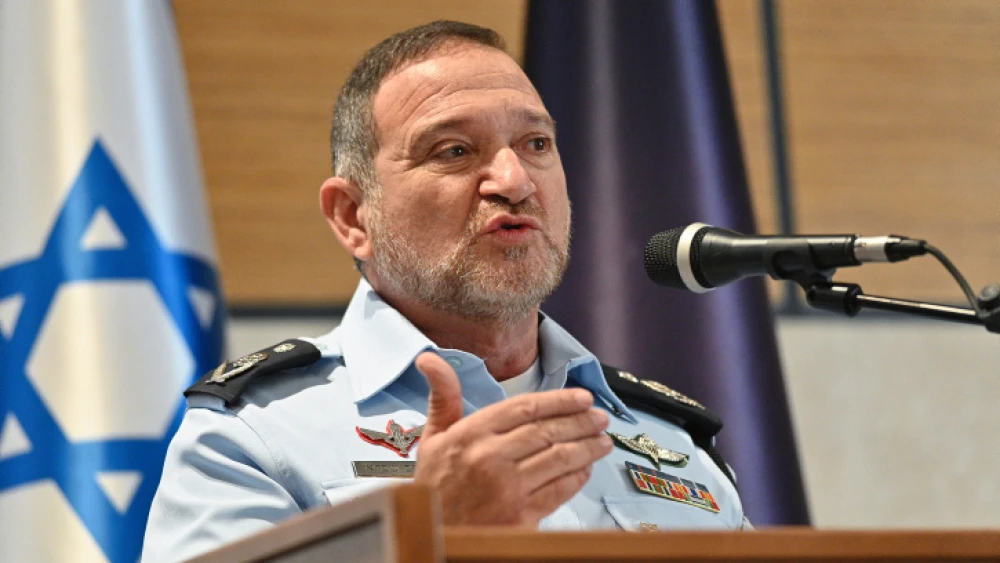
Israel Police Chief Yaakov Shabtai speaks during a ceremony after the largest-ever police operation against illegal gun dealers in the northern Israeli city of Nazareth, Nov. 9, 2021. Photo by Michael Giladi/Flash90.

Israel Police Commissioner Yaakov Shabtai has condemned the violent exchanges that took place between Arab Knesset members and police officers last week.

“I will not abide an agenda of blatantly and forcefully harming police officers who are doing their job on behalf of the state and for its citizens,” said Shabtai at a Knesset event on Tuesday honoring Israeli security forces. “Certainly not by someone who is supposed to serve as an example and model of law-abiding behavior for their constituents,” he said. He refrained from naming the lawmakers in question.

On May 13, Joint Arab List MK Ofer Cassif was filmed confronting and striking a police officer who blocked his way to a protest in the southern Hebron Hills region. In a separate incident, MK Ahmad Tibi was documented interfering with police work at a protest in Jerusalem.

“The police and officers cannot become part of a political game and a target for provocations,” said Shabtai on Tuesday.

Earlier this week, the police asked the attorney general for authorization to launch a criminal investigation into the two incidents.

This article first appeared in Israel Hayom.

“These changes reinforce that transparency and accountability can be powerful motivators,” Shira Goodman, of the Anti-Defamation League, told JNS.
“There have been continuing conversations with Harvard about compliance concerns,” Kenneth Marcus, of the Brandeis Center, stated.
The Israeli currency’s symbolic 2.99-rate against the dollar is said to reflect shifting regional dynamics and growing confidence in the Jewish state’s economic outlook.
Negotiators are reportedly seeking compromises on Iran’s nuclear program, freedom of navigation in the Strait of Hormuz and compensation for wartime damages.
The proposal includes three broad aims: clearing a backlog of stranded vessels, conducting a major demining effort, and setting up ongoing naval escorts.
No injuries were reported among Israeli forces.