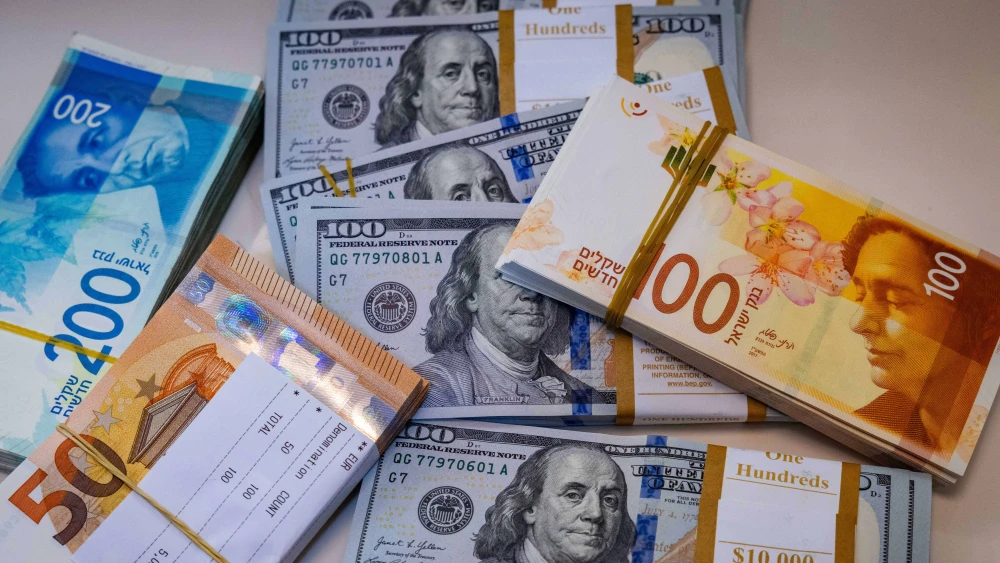
The Israeli shekel broke through the symbolic three-NIS-per-dollar barrier on Wednesday, reaching its strongest level against the U.S. currency in more than three decades.
The rate of 2.99 shekels to the dollar, a level last seen in October 1995, is thought to reflect investor optimism tied in part to recent diplomatic developments in the region, including a ceasefire with Iran and meetings between the Jewish state and Lebanon. The dollar has lost much of the value it gained since the war against Iran began on Feb. 28.
Leo Lederman, chief economic adviser at Bank Hapoalim and former head of the research division at the Bank of Israel, told the Globes business daily that “one event could bring the shekel to a level of about two shekels to the dollar—the fall of the regime in Iran.”
In the interview with Globes, Lederman cited the potential for Israel of increased capital flows, reduced risk premiums and expanded foreign investment.
For months, the shekel has been consolidating its position as one of the strongest-performing currencies against the U.S. dollar this year, gaining more than 20%. Until recently, dipping below the three-shekel threshold was widely viewed as unlikely, but in recent months, particularly after the ceasefire in Gaza, analysts projected the possibility.
A strong shekel reduces the prices of imported goods and airline flights while moderating inflation, which has returned to within the Bank of Israel’s annual target range of 1%–3%. Bank of Israel data also reflect increased foreign investment, with net inflows reaching $39 billion in 2025, compared with $25 billion in 2024.
Economists are watching whether the Bank of Israel will intervene in foreign exchange markets, either by purchasing foreign currency or adjusting interest rates, as it has done during previous periods of volatility.