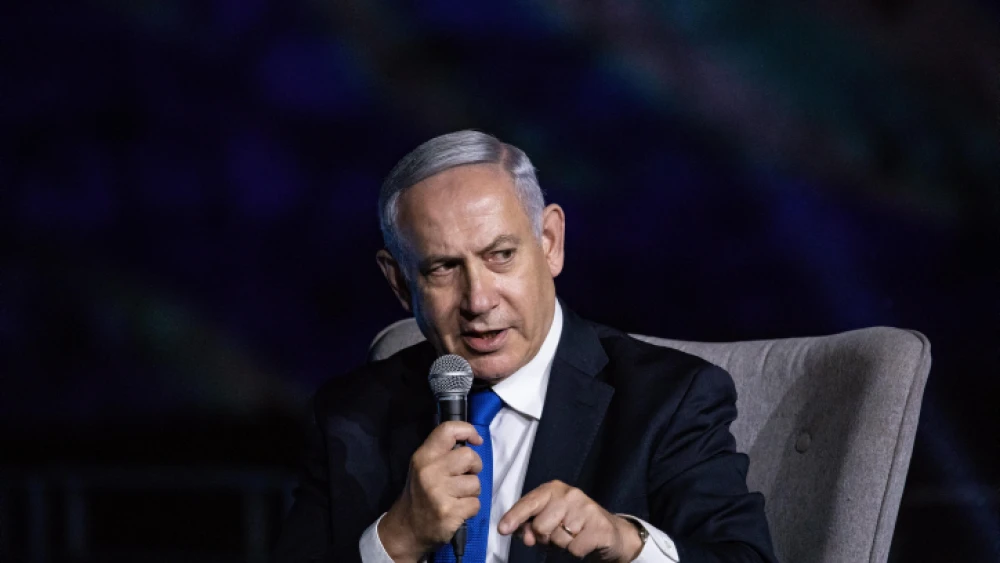
Israel is readying plans for a “forceful military strike against Hamas,” Israeli Prime Minister Benjamin Netanyahu said on Monday.
Speaking with reporters while visiting Ukraine, he was asked whether his government could properly deal with the threat posed by the Hamas terrorist organization ruling the Gaza Strip, just days after another escalation.
“I am preparing a massive campaign; it will be different than anything we have seen before,” he said. “I cannot elaborate on the preparations, but we are properly positioned for such a scenario.”
Netanyahu dismissed claims made by Blue and White Party leader Benny Gantz that Israeli deterrence had been weakened.
“That is just nonsense,” said the prime minister, “and, in fact, Hamas has issued religious rulings to make sure its people refrain from attacking Israel.”
Netanyahu went on to say that Gantz had never offered any alternatives to the current policy, even when he served as the Israel Defense Forces’ chief of staff. He declined to say whether Israel would try to topple the Hamas regime if the two sides fought another war.
Asked about Iran, Netanyahu reiterated his position that the Islamic republic had “no immunity.” He warned that if needed, “we will act against them wherever necessary; I am not ruling out any place.”
This article first appeared in Israel Hayom.