
The political road to power increasingly runs through pro-Palestinian consensus and voters who glorify Hamas, while seeking to silence those who stand against it.
Here is the all-too-simple story of a regional president who quickly became passionate about “Palestine,” built his politics around the issue and chose a predetermined victim because of his courageously asserted connection to Israel.
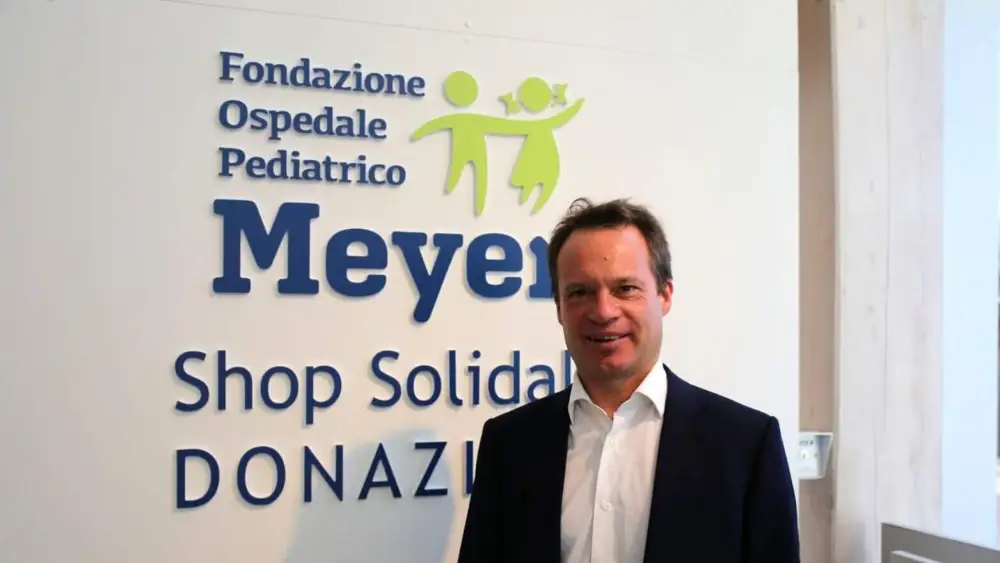
Eugenio Giani, president of Tuscany, the central Italian region whose capital is Florence, has decided not to renew the appointment of Marco Carrai, Israel’s honorary consul in Florence, as president of the Meyer Children’s Hospital Foundation.
Under Carrai’s presidency, the hospital has been extraordinarily generous in promoting initiatives for all children, including those from Gaza.
Giani has chosen a new president, in effect silently accepting the antisemitic criminalization of Israel over the issue of children.
This is essentially a continuation of the horrific campaign against Carrai and his entire family, which has included death threats, posters and ambushes. A public official should defend every citizen, not ignore the danger—now compounded—of threats and lies.
We do not know Giani’s reasons or what lies in his heart. But we do know the political record.
Giani, a politician with no particular background in international affairs, initially declared his solidarity with Israel after the Hamas massacre on Oct. 7, 2023.
Then things changed.
Coming from the reformist wing, in 2025 he aligned himself with the “broad field,” or campo largo, coalition. The new regional government includes the Democratic Party (PD), the Five Star Movement (M5S), the Green and Left Alliance (AVS) and the Reformist House.
The easiest political bond among them is certainly Palestinianism. On that, they truly agree.
In 2024, the regional council approved a motion recognizing Palestine. In 2025, the Palestinian flag appeared on the regional government building. Then came a resolution calling on the Italian government to recognize a Palestinian state, along with the use of words such as “criminal” and “genocidal” to describe Israeli Prime Minister Benjamin Netanyahu.
The mechanism is hardly unique to Italy. In the United States, the Palestinian cause has increasingly become an instrument of domestic political identity and mobilization, particularly on the progressive left.
Former New York Rep. Jamaal Bowman made opposition to Israel a defining feature of his politics after the Hamas massacre on Oct. 7, 2023. During his bitter 2024 Democratic primary against George Latimer, Bowman accused Israel of committing genocide in Gaza and aligned himself closely with the pro-Palestinian progressive movement. Israel, an issue far removed from the everyday responsibilities of a congressional district in New York, became one of the central dividing lines of the race.
Rep. Rashida Tlaib of Michigan offers an even more enduring example. The first Palestinian-American woman elected to Congress has made the Palestinian cause central to her political identity, repeatedly using the conflict with Israel to mobilize supporters at home. In November 2023, the House censured her over statements concerning Israel and the Oct. 7 massacre.
The lesson extends far beyond these individual politicians. Palestinianism is no longer treated simply as a position on a distant foreign conflict. It can serve as a political identity, a means of mobilizing voters and a dividing line between those who belong to the progressive camp and those who are cast outside it.
In Tuscany, we are now seeing the same mechanism at work—and Marco Carrai is paying the price.
It defies common sense that while Giani prepares to remove Carrai, he expressed “total solidarity” last June with Marwan Barghouti, the architect and terrorist leader of the very real mass slaughter of the Second Intifada, in which more than 1,000 people were killed—a man imprisoned for five terrorist murders and suspected of involvement in another 21.
Perhaps Giani is already looking toward the next elections. Perhaps Rome and a future center-left government do not seem beyond his reach, precisely because his politics can unite the left.
Whatever his calculations, the result is the same: Giani is handing Carrai over to the very crowd whose votes he seeks.
It is a disgrace for Florence and for Tuscany.