The United States on Saturday submitted to Lebanese President Michel Aoun a formal proposal to end a longstanding maritime border dispute between Lebanon and Israel.
A statement released by Aoun’s office confirmed receipt of the document, which will now be reviewed by top Lebanese officials, who have recently hinted that they will accept the terms of the deal, the Associated Press reported.
U.S. senior energy adviser Amos Hochstein has been mediating between the sides for more than a year in a bid to end the dispute centered on competing claims to some 330 square miles (860 square kilometers) of gas-rich waters in the Eastern Mediterranean.
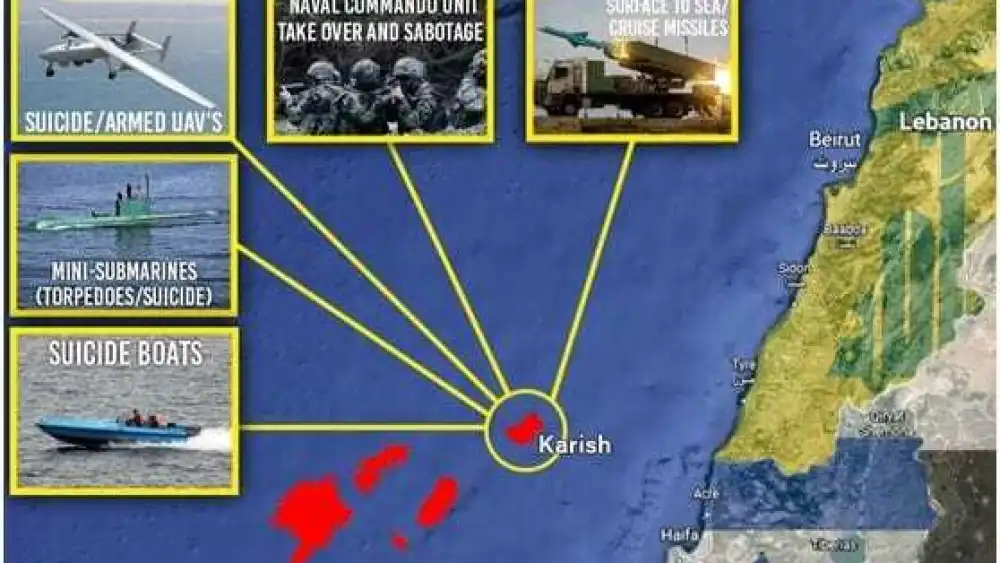
The latest proposal would reportedly allow Lebanon to develop the contested Qana gas field, while Israel’s claims over the Karish deposit would be recognized.
Israel recently set up a rig at Karish, where gas was reportedly set to begin flowing in September but was delayed in order to give the talks more time, and amid repeated threats of war by Hezbollah chief Hassan Nasrallah.
In July, the Iran-backed terror group launched three unmanned aerial vehicles towards Karish, all of which were downed by the Israel Defense Forces.
While Nasrallah has continued to beat the drums of war, he described Saturday’s development as “a very important step,” with Israeli media quoting him as saying that the prospective agreement would provide “new and promising horizons for the people of Lebanon by rescuing the country from the crisis it has fallen into.”
The comments echoed those of Lebanese Parliament Speaker Nabih Berri, who in an interview with the London-based Asharq Al-Awsat newspaper said the proposal “in principle meets the Lebanese demands.”
Hebrew-language media outlets reported that the draft proposal was also handed over to Israel, and that the cabinet would meet this week in Jerusalem to approve the agreement.