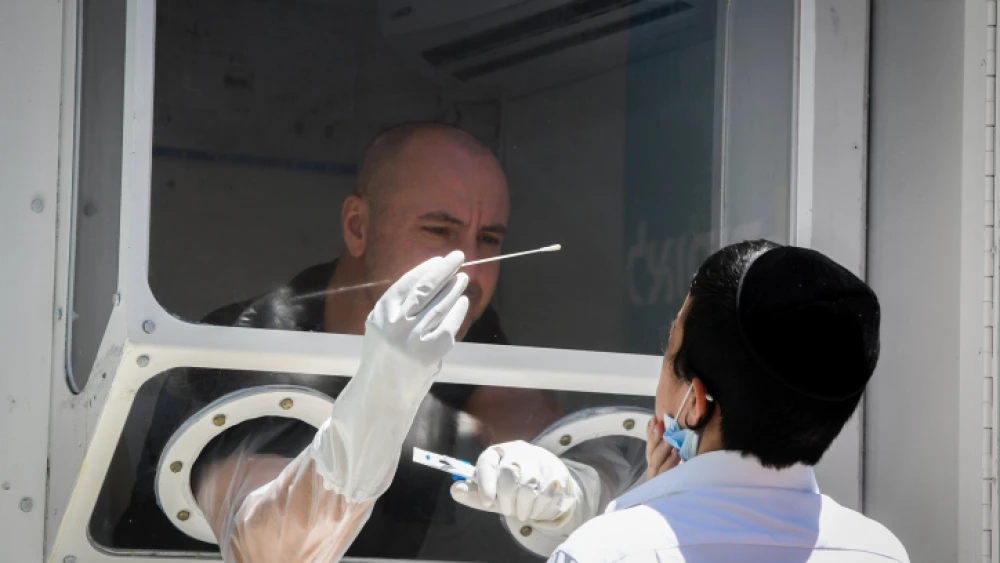
Israel’s ministerial committee that deals with the coronavirus crisis unanimously accepted on Monday a recommendation by the Ministry of Health to limit certain social gatherings to 50 people.
Concerts, museums and weddings are still allowed to host up to 250 people, reported Ynet.
Meanwhile, the number of coronavirus patients in serious condition increased by 18 percent overnight, according to the Health Ministry, which said there are 46 patients in serious condition with 24 of them on ventilators.
So far on Monday, 159 tested positive for the virus and one patient died, raising the total number of deaths to 319, according to the report. In the past three days, Jerusalem had the biggest jump in new cases at 100 and Ashdod second with 74, followed by Bnei Brak with 60.
Separately, the Israel Airports Authority has informed all airlines that the COVID-19 restrictions for passengers entering the country are being extended for an additional month.
The ban on foreigners arriving at Tel Aviv’s Ben-Gurion International Airport—and the requirement for Israelis returning from abroad to self-quarantine for 14 days—was scheduled to expire on July 1, but will now continue until Aug. 1 amid a rise in coronavirus infection in Israel and other countries.