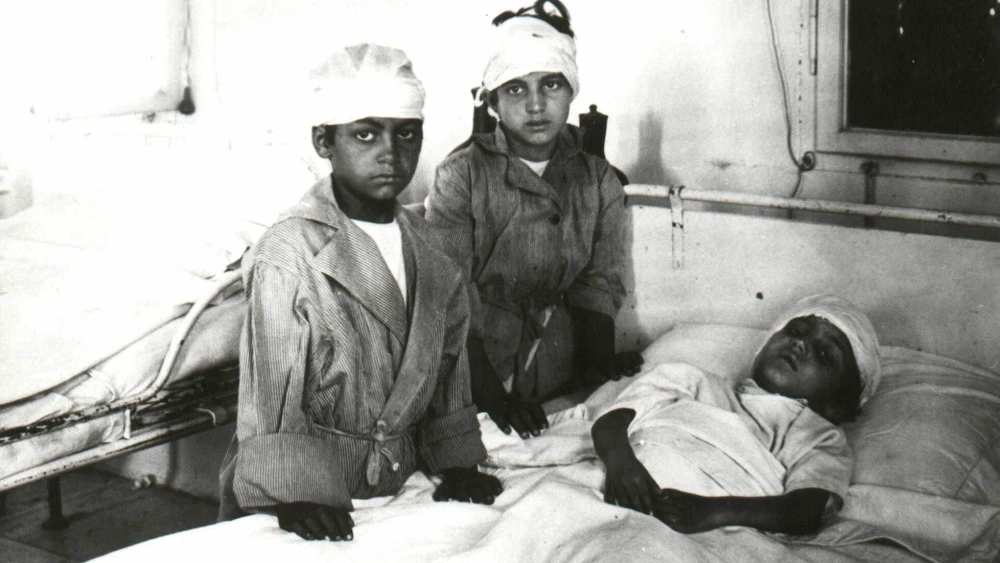
Aug. 24 marks the date on the secular calendar commemorating the 1929 Hebron Massacre, the worst of a series of butcheries perpetrated by Arabs, which took the lives of 133 Jews in pre-state Israel during the British Mandate period.
Israelis had commemorated the tragedy on the 18th of Av, the Hebrew date, which fell this year on the evening of July 31 and through Aug. 1.
In an X post on Monday marking the secular anniversary, Israel’s Foreign Ministry said, “From 23-29 August 1929, amid incitement by the Grand Mufti of Jerusalem, Amin al-Husseini, Arab mobs unleashed a wave of violence against Jewish communities across the Land of Israel.
“In Hebron, Safed, Jerusalem and elsewhere, Jewish men, women and children were murdered and mutilated. Homes, businesses and synagogues were attacked, burned, looted and desecrated.”
The Ministry ended on an upbeat note: “For centuries, the people of Israel were persecuted, massacred and expelled from their homeland. In 1948, the State of Israel gained independence and is thriving ever since, while defending its citizens against ongoing threats.”
In a separate post on Monday, the Ministry posted the interview of a Palestinian woman in 2011 recalling with pride her family’s part in the massacre. She expressed “hope that the next generation of Palestinians will continue killing Jews.”
1929. Before the modern State of Israel was even established.
— Israel Foreign Ministry (@IsraelMFA) August 24, 2026
In her own words, a Palestinian woman recalls in 2011 with pride her family’s involvement in the horrific Hebron Massacre and expresses hope that the next generation of Palestinians will continue killing Jews. https://t.co/BDOgxT3AvA
Hebron, home to the Tomb of the Patriarchs and Matriarchs, is one of Judaism’s four holy cities (along with Jerusalem, Safed and Tiberias) and had maintained a Jewish community for hundreds of years before the massacre.
The violence erupted amid widespread riots across Mandatory Palestine after false rumors spread that Jews were threatening Muslim holy sites in Jerusalem. Arab rioters in Hebron attacked the city’s Jewish residents, killing 67 men, women and children, wounding dozens more, looting homes and desecrating synagogues. The surviving Jewish residents were evacuated by the British authorities, ending a continuous Jewish presence in the Judean city that had stretched back centuries.
The anniversary comes months after the death of Yitzhak Ben-Hebron, believed to have been the last surviving witness to the massacre. Ben-Hebron, who was four years old when Arab rioters attacked the city, returned following the 1967 Six-Day War and devoted much of his life to rebuilding Hebron’s Jewish community.
Today, a renewed Jewish community lives alongside a much larger Palestinian population in Hebron, where security remains tight because of the city’s religious significance and its history of Arab violence.
Israeli leaders have repeatedly cited the 1929 massacre as evidence that anti-Jewish violence in the Land of Israel predates both the establishment of the State of Israel and the modern Israeli-Palestinian conflict.