Israelis are marking the Hebrew anniversary of the 1929 Hebron Massacre this weekend, commemorating one of the deadliest pogroms of the British Mandate period and the destruction of Hebron’s centuries-old Jewish community.
The massacre took place on the 18th of Av, 5689—corresponding to Aug. 24, 1929—and this year the Hebrew date falls from Friday night through Saturday.
In a post on X marking the anniversary, Israel’s Foreign Ministry recalled that “67 Jews were murdered by their Arab neighbors in the Hebron Massacre, temporarily bringing centuries of continuous Jewish life in Hebron to an end.
“The nefarious ideology that fueled the massacre did not stop in 1929,” the ministry wrote. “It began long before Israel’s establishment.”
On this day in 1929, 67 Jews were murdered by their Arab neighbors in the Hebron Massacre, temporarily bringing centuries of continuous Jewish life in Hebron to an end.
— Israel Foreign Ministry (@IsraelMFA) July 31, 2026
The nefarious ideology that fueled the massacre did not stop in 1929. It began long before Israel's… pic.twitter.com/Op2cMw74st
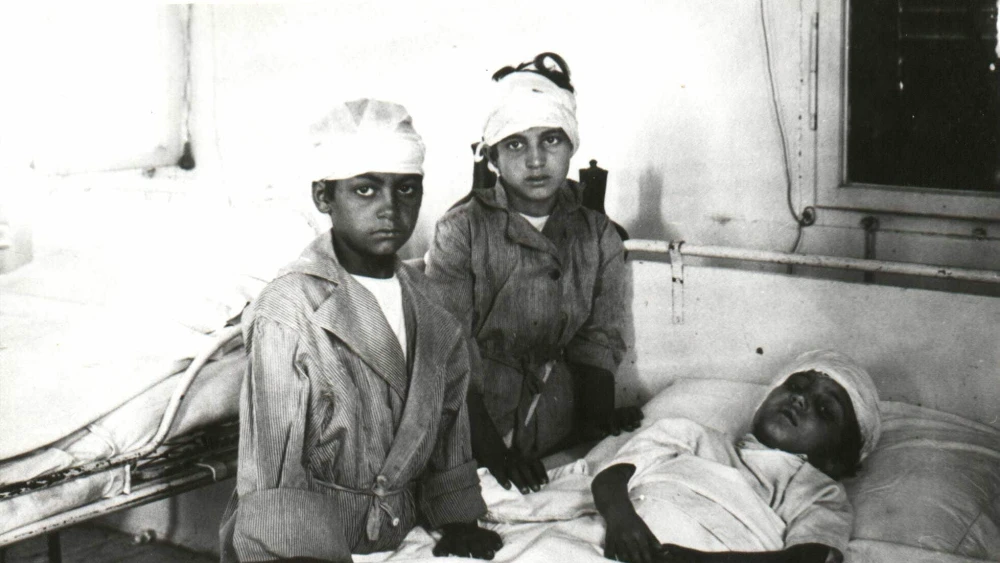
The violence erupted amid widespread riots across Mandatory Palestine after false rumors spread that Jews were threatening Muslim holy sites in Jerusalem. Arab rioters in Hebron attacked the city’s Jewish residents, killing 67 men, women and children, wounding dozens more, looting homes and desecrating synagogues. The surviving Jewish residents were evacuated by the British authorities, ending a continuous Jewish presence in the Judea city that had stretched back centuries.
Hebron, home to the Tomb of the Patriarchs and Matriarchs, is one of Judaism’s four holy cities (along with Jerusalem, Safed and Tiberias) and had maintained a Jewish community for hundreds of years before the massacre.
The anniversary comes two months after the death of Yitzhak Ben-Hebron, believed to have been the last surviving witness to the massacre. Ben-Hebron, who was four years old when Arab rioters attacked the city, returned following the 1967 Six-Day War and devoted much of his life to rebuilding Hebron’s Jewish community.
Today, a renewed Jewish community lives alongside a much larger Palestinian population in Hebron, where security remains tight because of the city’s religious significance and its history of Arab violence.
Israeli leaders have repeatedly cited the 1929 massacre as evidence that anti-Jewish violence in the Land of Israel predates both the establishment of the State of Israel and the modern Israeli-Palestinian conflict.