


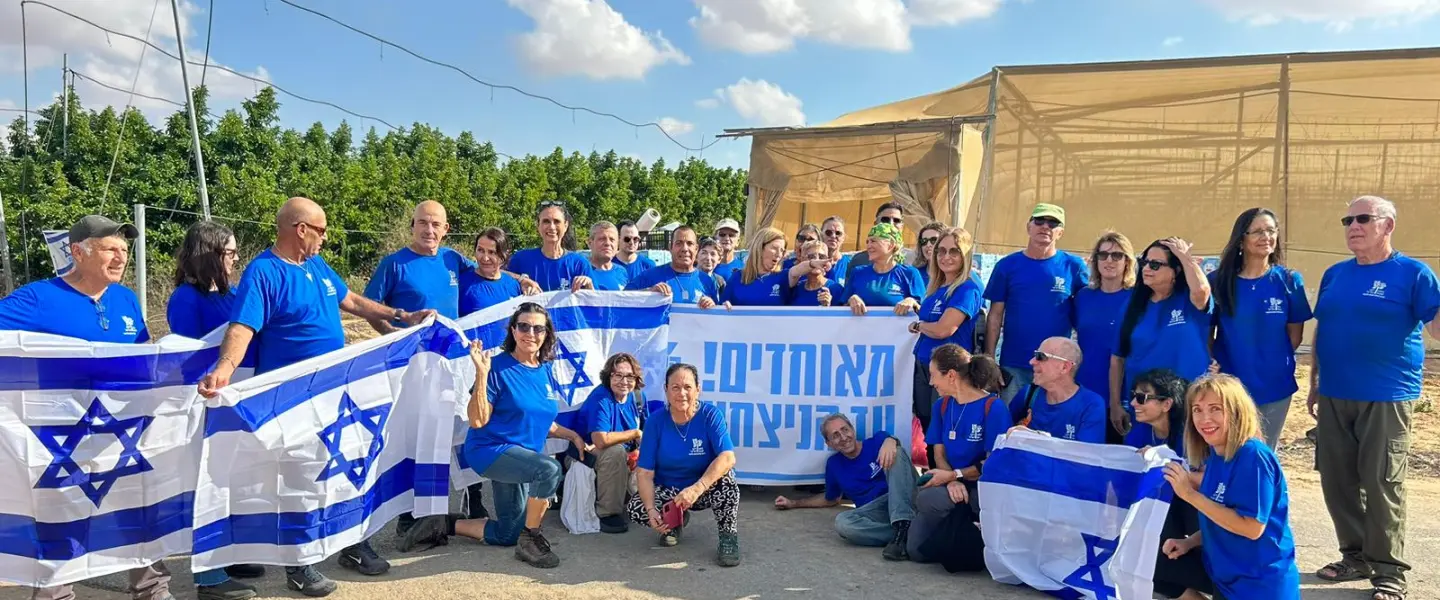
For 23 years, Leket Israel has rescued surplus food and delivered it to Israelis in need. During nearly three years of war, however, the country’s leading food rescue organization has had to overcome unprecedented challenges to keep nutritious food flowing to hundreds of thousands of people.
Foreign agricultural workers left the country, farms came under missile fire, restaurants and event halls closed, and deliveries into conflict zones became increasingly difficult. Yet Leket Israel continued to expand its operations, adapting to rapidly changing conditions.
In an interview with JNS at the end of June, Joseph Gitler, the organization’s founder and chairman, reflected on Leket’s evolution, the challenges of operating during wartime and the lessons learned as Israel prepares for future emergencies.
From hotel breakfasts to a national organization
When Gitler made aliyah from New York in 2000, he was struck by the amount of untouched food left over at Israeli hotel breakfasts while many Israelis struggled with food insecurity.
He set out to rescue that surplus food and distribute it to those in need.
“Hotels, catering halls, restaurants and army bases were so open” to donating surplus food, Gitler recalled. “They weren’t concerned about legal liability or tax deductions—they saw people suffering and thought, ‘We have this asset—what the heck!’”
In 2003, Gitler founded Table to Table, the precursor to Leket Israel, to rescue nutritious surplus food, reduce food waste and combat food insecurity.
The name “Leket” comes from the biblical commandments in Leviticus 19:9 and 23:22 instructing farmers to leave the corners of their fields and the gleanings of their harvest for the poor and the stranger.
Gitler initially transported rescued meals from catering halls and corporate cafeterias in his Subaru, storing them in refrigerators lining his driveway before local nonprofits distributed them to families in need.
Over the next two decades, the organization expanded steadily, opening warehouses, logistics centers and regional operations while recruiting thousands of volunteers from Israel and abroad.

Adapting to wartime
Gitler emphasized that Leket is not an emergency relief organization.
“We are a well-established nonprofit that works day in and day out so healthy, nutritious food doesn’t go to waste and gets into the hands and mouths of those who need it,” he said.
“But in Israel, emergency situations arise where all charitable agencies need to change and adapt.”
Following the Hamas massacre on Oct. 7, 2023, many of Leket’s traditional food sources suddenly disappeared.
“We had fewer sources of food—from farms, army bases and event halls,” Gitler said. “Most of our sources dried up because it was too dangerous, there was damage, there were no clients, and the army was preparing to fight.”
Rather than reducing services, Leket expanded them.
“We had to do what we had to do,” Gitler said.
That included purchasing vegetables and prepared meals to replace food that was no longer available through donations.
“We don’t like to buy food—but we did,” he said. “If there is no food, you hope your donor base comes through. It is much more expensive than getting it for free.”
Leket launched additional emergency programs as many partner organizations were unable to operate and vulnerable populations, including elderly Israelis, could no longer access meal programs.
At the same time, the organization shifted some of its focus to supporting Israeli farmers, particularly those in communities bordering Gaza and in the north.
“We are not the government, but we have relationships with thousands of farmers who couldn’t sell their crops,” Gitler said. “We raised money for grants to replace equipment and for loans. We are trying to do our part to show goodwill to the farmers.”
Leket also arranged and funded buses to transport volunteers to farms needing help with harvesting, planting and weeding.
“Since November 2023, we have been sending buses with groups of volunteers to any farmer who says they need help,” Gitler said.
Earlier in the war, Leket was sending about 50 buses each week. Today, that number has stabilized at 20 to 25 weekly as approximately 80% of foreign agricultural workers have returned, although Palestinian laborers have not.
Gitler said one encouraging development has been the growing number of older Israelis volunteering on farms.
“It has been really positive seeing how everyone has found a place to volunteer since Oct. 7,” he said.
Preparing for the next emergency
Even as operations return closer to normal, Leket is planning for future crises.
“We are now working to have 100,000 frozen and dried meals in a stockpile,” Gitler said.
The organization is also purchasing digital debit cards, recognizing that distributing food during wartime is not always practical.
Leket’s 2025 operations included 170 employees, 63 food rescue vehicles and some 120,000 volunteers. Through 346 nonprofit partner agencies, the organization delivers food to approximately 470,000 Israelis in need every week while rescuing nearly 34,000 tons of food annually.
More information on Leket is available on its website.
