The United Nations Security Council is set on Friday to discuss a post-UNIFIL landscape for Lebanon; both Washington and Jerusalem are clear: The time for international peacekeepers north of Israel’s border is closing.
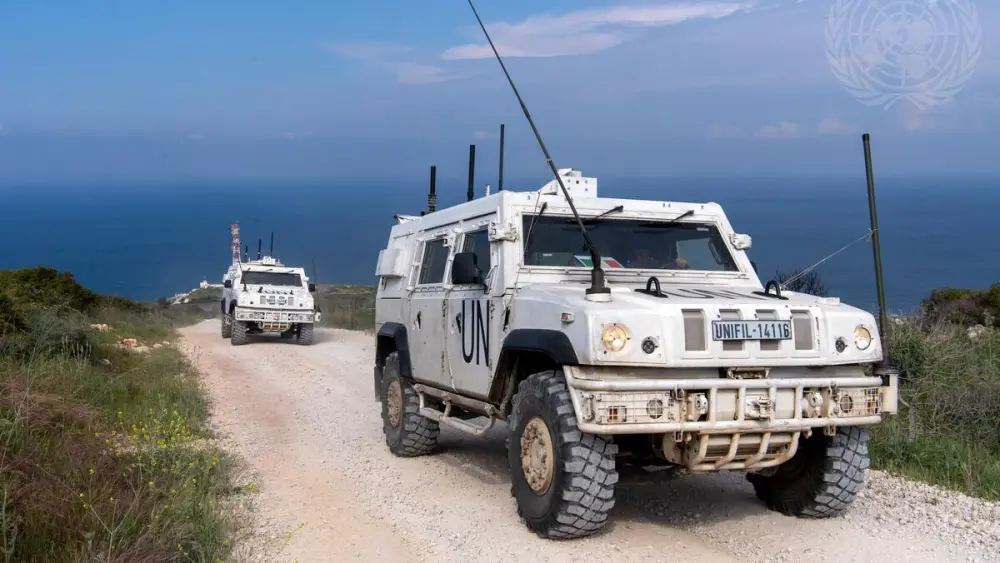
UNIFIL—the U.N. Interim Force in Lebanon—has been anything but interim. Formed in 1978, ostensibly to help keep the peace between Jerusalem and Beirut, the mission has come under withering criticism from Israel and the United States for allowing the Iran-backed Hezbollah terrorist group to operate under its nose with little to no pushback, giving it significant ground from which to launch attacks on the Galilee.
The United States, through its veto power on the Security Council, forced an end to UNIFIL’s mandate, with an expiration date at the end of this calendar year, followed by a drawdown period for UNIFIL’s roughly 8,000 military personnel and 600 civilian staff
U.N. Secretary-General António Guterres has proposed to the council, at its request, three options for post-UNIFIL consideration.
They include approximately 5,525 uniformed personnel along the unofficial, U.N.-deliminated international border called the Blue Line and up to the strategic Litani River; approximately 3,370 uniformed personnel, combining an unarmed military observer group with protective armed units for protection between the Blue Line and the Litani; and approximately 1,980 uniformed personnel with a limited geographic footprint and with little enforcement capability, focusing more on liaison and reporting functions.
But while the council will debate those choices behind closed doors on Friday, Israel is saying the council already got it right by voting to shutter UNIFIL and needs to keep heading in that direction.
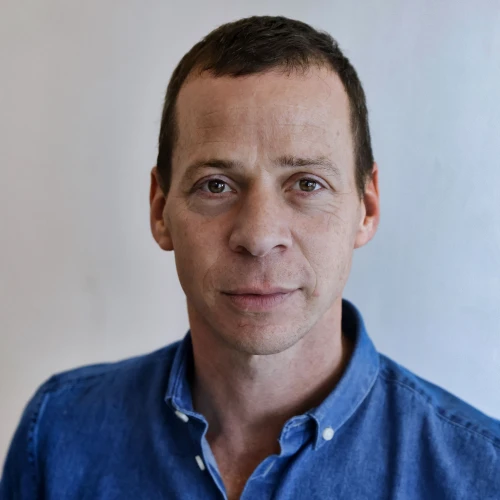
“We support the implementation of the Security Council resolution to end UNIFIL’s mandate in Southern Lebanon, but we oppose the deployment of new international forces in the area. We must not repeat the grave mistake of UNIFIL,” Danny Danon, Israel’s U.N. ambassador, told JNS.
He and the Americans instead want to work through the trilateral framework established earlier this year between Washington, Jerusalem and Beirut, which is working on political and security tracks to remove the threat of Hezbollah, reestablish Lebanese sovereignty in the southern part of the country and settle international border disputes, with the hopes of establishing peace between Israel and Lebanon.
A U.S. official told JNS this week that the framework, if successfully implemented, will eliminate the need for more international peacekeeping missions in the area, including the use of so-called pilot zones, in which the Lebanese Armed Forces are to establish control over Hezbollah-held areas, leading to a withdrawal by the Israel Defense Forces from its protective positions in Lebanese territory.
It is unclear if the pilot program is working as intended, with mixed reporting on the issue.
Washington is leaving the door open for some type of post-UNIFIL international presence in Southern Lebanon, but the U.S. official said it needs to be in tandem with the goals laid out explicitly in the framework, “rather than another so-called interim force that’s not directly invested in a resolution to the conflict.”
The parties to the trilateral framework, meanwhile, are seeking their own choice to serve as verifier that the pilot zone commitments made by Beirut and Jerusalem are being filled, with the list of countries to potentially serve in that role trimmed down to just a handful.
Italy as verifier?
A senior U.N. official with deep knowledge of peacekeeping operations told JNS that Washington may try to split the difference and “decide to come to the council and ask for council mandate for a third-party verification force. So it will be a non-U.N. force, but with the U.N. imprimatur.”
The U.N. official noted that Italy, which contributes troops to UNIFIL, including the current ground force commander, is reportedly on the verification force shortlist, and there have been high-level diplomatic and military visits to Italy in recent weeks by Lebanese officials.
The U.S. official, meanwhile, warned against the development of “UNIFIL-lite,” whereby “we rotate out a mission that’s been ineffective for decades and think rotating in a smaller, more restricted one with no time-specific mandate will somehow be of benefit.”
Danon told JNS that “The alternatives being proposed will not contribute to regional stability. On the contrary, they could provide Hezbollah with a platform to rebuild its strength, just as it did during the UNIFIL era.”
The U.N. official told JNS that “ideally a decision by the Security Council should come sometime in September to allow for the planning of whether there is a follow-on U.N. force after UNIFIL or not.”
The official told JNS that Hezbollah and Palestinian armed factions in Lebanon, “are also not sitting with their hands crossed. They’re positioning themselves, and while they acknowledge that they have lost in the frontal confrontation with Israel, they have not abandoned their plans and ambitions, including to play a significant role in Lebanese society, politics and even security.”
Notably, the official said that “Frankly, I think the paradigm of south and north of the Litani River is no longer valid. It’s about the situation in Lebanon as a whole.”
It will all impact how the plans for next year’s drawdown are drawn up, the official said, including what to do with UNIFIL positions and observation posts along the Blue Line, the main headquarters in Naquora and the pair of sector headquarters.
If there’s a follow-on, whether it’s administered by the United Nations or not, the official said some of those facilities could be handed over to that force.
“But if there isn’t any follow-on force, the question is, to whom do we hand over these facilities?” the official said, adding that the drawdown will be gradual, starting from the east and moving toward the Mediterranean Sea.
Practically all of the facilities, with an exception of one or two, currently sit behind the so-called Yellow Line, which is the line deeper into Lebanese territory to which Israeli troops moved following Hezbollah attacks.
The official also cited the financial need for a decision to be made soon, given that shutting down facilities and moving equipment, only to have to turn the lights back on later, has a cost.
There’s also the issue of the special political mission based in Beirut known as the U.N. Special Coordinator for Lebanon, or UNSCOL. Its previous head, Jeanine Hennis-Plasschaert, was promoted this summer to U.N. under-secretary-general for safety and security, and the official said that recruitment for her replacement is continuing, indicating that office might take on some of UNIFIL’s non-military tasks.