



Fourteen Sephardi and Mizrahi organizations delivered a letter to the editors of the New York magazine on Aug. 25. The letter was coordinated by JIMENA, a California-based organization that campaigns to raise awareness of the rights of Jews driven from the Middle East and North Africa.
It was drafted in protest at the erasure of Jewish establishments in the magazine’s 31-page issue, splashed with the front-page headline, “Habibi City.” It deplored the fact that the publication had deliberately left out Middle Eastern Jewish restaurants from New York’s SWANA cultural scene.
SWANA (not to be confused with the Solid Waste Association of North America) is an abbreviation for South West Asia and North Africa, a newly minted term to avoid using the “colonial and Eurocentric” expression “Middle East.”
The magazine erased Jewish restaurants, but the culture of a rich tapestry of non-Arab Middle Eastern peoples—Christians, Armenians, Kurds, Yazidis, Druze, Amazigh, Baha’is, Zoroastrians—was also nowhere to be found. The reader soon concludes that SWANA equals Muslim; indeed, Muslims with certain approved beliefs.
What’s more, “geography” becomes “ideology.” To be accepted in the community of the good, anti-Zionism belongs in SWANA’s catechism, rejecting Zionism alongside xenophobia and Islamophobia. Jews may only be included if they disavow Zionism.
A world away from the comfortable, stable lives of most American Jews for whom Israel is a luxury they don’t need, most Mizrahim are self-declared Zionists from bitter experience. Almost a million Mizrahim had no choice but to flee, most as destitute refugees, when their communities were destroyed.
Only Israel would accept them without condition. According to “Habibi City,” however, the only good Jew is an “Arab Jew”—a Jew with no Israel, or an “Arab of the Jewish faith.” This categorization is rejected by all but a tiny minority of Mizrahi Jews. The letter says: “Include us as we are.”
The feature story makes no mention of the 1,200 people slaughtered by Hamas on Oct. 7, 2023; perversely, it even traces the growth in SWANA cafes, restaurants and dance parties to the war following the terrorist attacks in southern Israel. “Out of resistance,” it triumphantly proclaims, “a cultural ecosystem started to bloom.”
Why did Harif, a British Association of MENA Jews which I co-founded 20 years ago, sign the JIMENA letter? Erasure is plaguing Britain, too. A September 2025 article in Time Out London by Suzie Bakos, a supper-club influencer, gushed about “Syrian breakfasts, Kurdish brunches, Palestinian dinner parties and late-night Lebanese bites,” but did not mention a single Israeli restaurant.
Yet Israeli chefs such as Yotam Ottolenghi and Eyal Shani have started something of a culinary revolution on this side of the pond. London boasts at least seven excellent Israeli restaurants. After protests, Time Out London was forced to republish its listing of 20 best Middle Eastern restaurants to include three Israeli (or Mediterranean) ones.
The entire Jewish population of the British Isles would fit into the borough of Manhattan, while New York City houses the world’s largest Jewish population outside Israel. Some 120,000 Jews from Muslim countries live there. The acknowledgement of cultural erasure is critical.
Clearly, the election of New York City Mayor Zohran Mamdani has put wind in the sails of the anti-Zionist movement: “Habibi City” simply reflects the zeitgeist. But if Jews don’t fight back, we become even less visible.
For decades, we’ve had the hummus wars.
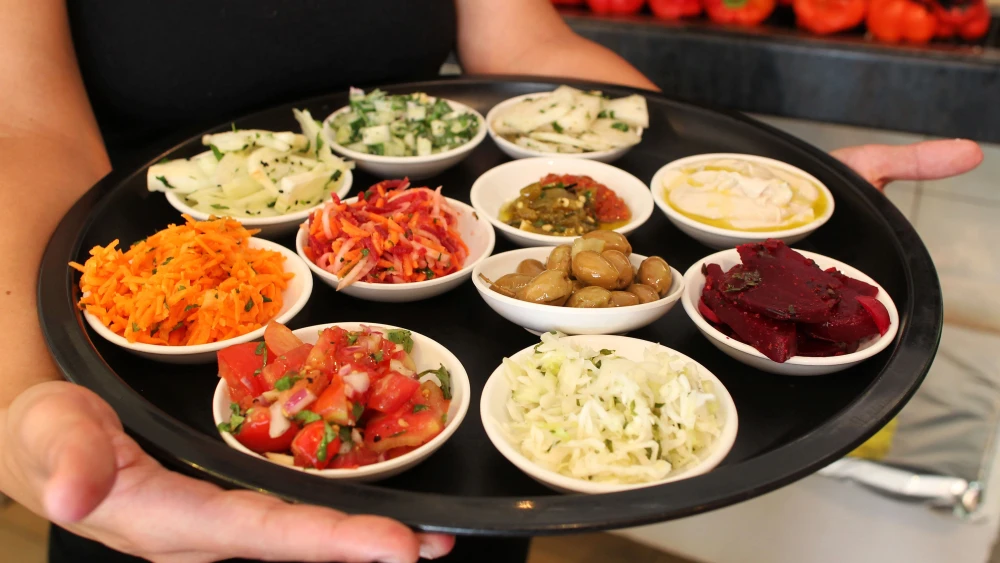
Palestinians have accused Israelis of appropriating so-called “Arab foods,” disregarding the inconvenient fact that Mizrahi Jews, who are now a majority of Israel’s Jewish population, predated the Arabs in the MENA region by a millennium or more and have been eating these dishes for a lot longer. One recent trend on some urban menus: Classic Israeli salad—that popular mix of tomatoes, cucumbers, lemon juice and salt—is now being called Palestinian salad.
The accusation aligns with the canard that Israel is a European settler colonial state, an inversion of history like so many others. Jews are one of the indigenous peoples of the Middle East and, like other ancient peoples, were colonized and Arabized. The campaign of erasure is just one step further down the line.
Erasure is the last refuge of the desperate. Not being able to destroy Israel on the battlefield, Palestine’s supporters think that Israel, which they disparage as “the current landmass,” will self-destruct if they pretend it doesn’t exist. And so with Israeli restaurants.
At least the letter has already had one positive result.
More than likely stung by the furious backlash from Jewish New Yorkers, David Haskell, editor-in-chief of New York magazine, agreed almost immediately to meet the 14 signatories of the letter and for future coverage to “reflect the multiple perspectives of the region.” Let’s make sure he keeps his word.


