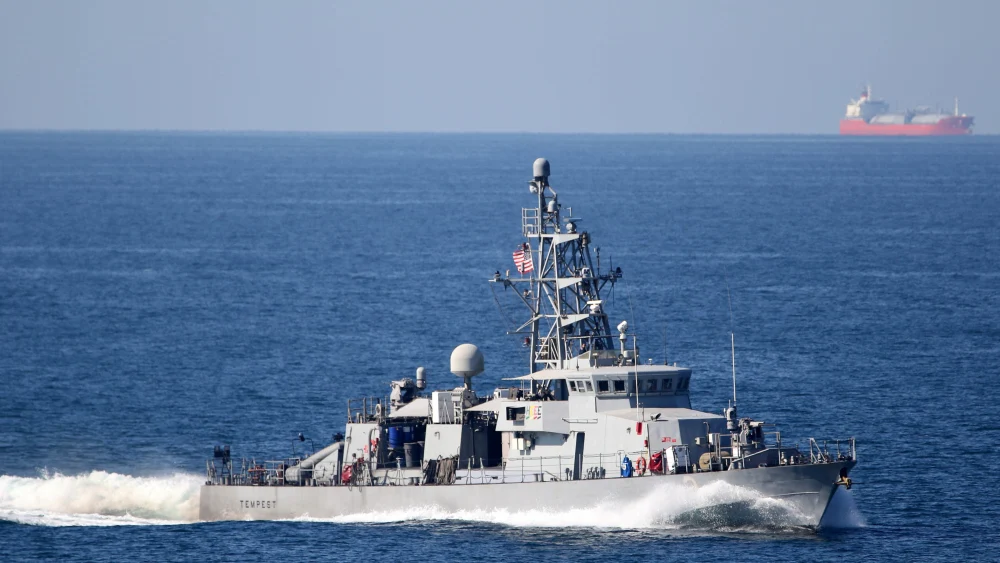
The U.S. military said on Monday morning that two U.S.-flagged vessels successfully transited the Strait of Hormuz, the first such passage since Iran effectively halted commercial traffic in the strategic waterway on April 18 amid escalating tensions.
The transit came a day after U.S. President Donald Trump announced “Project Freedom,” a U.S.-led initiative to ensure the free flow of commercial shipping through the vital global trade route.
“U.S. Navy guided-missile destroyers are currently operating in the Arabian Gulf after transiting the Strait of Hormuz in support of Project Freedom,” U.S. Central Command wrote on Monday morning. “American forces are actively assisting efforts to restore transit for commercial shipping. As a first step, two U.S.-flagged merchant vessels have successfully transited through the Strait of Hormuz and are safely headed on their journey.”
Details of the operation were not immediately clear, including whether the vessels had a U.S. naval convoy escort or which type of American military ships or aircraft were in the area to support the operation. It was also not disclosed what type of cargo the transiting vessels were carrying, nor their origin or destination.
The move underscores Washington’s effort to reopen one of the world’s most critical shipping lanes, through which roughly 20% of global energy supplies typically pass.
Iran warned it would respond forcefully to foreign military activity in the strait. The commander of the Khatam al-Anbiya Central Headquarters said “any foreign military force, especially the American military,” would be targeted if it attempts to approach or enter the Strait of Hormuz, according to Iran’s Fars news agency.
Analysts say the U.S. operation could force Tehran to choose between confronting American naval forces or allowing commercial traffic to resume. The standoff has driven up energy prices and disrupted global shipping, while the United States has simultaneously enforced a blockade on Iranian exports.
Separately, the U.S. government is seeking to build a multinational framework, known as the Maritime Freedom Construct, to coordinate safe passage through the strait by sharing intelligence, providing routing guidance and aligning diplomatic and military efforts.
Washington has requested allies to join the initiative after earlier proposals for a broader coalition faced resistance from some European partners.