


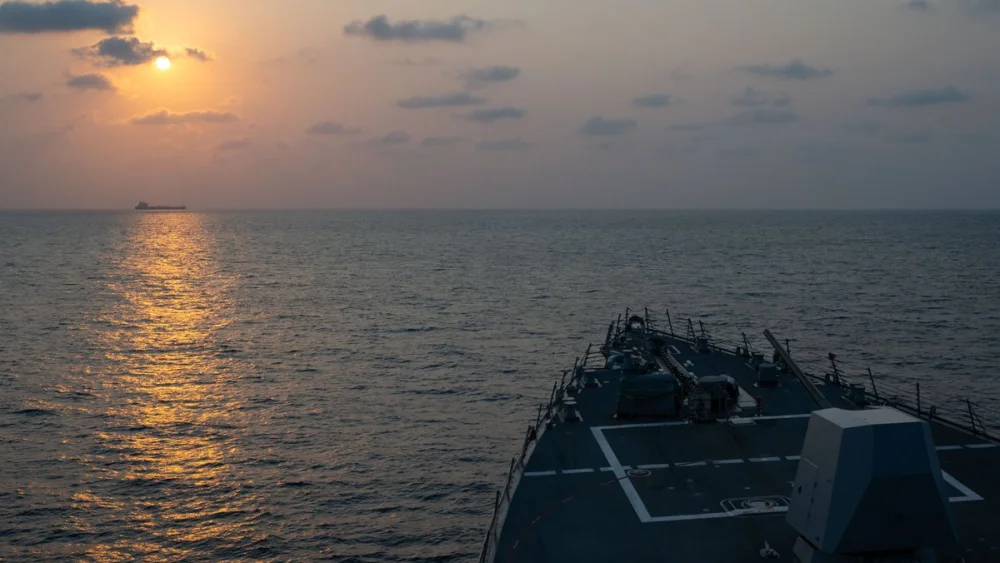
U.S. forces engaged with Iranian attackers in the Strait of Hormuz on Thursday, after three U.S. guided missile destroyers came under fire in the strait.
“Three world-class American destroyers just transited, very successfully, out of the Strait of Hormuz, under fire,” stated U.S. President Donald Trump. “There was no damage done to the three destroyers, but great damage done to the Iranian attackers. They were completely destroyed along with numerous small boats, which are being used to take the place of their fully decapitated navy.”
“Missiles were shot at our destroyers and were easily knocked down,” he said. “Likewise, drones came and were incinerated while in the air. They dropped ever so beautifully down to the ocean, very much like a butterfly dropping to its grave.”
U.S. Central Command called the Iranian attacks “unprovoked.”
“Iranian forces launched multiple missiles, drones and small boats as USS Truxtun, USS Rafael Peralta and USS Mason transited the international sea passage,” CENTCOM said. “No U.S. assets were struck.”
U.S. Central Command said that its forces “eliminated inbound threats and targeted Iranian military facilities responsible for attacking U.S. forces, including missile and drone launch sites, command and control locations and intelligence, surveillance and reconnaissance nodes.”
It added that it “does not seek escalation but remains positioned and ready to protect American forces.”
The attacks came as U.S. forces continue a military blockade on the strait during a ceasefire period, pending a possible deal with Iran.
“They are led by lunatics,” Trump said, of Iranian regime leaders. “If they had the chance to use a nuclear weapon, they would do it without question. But they’ll never have that opportunity and just like we knocked them out again today, we’ll knock them out a lot harder and a lot more violently in the future if they don’t get their deal signed, fast.”
Trump added that the three destroyers will rejoin the blockade, which he called a “wall of steel.”


