


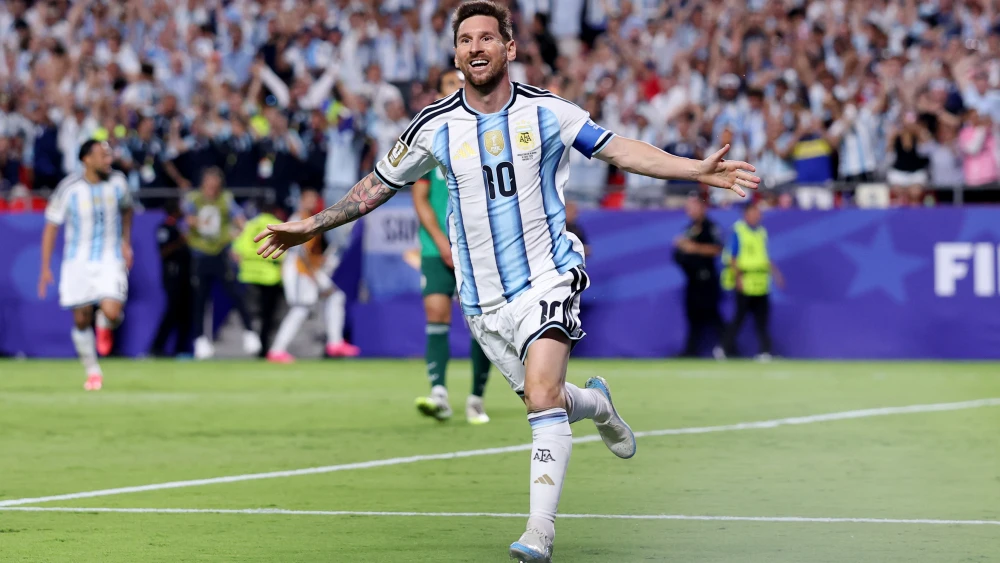
The uproar over Algeria’s 3-0 defeat to Argentina in the opening match of the World Cup continues to reverberate across the country, and has now forced the National Independent Authority for the Regulation of Audiovisual Media to intervene.
Algerian journalist Mustapha al-Maazouzi, one of the most popular media figures in the country, appeared unable to digest Lionel Messi’s hat trick against his national team and declared: “Messi is protected by the Jewish lobby. This lobby controls the world. They run it however they want, as if they were a mafia. Gianni Infantino [the president of FIFA] does not want things to go well for us.”
Al-Maazouzi continued, live on air: “We are a country with dignity. We are a country called Algeria. We have political positions regarding Western Sahara and the Palestinian issue, and that is why they do not want things to go well for us. If we had the ability to win the World Cup, they would find a way to prevent us from doing so.”
Following these and other remarks by al-Maazouzi, the National Independent Authority for the Regulation of Audiovisual Media issued an official statement: “We followed several sports programs and analyses broadcast on television that dealt with the match between Algeria and Argentina as part of the 2026 World Cup. During the broadcasts, remarks were heard that exceeded the bounds of professional sports analysis and descended into accusations, defamation, and inflammatory and offensive statements. We emphasize that issues of this kind must be discussed within a professional, balanced, and respectful analytical framework, while preserving the dignity of individuals and institutions and avoiding baseless accusations or incendiary discourse.”
In its statement, the authority called on all broadcasters in the country to uphold the rules of professionalism and responsibility and to respect the governing legal and ethical provisions. It clarified that it would continue monitoring broadcast content, and that if similar incidents recur, it could take action against those involved.
Originally published by Israel Hayom.


