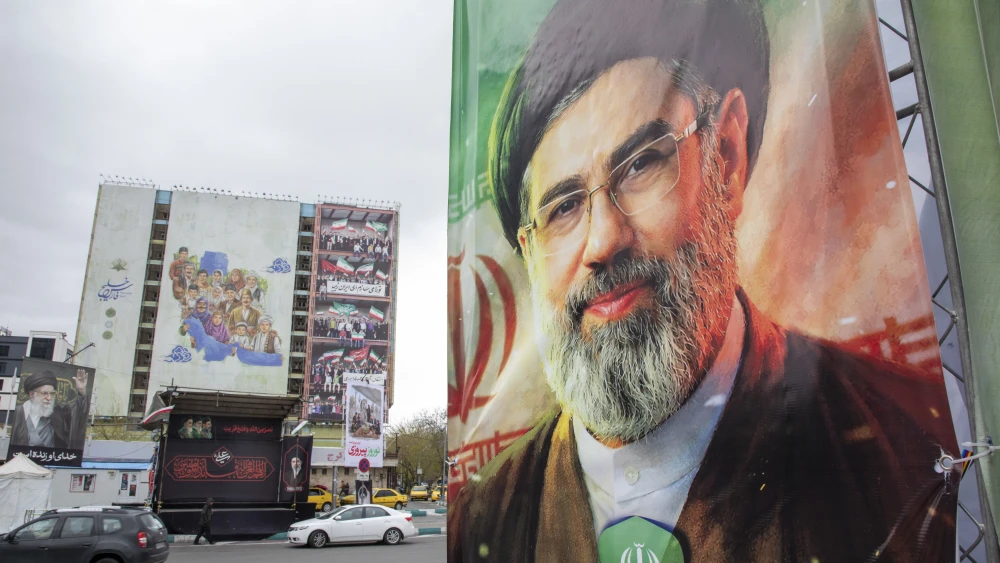
Ayatollah Mojtaba Khamenei posted a series of tweets on X on Thursday claiming that a new day is dawning when America’s bases in the region can’t defend themselves, let alone their local allies.
“A new chapter for the Persian Gulf and the Strait of Hormuz is unfolding,” the leader of the Islamic Republic tweeted.
“Today, it has been proven to not only the global public opinion but even to the rulers of countries that the U.S.’s presence and establishment in the Persian Gulf is the main source of instability in the region,” he added. “The U.S.’s flimsy bases lack the resilience and capability even to ensure their own security, let alone provide any hope for U.S.'s dependents and the U.S.-worshippers in the region.”
Mojtaba Khamenei was injured in the U.S.-Israeli attack that killed his father, Iranian Supreme Leader Ali Khamenei, on Feb. 28. While it is generally believed that Mojtaba is still alive, he has not appeared in public since the opening salvo of the war.
“One leg was operated on three times, and he is awaiting a prosthetic. He had surgery on one hand and is slowly regaining function. His face and lips have been burned severely, making it difficult for him to speak, [Iranian] officials said, adding that, eventually, he will need plastic surgery,” The New York Times reported on April 23, citing four unnamed senior officials.
“Access to him is extremely difficult and limited now. He is surrounded mostly by a team of doctors and medical staff who are treating the injuries he sustained in the airstrikes,” the Times reported.