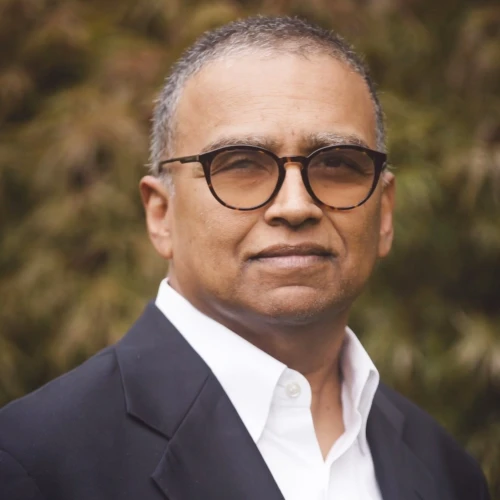
Yamina Party leader Naftali Bennett has found himself in a position that allows him to manipulate Israel’s entire political system, thus justifying the crown of kingmaker the media has bestowed on him during the election campaign.
Following two lengthy meetings—with Israeli Prime Minister Benjamin Netanyahu on Friday and Yesh Atid head Yair Lapid on Saturday—when Bennett meets with President Reuven Rivlin on Monday, he will, to a great extent, decide the fate of the future coalition.
One must remember that, politically speaking, Bennett is identified with a certain part of the Zionist camp, but all of a sudden, he also has many fans in the post-Zionist camp.
It appears that he plans to recommend to Rivlin to task him with forming the coalition; he certainly won’t recommend Lapid. This charts the unknown and is likely to condemn Israeli politics to weeks, perhaps even months, of instability.
Moreover, it will produce, at best, a loose coalition that removes Netanyahu from the Prime Minister’s Office with the backing of Joint Arab List and Ra’am—a government whose days are numbered.
Should Bennett ask Rivlin to task Netanyahu with forming the coalition, it would immediately form a cohesive 59 MK bloc that can support a solid coalition.
There are important issues to deal with: bolstering Israeli society’s resilience vis-à-vis the coronavirus pandemic and the Iranian threat. The country needs a government dedicated to public health in something of a preventive medicine approach. “Healing“ is not a work plan for a society endangered by a global pandemic and enemies threatening its very existence.
We need real decisions. We need performance with respect to Israel’s relations with Europe, which longs to collaborate with it against COVID-19. Israel itself longs for stable governability.
In a right-wing government comprising “natural” partners, Bennett and his No. 2, Ayelet Shaked, could upgrade their status.
There are those who speak of a power-sharing deal. Bennett, for all his faults, is smart and a strategist. A stable right-wing government can position him as defense or finance minister—solid points from which to make the leap to the PMO.
On the other hand, a power-sharing deal is a recipe for political instability. A government that is sure to fall apart within a year or 18 months does little to further one“s political ambitions and even less to promote national interests.
If Netanyahu garners the support of 59 Knesset members, he would still have to find a way to get that number up to 61—the minimal requirement to form a government.
Were Bennett to assert his commitment to the right-wing bloc, it would buttress the coalition—both safeguarding historical national interest and preventing Israel from being dragged into a fifth election campaign in two years—and make it easier to find those two missing mandates.
This article first appeared in Israel Hayom.