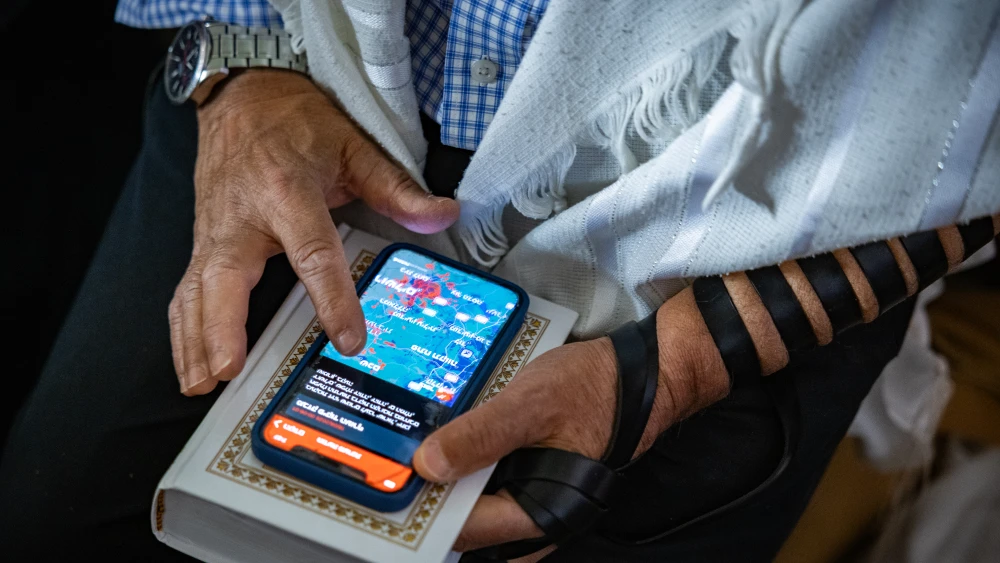

The 90-second countdown had begun. Red-alert warnings echoed across the cellphones in the lower level of the synagogue. Everyone knew what it meant—an Iranian ballistic missile was en route. We shuffled toward the shelter in the back as the sirens wailed beyond the yellow-tinted windows. The bris was going to be delayed.
Not all of the family and friends were able to come. The Israel Defense Forces Home Front Command guidelines limit gatherings like these to 50 people so that everyone can enter the protected space in time. With flights being canceled, family members were unable to arrive. The plan was for the grandfather to bless the cup of wine and give the baby his name via Zoom.
Once the two-layered metal doors were slammed shut, the waiting began. The mother sat, holding her baby near the entrance. A hint of concern was hidden by her smile. Conversations continued as they had outside, almost as if nothing had changed. Children scurried about, oblivious to the impending danger. And now another clock was ticking. This was a late-day brit milah, and it could only be performed until sunset. The day was ending.
Even buried in the double-layer bunker, the interceptions can be heard. Lately, what used to be a single boom has become rapid bursts, like a summer thunderstorm just before the rains come. A similar post-thunderstorm silence follows the explosions. We held our breath until the “all clear” messages arrived.
The phone-alert echo began again; only this time, it was the 10-minute mark. It was over. Everyone else breathed a sigh of relief. There’s a false sense of security just after rocket fire, similar to the unlikelihood of lightning striking twice. While the rocket event was over, the other event needed to begin, and the question was: Would we make it in time?
I made sure to be the first to leave the bomb shelter because time was of the essence. I had arrived well in advance to help the family choose the event location—inside the bomb shelter itself or in the adjacent hall—but now I’d lost a good chunk of that time. The family chose to be downstairs, not in the beautiful sanctuary adorned with stained-glass windows, to be closer to the shelter. They were not being overly cautious; it was clearly out of necessity.
There’s a surreal nature to a simcha scene just after an air-raid siren. The family continued setting up. Pictures were still being taken in the late afternoon sunlight, but the emotions were somehow more raw. Questions like “How are we already back to normal?” came to mind. There was a deep desire to complete the event before lightning struck again—because it most certainly would.
With their family and friends singing around us, I took hold of the knife. My hand shook, which never happens. I needed an extra breath before continuing. I realized that somewhere not far away, shrapnel lay on the ground. I said a silent prayer that no one was hurt. Then I recited the blessing. The father followed suit, thanking God for bringing his son into the covenant of Abraham and for reaching this happy day.
I don’t usually spend much time at the post-bris meal. There are only so many bagels one can eat. But the breakneck pace that led up to the event slowed my exit. The laughter and commotion of my surroundings helped to recenter me. When I finally headed to the car, darkness had fallen on the small town outside of Tel Aviv.
Driving home, I called family members in the United States to regale them with tales of simcha survival amid a war with Iran. My phone made a familiar sound, warning me to pull over and find cover. I stopped under a highway overpass, hoping it would provide some protection.
An interceptor lit up the sky, followed by thunderous booms. All I could think was, “Thank God, we finished in time.”