
Hamas has released all of the remaining living hostages, but after the joy and relief comes an unavoidable question: What now?
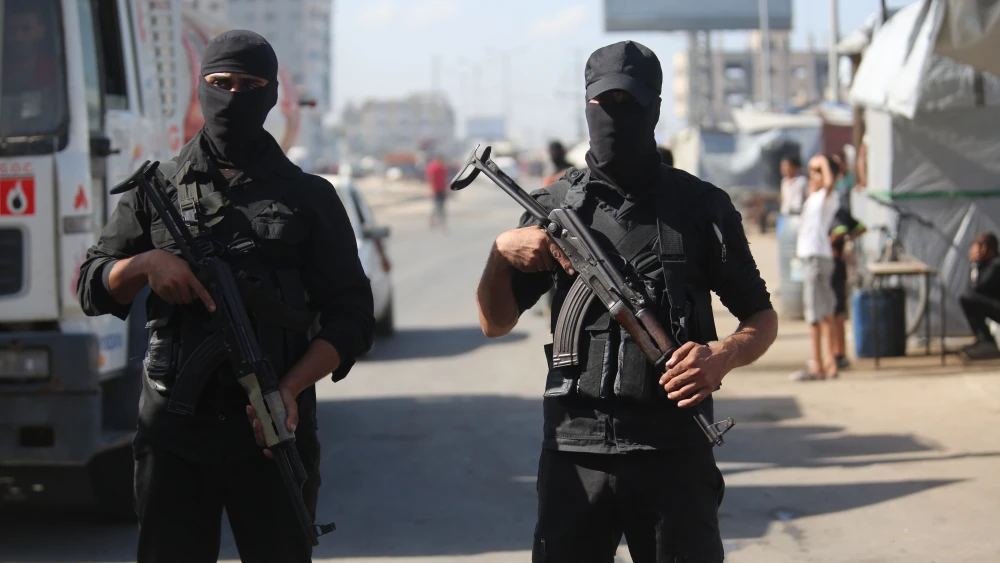
The terror group had built its entire negotiating position around the hostages. Each one represented leverage. Each was meant to tie Israel’s hands, to force concessions, to drag out international talks. Releasing them all, in one stroke, goes against everything Hamas has calculated since Oct. 7 and everything it has pursued in the months since.
The answer is unlikely to be found in Israel’s military pressure alone, though that has certainly mattered. Gaza has been flattened, Hamas has been battered and its senior commanders eliminated. But if battlefield losses were enough to break Hamas’s will, this would have happened much earlier. What appears to be happening now is different. Hamas is not caving to Israel, but to the Arab world and the pressure of Qatar, Egypt and other entities that have finally decided to exert real weight.
This reality begs the next question: If the Arab states could push Hamas this far, why did they wait until now? Why did it take nearly two years of suffering on both sides and countless international crises before that pressure was brought to bear?
If the reports are accurate, it means that the keys to ending the war were in Arab hands all along. Qatar has served as the patron of Hamas and its financial lifeline. Egypt has controlled the Rafah crossing and positioned itself as an essential mediator. Other Arab capitals have maintained their own influence. And yet, for months and months, all we heard was that the situation was “delicate,” that more time was needed, that Hamas could not be forced into concessions.
But what if that was never really true? What if Hamas could have been compelled to release the hostages much earlier, if the Arab world had decided to exert its leverage? What if Qatar and others held out hope that they could somehow defeat Israel through global pressure? This possibility is as frustrating as it is infuriating. It would mean that hundreds of days of anguish were avoidable, that the endless “talks about talks” were largely a charade, and that hostage families and ordinary Palestinians were forced to suffer because regional politics came before human lives.
It also lays bare how decisive Qatar is in this fight. When Qatar chooses to act, things move. And when Qatar withholds action, things stall. In reality, this makes Qatar not just a mediator or power broker of the first order, but the de facto leader of Hamas itself. This truth is perhaps too hard to confront right now, but it should be grappled with in the future.
None of this diminishes the magnitude of what unfolded earlier this week with the return of all 20 living hostages. It served as one of the most emotional, unifying and redemptive moments in Israel’s history. It is a vindication of Israeli Prime Minister Benjamin Netanyahu’s desire for total victory as defined by a complete return of the hostages, an end to Hamas rule and the disarmament of Hamas as laid out in the 20-point plan brokered by U.S. President Donald Trump.
It is also a moment to recognize the individuals who worked tirelessly behind the scenes. Credit is due to Trump and his team, whose influence is unmatched around the world; to the president’s son-in-law and former senior adviser Jared Kushner, whose groundwork during the 2020 Abraham Accords continues to shape Arab-Israel dynamics; to Israeli Minister of Strategic Affairs Ron Dermer; to Netanyahu, who withstood immense pressure to cave on a strategy for victory; and, of course, to the moderate Arab states who united to pressure Hamas.
Gratitude, however, must not blind us to the lesson. This moment proves that Hamas alone was never the true obstacle; it was always its protectors. The Arab world had the ability to end this horror of a war, but chose to delay action for its own reasons.
Ecclesiastes 3:1 states: “To everything there is a season, and a time to every purpose under heaven.” Deep questions loom in the distance, but perhaps now the best thing to do is to rejoice in the possible end of this war and ask questions later.