
So much of the commentary around Passover this year has to do with helping us cope with the coronavirus pandemic. How do we make sense of a real, modern-day plague that has been added to the 10 ancient plagues of the Passover story? How do we connect the many messages and lessons of Passover with the biggest crisis of our time? How do we manage to have seders all alone, or on Zoom? And how do we “celebrate” a Jewish holiday while so much pain and suffering has been unleashed on the world?
These questions and others must be asked. I’d like to suggest one more: How do we clean out our chametz in pandemic times?
Chametz, in the Jewish tradition, is any food product made from wheat, barley, rye, oats or spelt that has come into contact with water, and been allowed to ferment and rise.
Because it is a biblical commandment for Jews to replace chametz with unleavened matzah during the eight days of Passover, we must make sure to thoroughly clean our homes of any chametz. Growing up in Morocco and Montreal, I have vivid memories of the back-breaking work that went into Passover cleaning every year.
But something happened this year that arguably has never happened in human history: a microbe entered our lives and infiltrated virtually the entire planet. This has changed everything—the things we value, the things we talk about, the actions we take, the choices we make, the way we look at life—everything.
In that spirit, it ought to change how we approach the mitzvah of cleaning the chametz from our homes.
For one thing, we can’t settle for the physical. It’s not enough to break our backs to eradicate from our homes any leavened food product. In these pandemic times, when everything is magnified and nothing is the same; we must aim higher and deeper.
We must eradicate not just the leavened crumbs hiding behind our furniture but the bad habits that have “leavened” inside us. We must ask ourselves: What are those bad habits and where are they hiding? Is it sloppiness? Selfishness? Grouchiness? Anger? Arrogance?
These bad habits are the spiritual chametz that corrode the soul and poison relationships. As we clean out the physical chametz, we must be just as diligent with the spiritual chametz. This chametz has leavened and hardened for too long.
What is the one habit that can help eradicate our worst character traits? Humility. It is recognizing our many faults and knowing how much we don’t know.
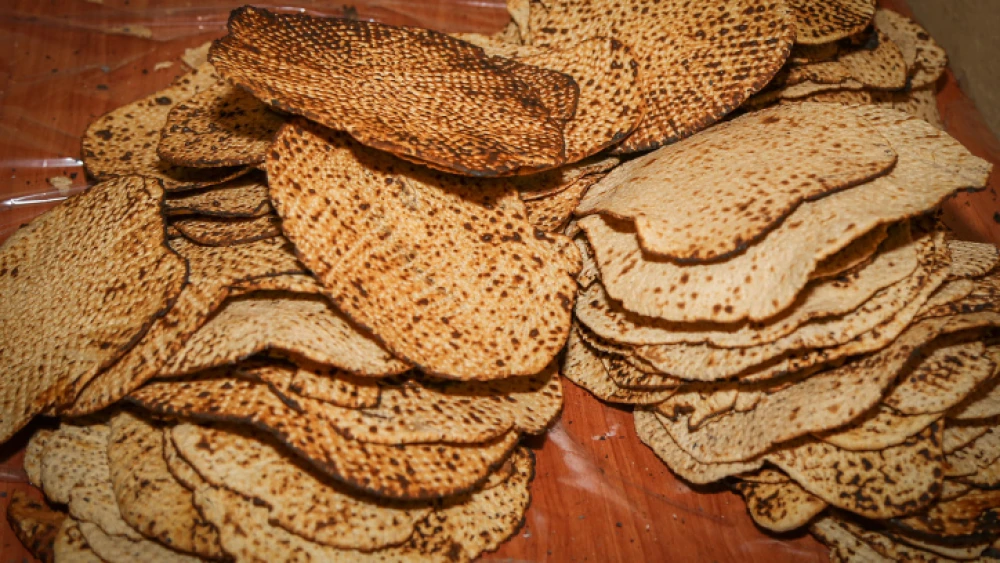
What does the matzah represent? That’s right, humility.
At Passover, we get rid of what has “leavened” and gotten to our heads, and replace it with the humble, unleavened matzah. Activating our humility gene is especially appropriate during these pandemic times, when we’ve been humbled and reminded how little we know. A deadly virus has brought us to a lowered plane, where only the essentials matter, such as our habits.
So, this is how we get rid of our spiritual chametz in pandemic times: We roll up our sleeves, look for our bad habits and replace them with the matzah of humility.
It may hurt our egos, but it won’t hurt our backs.
David Suissa is editor-in-chief and publisher of Tribe Media Corp and Jewish Journal. He can be reached at davids@jewishjournal.com.
This article was first published by the Jewish Journal.