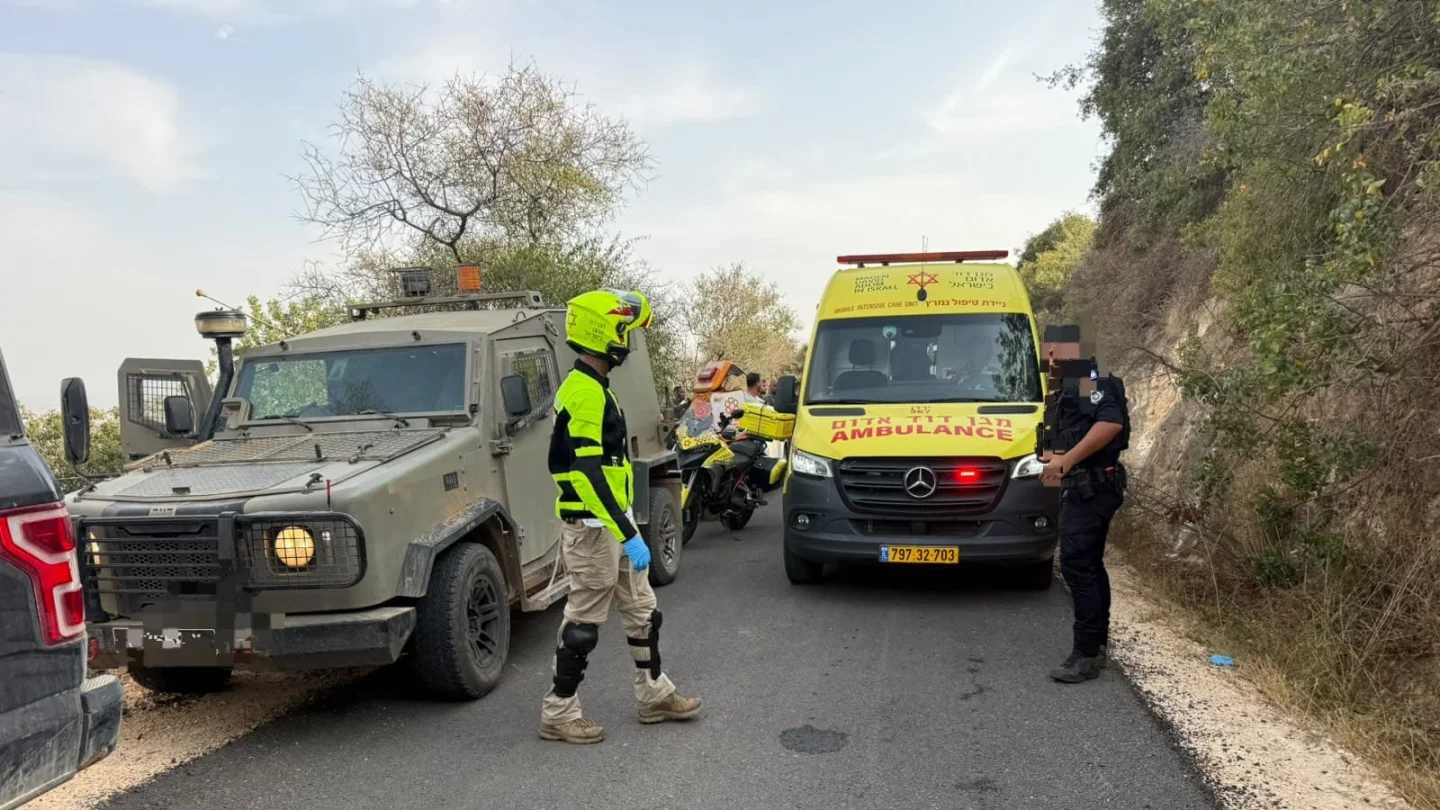

On Aug. 14, a Hezbollah explosive drone struck Israeli forces in the Ali al-Taher Ridge area in Southern Lebanon, seriously wounding three soldiers in the Israel Defense Forces.
Israel responded forcefully, striking Hezbollah targets across the area and killing a battalion commander in the organization’s Radwan Force, along with several other operatives.
The important question, however, is not whether Israel can respond forcefully; it clearly can. The question is how Hezbollah reached a point where it can still operate against IDF forces from an area whose importance, infrastructure and hostility have long been known to Israel. A forceful response after an attack is not the same as removing the threat before it materializes.
The Ali al-Taher Ridge is not just another hill in Southern Lebanon. It forms part of a military and underground network that Hezbollah built over years in the area between the Litani River, the Saluki Valley, Nabatieh and the Israeli border.
The IDF has already cleared parts of this area of Hezbollah terrorist infrastructure, including fighting positions, observation posts, weapons and underground facilities. Lebanese reports have stated that dozens of Hezbollah operatives remain trapped inside the ridge’s tunnel system.
Whether every detail of those reports is accurate is less important than the broader reality: Israel knows that an organized hostile presence remains there.
Clearly, the problem is not a lack of intelligence. The location is known, the enemy is known, and the threat is understood. Yet Israel increasingly finds itself operating under political constraints that complicate the use of decisive force.
Recent reports have described Israeli preparations for broader action around Ali al-Taher alongside American warnings that such an operation could undermine emerging political arrangements with Lebanon. Once again, military necessity is being weighed against the fear that military action might endanger a diplomatic process.
There is nothing inherently wrong with restraint. A responsible state does not use force simply because it can. Diplomatic considerations, civilian protection and escalation management are legitimate components of strategic decision-making.
But restraint remains an asset only so long as the side exercising it retains the initiative. When restraint gives the enemy time to preserve infrastructure, prepare the terrain and choose when to attack, it ceases to be a diplomatic instrument and begins to become an operational advantage for the enemy.
This is precisely the danger I warned about after the current Israel-Lebanon framework agreement was reached. The risk was never that the agreement would collapse immediately, but that it would succeed just enough to restrain Israel without actually disarming Hezbollah. That would give a weakened Hezbollah what it needs most: time to preserve capabilities, adapt and eventually regain the initiative. The events at Ali al-Taher suggest that this danger is no longer theoretical.
Israel knows what exists in the area and has operated against it repeatedly. But if destroying a known terrorist infrastructure increasingly requires a new political debate each time, while Hezbollah faces no comparable limitation on its ability to prepare attacks, a dangerous asymmetry emerges. Israel must explain why it needs to act. Hezbollah needs only to decide when.
The danger is that Hezbollah learns to exist comfortably in the gray zone between peace and war.
This is why Washington’s approach deserves serious scrutiny. The United States understandably wants to prevent another major war, strengthen the Lebanese government and give the Lebanese Armed Forces a greater role in Southern Lebanon. Those are legitimate objectives.
But a political process that does not remove Hezbollah’s military capability while simultaneously restricting Israel’s ability to do so cannot solve the underlying problem. At best, it postpones it. At worst, it creates a protected space in which Hezbollah can survive until conditions become more favorable.
The danger is that Hezbollah learns to exist comfortably in the gray zone between peace and war: armed enough to threaten Israel, cautious enough to avoid provoking a full-scale campaign and increasingly protected by the argument that every significant Israeli action might “endanger the diplomatic process.”
If this becomes the operating logic, diplomacy will no longer be consolidating military achievements. It will gradually begin limiting Israel’s ability to preserve them.
But the responsibility does not rest with Washington alone. Ultimately, the Israeli government is responsible for the security of Israel’s citizens.
Strategic cooperation with the United States is indispensable, and coordination with Washington is important. Yet Israel cannot allow a situation in which a terrorist infrastructure threatening its northern border remains intact simply because destroying it is inconvenient for the diplomatic timetable.
If Israel concludes that the Ali al-Taher complex poses a continuing security threat, it must make clear to its allies that diplomacy can help shape what follows the removal of that threat; it cannot become the reason the threat is allowed to remain.
The Aug. 14 incident in Lebanon is not the only recent reminder of the price of surrendering the initiative. Almost simultaneously, an IDF tank operating near the Yellow Line in the Gaza Strip drove over an explosive device planted by Hamas.
No soldiers were wounded, but the incident illustrates the same basic principle: an armed terrorist organization does not sit quietly while diplomacy proceeds. It watches, learns, adapts and waits for opportunities to exploit the restrictions imposed on its opponent.
Lebanon and Gaza are very different arenas, and Hezbollah is not Hamas. But the strategic principle is the same: When restrictions on Israeli military action appear before the enemy has been substantially disarmed, the political process risks becoming a mechanism that preserves the threat rather than removes it.
This does not mean that Israel should act recklessly or respond to every incident with a major escalation. Force should be precise, intelligence-driven and connected to a clear strategic objective. But there is a fundamental difference between restraint and passivity. A state that retains the initiative can decide when not to strike. A state that repeatedly waits until the enemy strikes first is no longer choosing the terms of confrontation.
What happened to the three soldiers at Ali al-Taher is therefore more than another tactical incident. It is a warning. If Israel does not actively shape the security environment along its borders, Hezbollah and Hamas will continue trying to shape it instead. Diplomatic agreements can consolidate a military achievement and transform battlefield success into a more durable reality. But diplomacy cannot substitute for the achievement itself.