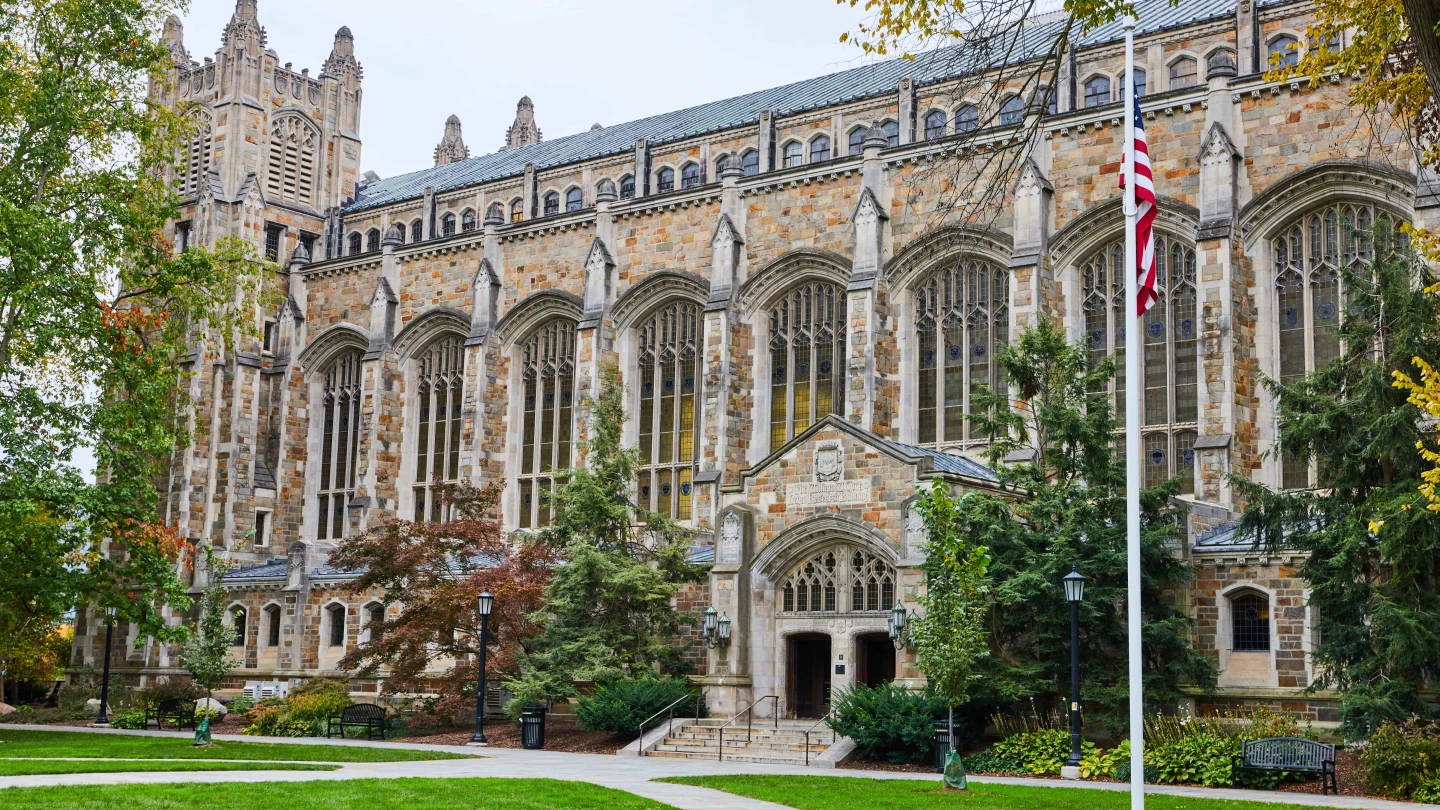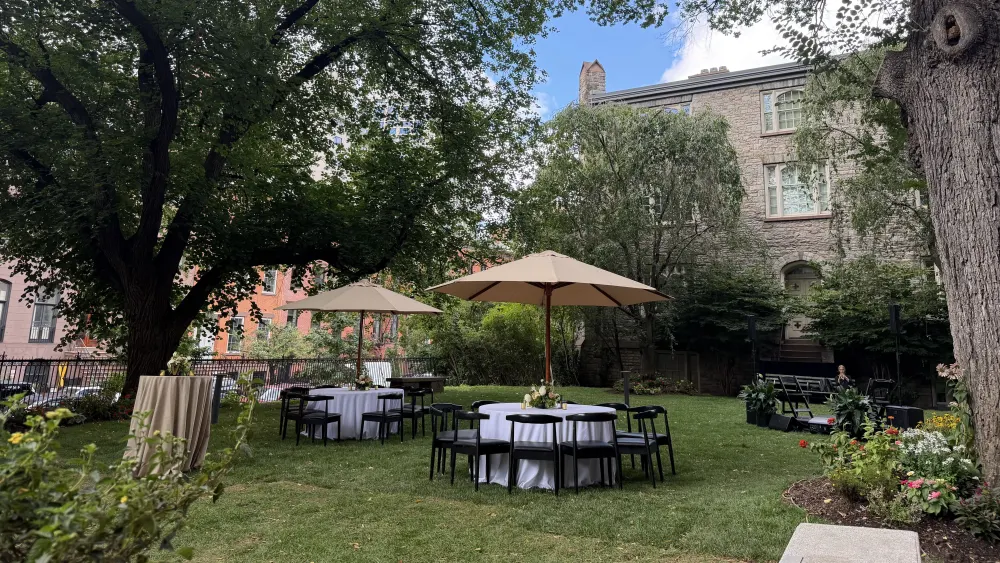
A “secret garden.” That’s how James Kellerhouse describes the grassy, historic grounds of Vanderbilt University’s new campus in Manhattan’s Chelsea neighborhood.
“You walk through the gates and you’re just in this oasis of historic, beautiful buildings,” Kellerhouse, assistant vice chancellor for strategic initiatives and executive director of operations and engagement for Vanderbilt in New York, told JNS during a walkthrough of the campus on opening day, Aug. 25.
Tucked behind iron gates on West 21st Street and surrounded by red-brick, Gothic buildings, the campus welcomed its first cohort of 87 students two days prior.
Vanderbilt has nearly 10,000 alumni in New York, many of whom helped the university develop relationships and open doors for internships, Kellerhouse said.
“New York is our largest market in terms of recruiting students to Nashville,” he said. “New York is our largest market for our students who are leaving Nashville and going to an urban environment to work.”
Kellerhouse told JNS that there are Jewish students in the inaugural cohort and that Vanderbilt has begun discussions with Central Synagogue about several possible partnerships. (The Reform synagogue was recently attacked during a Friday night service, and hate crime charges are pending against the alleged attacker.)
Those conversations with the synagogue have included internships for Vanderbilt students at the temple and co-hosted programs, and Kellerhouse told JNS, potentially allowing the synagogue to use Vanderbilt classrooms for its Hebrew school.
“We’re just getting started on the collaboration,” he said.
Vanderbilt students have expressed interest in knowing more about worship, programming and volunteer opportunities at Central Synagogue, he said.
“Vanderbilt is known, I think, fairly well as a university that welcomes and has a welcoming environment for our Jewish students,” Kellerhouse told JNS.
Students are also interning at the Whitney Museum of American Art, High Line, Hudson Guild, New York Public Defender’s Office and law firms, he said.
Darren Reisberg, Vanderbilt vice chancellor for operations and the campus network, has spent significant time in New York “making sure that the families here know that Vanderbilt’s a great place for them to go to school,” according to Kellerhouse.
“We plan to extend all of that type of programming, welcoming environment here to New York City as well,” he said.
The campus’s grab-and-go food provider will make kosher food available if students request it, Kellerhouse told JNS.
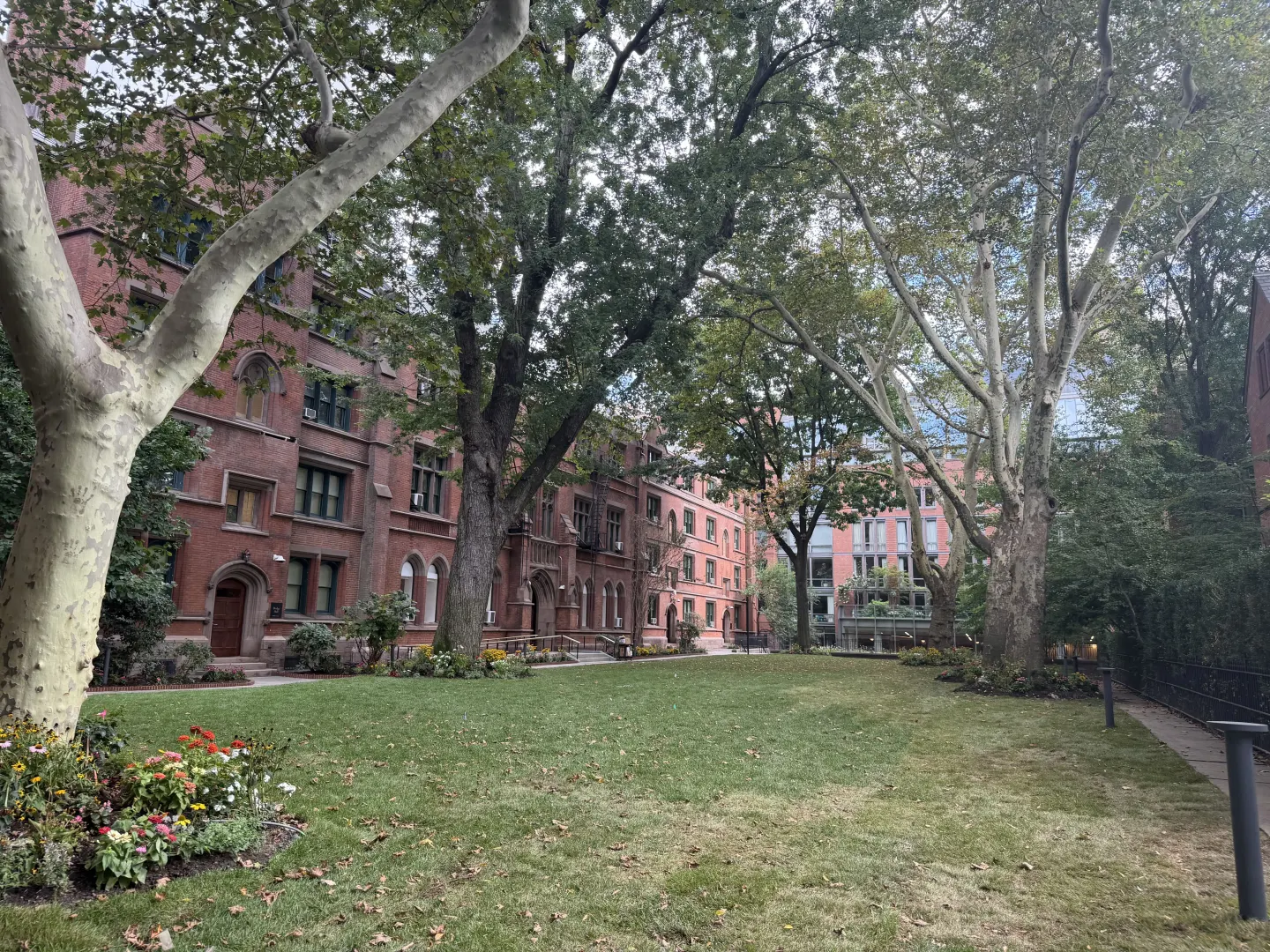
Students, Vanderbilt officials and New York lawmakers gathered on the lawn for Tuesday’s opening ceremony, during which Vanderbilt Chancellor Daniel Diermeier and Mark Levine, comptroller of New York City, delivered welcome remarks. Guests mingled outside over drinks and food, as live music played across the historic grounds.
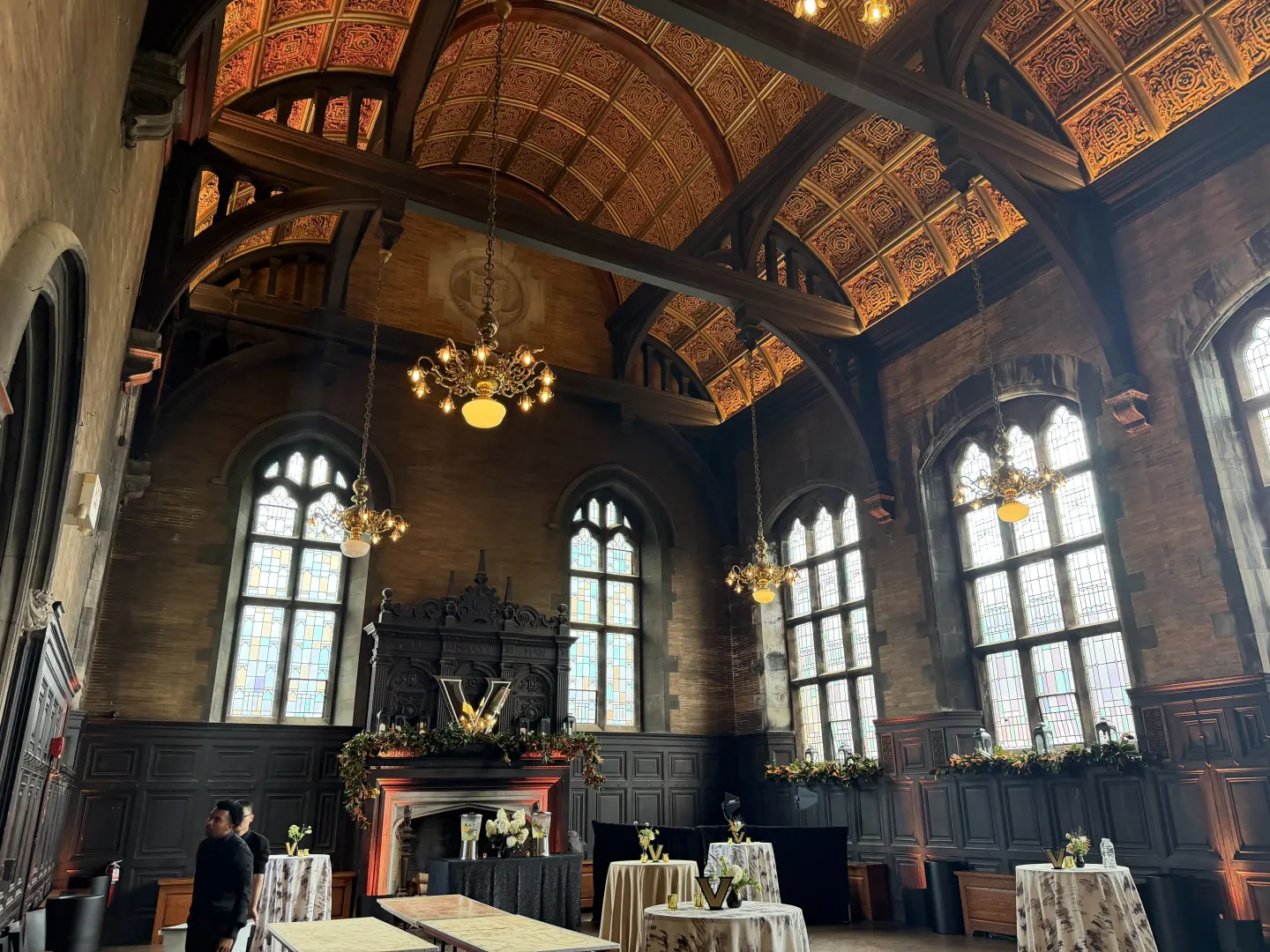
The property was formerly home to General Theological Seminary, an Episcopal institution founded in 1817 that established its Chelsea campus in 1827, according to Kellerhouse.
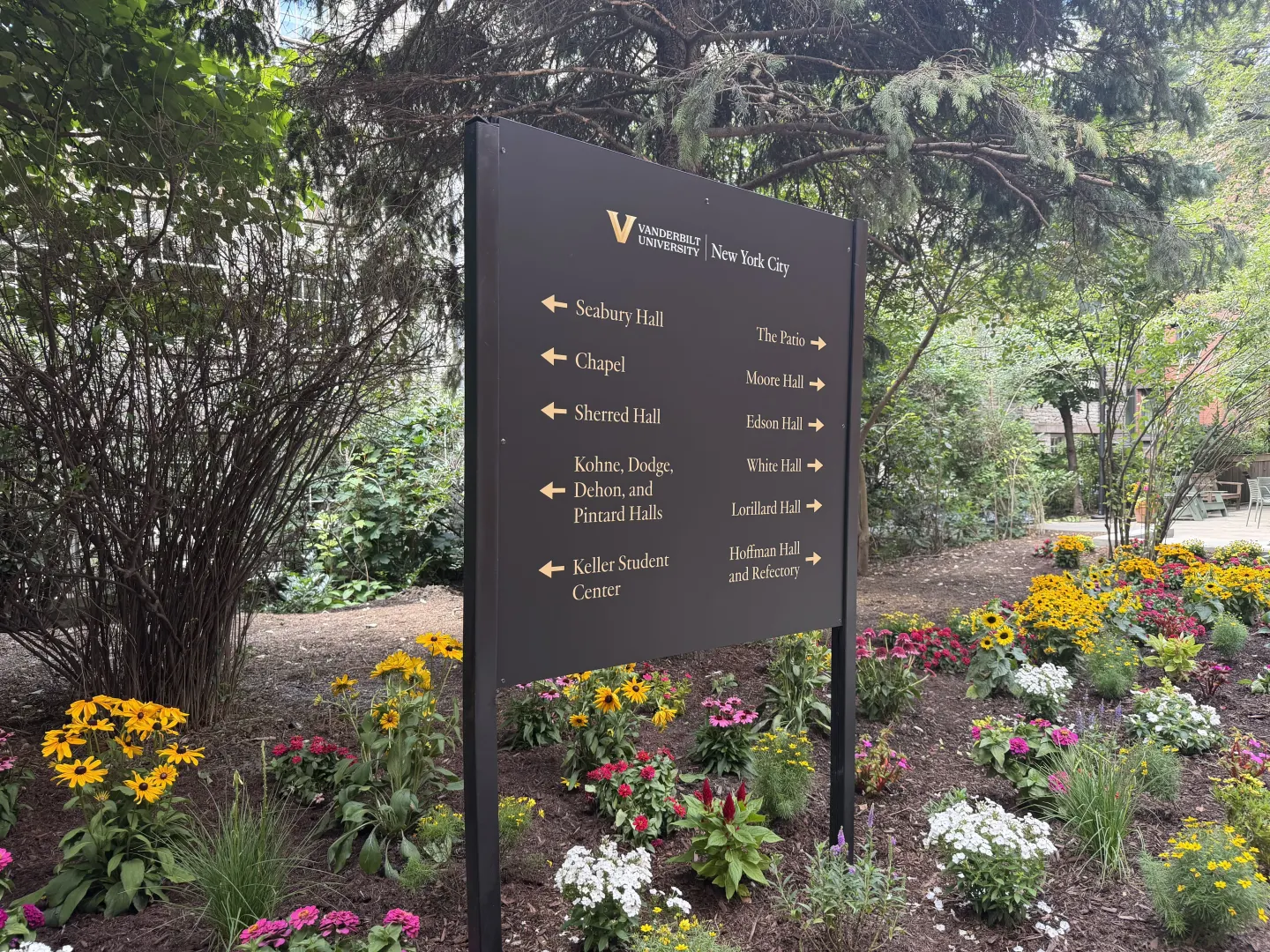
Vanderbilt occupies 13 buildings on the property, known as “the Close,” including seven residence halls and the Chapel of the Good Shepherd, built in 1889.
The campus, where renovations began in December 2025, did not look entirely finished.
Workers were still installing windows in a classroom building, and Kellerhouse said that parts of the first floor were being completed and cleaned that day. Classes are scheduled to begin on Wednesday.
For its first five years, the campus is authorized to offer an undergraduate study-away program for rising juniors and seniors and a planned one-year, full-time master’s program in business and technology set to launch in fall 2027.
Undergraduate students take classes on Mondays and Wednesdays and work at internships on Tuesdays, Thursdays and Fridays.
Vanderbilt has drawn attention in recent years for taking a different approach than many other schools to the campus turmoil that followed Oct. 7.
At the New York campus, Vanderbilt intends to carry over its emphasis on free expression coupled with expectations governing how students engage with one another, according to Kellerhouse.
“We’re in an incredible neighborhood,” he told JNS. “But safety and security is important to us.”
The campus is generally closed to the public outside of events and requires electronic access, Kellerhouse said. Vanderbilt has its own director of public safety, security supervisors and community officers on site and works with the New York City Police Department.
Vanderbilt “had stuff,” he said, of widespread campus protests in the wake of Oct. 7.
“We know that students have the right to protest,” he said. “We have created spaces for that to happen, but where we really focus our time is on creating community together and having different opinions and living and working with one another.”
Kellerhouse joined Vanderbilt in March 2025 after serving as vice president for institutional advancement and external affairs at Hartwick College in Oneonta, N.Y.


He described Tuesday’s opening as the day the campus moved from “a construction project to a community.”
“I’ve worked in higher education my whole career,” he told JNS. “My whole life was about creating opportunities for students to have transformative experiences, and this is what we’re doing. This is our moment.”
Diermeier, the school chancellor, told JNS prior to the campus opening that there is a close relationship between a university and its location.
“If you want to build a great film school, don’t do it in a rural location,” he said. “You want to do it in a thriving artistic community, like New York, L.A., whatever it is. That is true for every other area as well.”
Each of Vanderbilt’s locations is “designed with a particular purpose in mind,” he said.
“New York is very much about allowing our students to be in a global city,” Diermeier said. “That may be connected to their career interests or broader interests, but we’re really thinking about New York City as an extension of what we do and an extension of the classroom.”
“You can’t replicate this in Nashville,” he told JNS. “Nashville has other assets—has other advantages—but not that.”