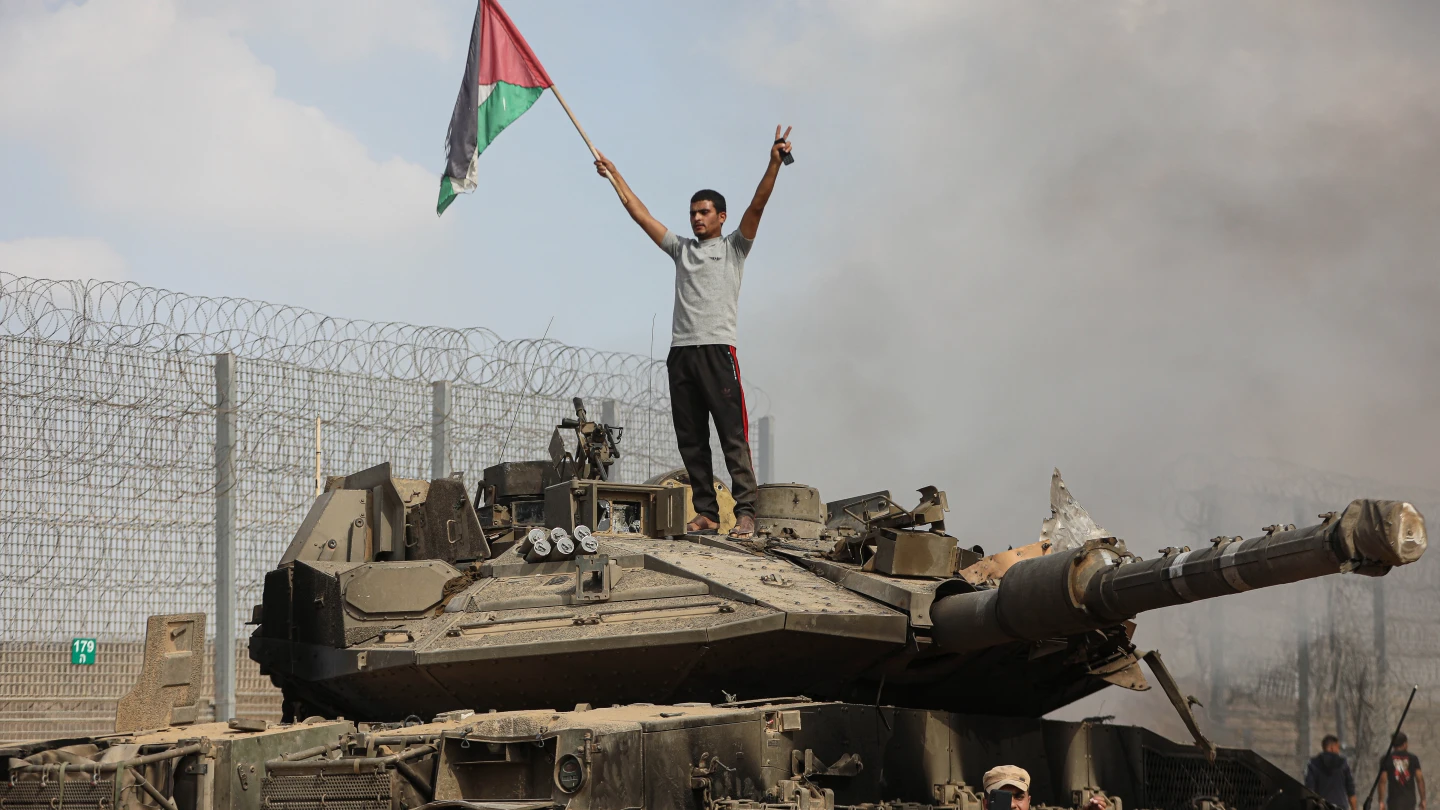
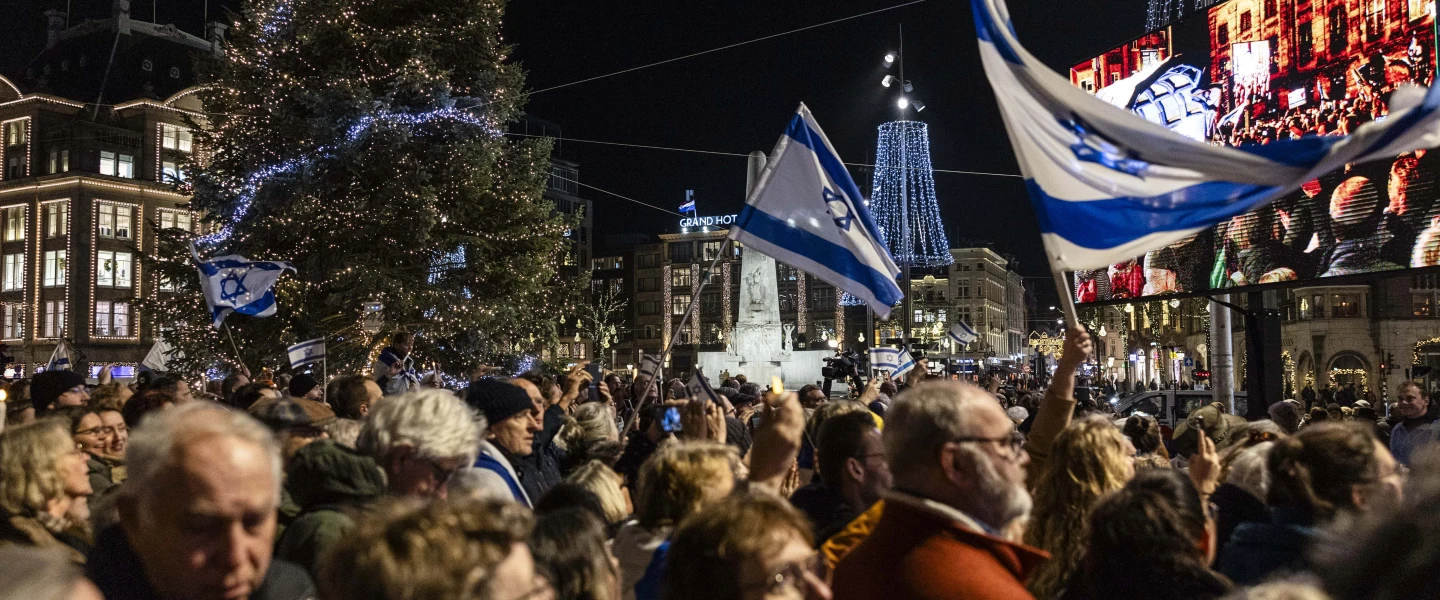
The attacks of Oct. 7, 2023, forced a moral reckoning.
Hamas carried out a massacre against Israeli civilians. Israel has both the right and the obligation to defend its citizens and dismantle the organization responsible. The global surge in antisemitism that followed must be confronted clearly and without equivocation.
I believe these things without hesitation. I am teaching them to my children.
But alongside those certainties sits a harder question: How do we transmit vigilance without transmitting permanent rage? How do we ensure that justified anger does not harden into identity?
I grew up close to my grandparents, both Holocaust survivors. From them, I learned that Jewish survival is never accidental. It depends on strength, solidarity and a refusal to outsource our safety. The events of Oct. 7 reinforced that lesson.
As director general of the Auschwitz Jewish Center Foundation, I think about how historical memory shapes moral judgment. Holocaust education is not only about preserving the past; it is about forming ethical reflexes in the present.
Several years ago, our foundation began filming a documentary exploring whether trauma must pass intact from one generation to the next. As part of that project, we brought Arnold Schwarzenegger to Auschwitz to meet our chairman, Simon Bergson. Both were born in Austria in 1947. Schwarzenegger’s father had been a member of the Nazi Party. Bergson’s parents met in Auschwitz after surviving the Holocaust.
Their conversation did not attempt to equalize history or soften its facts. It demonstrated something more modest and more demanding—that individuals are not bound to replicate the moral failures of those who came before them. History shapes us, but it does not own us.
I brought my son Julian to witness that encounter. I wanted him to see that inherited trauma need not dictate inherited hatred.
After Oct. 7, that lesson felt more fragile. The scale of violence and the ongoing captivity of hostages created an atmosphere defined by urgency: defend, dismantle, deter. Reflection can feel secondary when security is at stake.
Yet the question remains. If this generation of Jewish children is marked by Oct. 7 as my grandparents’ generation was marked by Auschwitz, what emotional inheritance will follow?
As part of the same documentary project, we recently facilitated a meeting between former Israeli hostage Elkana Bohbot, who survived 738 days in Hamas captivity, and Moumen Al Natour, a Palestinian civil-rights lawyer who was imprisoned and threatened by Hamas for his dissent. Al Natour and his family now live in Europe under asylum.
The meeting was not staged as a reconciliation, nor did it blur moral lines. Bohbot did not dilute his suffering. Al Natour did not excuse Hamas. Instead, they spoke candidly about how Hamas had constrained and reshaped their lives.
Bohbot’s last encounters with Gazans before his release were as captors. Resentment would have been understandable. Al Natour grew up in a society where Hamas controlled education, media and public discourse. Silence would have been safer. He chose dissent.
What emerged was not symmetry, but clarity. Hamas is both an external military threat to Israel and an internal authoritarian force within Palestinian society. It suppresses opposition, narrows thought and punishes independence. The ideology that fueled Oct. 7 has also limited the prospects of Palestinians who reject it.
Recognizing that distinction does not weaken Israel’s security imperative. Israel retains the responsibility to dismantle Hamas and prevent another potential attack. Justice and self-defense require it.
But defeating Hamas does not require internalizing its worldview. Extremism thrives on collective blame and categorical thinking. It reduces individuals to abstractions and justifies cruelty through dehumanization.
At Auschwitz, we teach that genocide begins long before killing. It begins when people are reduced to categories, and moral boundaries erode. That lesson is not theoretical.
For Jewish parents, the responsibility now is twofold. We must teach our children that Jewish survival is nonnegotiable and that Israel must be strong enough to defend its citizens. We must also teach that strength is inseparable from moral boundaries.
Anger after Oct. 7 is justified. The question is whether anger becomes the organizing principle of identity.
My son did not grasp every political nuance of the meeting he witnessed. But he saw something enduring: a man who survived prolonged captivity refusing to let that experience define his humanity, and a man raised under authoritarian rule refusing to inherit its hatred.
Those images may matter more than any argument.
What do we teach our children after Oct. 7?
The lesson: Jewish survival is nonnegotiable, and Israel must be strong enough to defend its citizens.


Jack Simony is the director general of the Auschwitz Jewish Center Foundation (AJCF), a nonprofit dedicated to harnessing the lessons learned from the Holocaust to combat hatred and bigotry through educational programs, and by providing direct humanitarian aid to victims of mass atrocities.
(Feb. 24, 2026 / JNS)
Copy Print