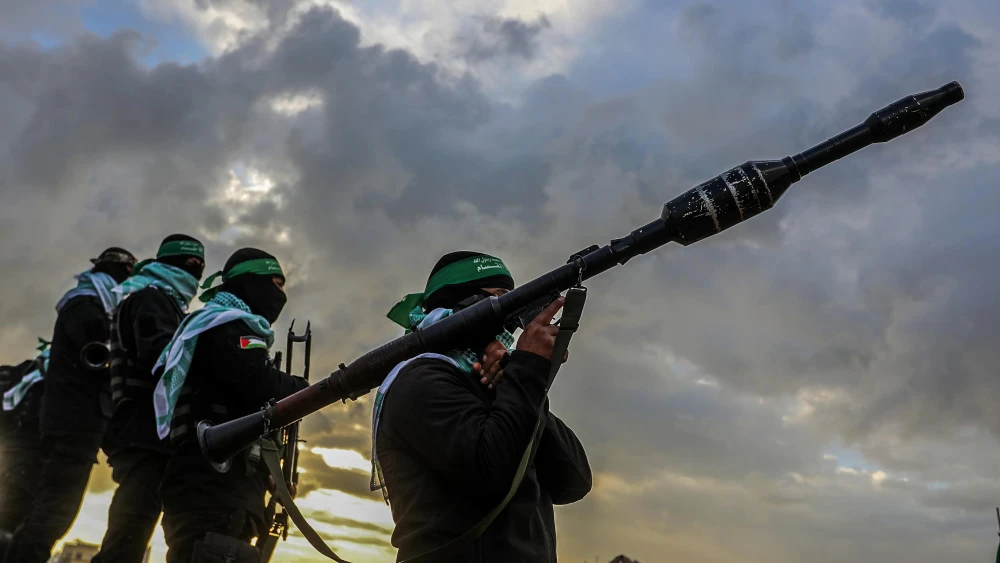

Israel drew a firestorm of international criticism recently when it announced its plan to defeat Hamas once and for all by taking full control of the Gaza Strip. While Hamas’s command and control has been devastated, it is still a deadly enemy that refuses to surrender or release the estimated 50 hostages it holds captive, and it remains deeply embedded within Gazan society.
French President Emmanuel Macron described Israel’s latest plan to achieve victory over Hamas as “a disaster of unprecedented gravity waiting to happen.”
Likewise, mainstream media and other Western powers, reflecting their growing distaste for the conflict and unsympathetic to Israel’s security needs, have criticized this plan. They predict untold Palestinian civilian deaths and a catastrophe for Israel’s international standing if it is implemented. Instead, they insist on Israel’s surrender, Hamas’s survival, the release of the hostages and plans for a Palestinian state.
Since Israel sees such an outcome as suicidal, it refuses and has chosen the most logical of unpleasant alternatives: It will invade Hamas’s remaining strongholds in Gaza to eliminate what’s left of the terrorist group. While the plan will likely involve costly, hand-to-hand guerrilla combat, Israel sees this option as the most viable for achieving its war goals: Destroy Hamas, free the hostages and ensure that Gaza no longer threatens the Jewish state.
Israel faces two difficult and costly choices as it seeks to end the Gaza War. Under Plan A, Israel would agree to end the war and withdraw from Gaza, essentially surrendering, which presumably would entice Hamas to free the hostages and give Israel and the people of Gaza a brief respite from hostilities. However, it would also allow Hamas to remain in control of the territory, rebuild its forces and attack Israel anew as it has vowed to do, leading to more war, more suffering and more criticism from the “international community.”
Plan B is, so to speak, to “bite the bullet” and end the war by defeating Hamas militarily by invading and destroying Hamas’s last remaining strongholds around Gaza City. This would involve evacuating a million or more Gazan civilians who live in this area, then wiping out what’s left of the terrorist group through close combat, in which the Israel Defense Forces predicts it will suffer uncommonly high casualties.
Note that Israel’s invasion plans involve no forced transfer of Gaza’s citizens. Rather, it will encourage noncombatants to move to designated safe zones outside the combat areas, where they will be safe from Hamas, safe from the fighting, and will receive food and medical care
While Plan B is not ideal as it involves more combat, more Israeli deaths and more suffering for Gaza’s residents, Israel’s ruling coalition nevertheless believes it’s the most viable option. Most importantly, it would eliminate the prospect of another bloody Oct. 7-style invasion, which Hamas has sworn to repeat, as well as the return of thousands more Hamas missile attacks on Israel’s population centers.
How Israelis and Hamas view the government’s new strategy. Making Israel’s decision even more difficult, popular Israeli support for its proposed invasion of Gaza gets mixed reviews. Various polls, depending on timing and survey phraseology, show both Israelis’ preference for a full hostage deal to end the war (57% on Aug. 8) and their support for resuming hostilities (59% on March 19).
A final consideration: Since the Netanyahu government has set the timing for a full-scale Gaza invasion for Oct. 7, 2025, there’s hope, and some indication from Hamas, that the terror group will offer an acceptable compromise. Surely, the imminent prospect of losing control over vast swathes of Gaza changes the group’s strategic calculations. Indeed, according to Arabic-language media, Hamas is now desperate to resume negotiations. No surprise, since military pressure is how Israel has managed to secure ceasefires with Hamas in the past.
Unsympathetic Western nations and media oppose Israel’s takeover plan. Foreign ministers of Australia, Austria, Canada, Germany, Italy, New Zealand, Norway and the United Kingdom issued a joint statement rejecting Israel’s planned takeover of Gaza, saying: “It will aggravate the catastrophic humanitarian situation, endanger the lives of the hostages, and further risk the mass displacement of civilians.”
Some countries have also responded with measures to punish Israel for its planned Gaza takeover. Germany imposed an arms embargo, Australia announced it would recognize “Palestine,” and France halted visa renewals for El Al airline security staff.
Mainstream media also criticize Israel’s plan. A recent CNN analysis, “Netanyahu’s Gaza takeover plan satisfies no one but himself,” accused Israeli Prime Minister Benjamin Netanyahu of plotting to take over Gaza simply to keep himself in power, blaming him and his “far-right coalition partners” for prolonging the war. The BBC, PBS, Associated Press and NBC also published articles with headlines blaming Israel for escalating the war.
Hamas cheers Western resistance to Israel’s strategy. In an interview with Al Jazeera, senior Hamas official Ghazi Hamad praised plans by France, the United Kingdom and Canada to recognize “Palestine” as “the fruits of Oct. 7.” Indeed, the sudden rise in public support by Western nations for a “Palestinian” state undeniably, and outrageously, proves Hamas is being rewarded for its Oct. 7 massacre.
Bottom line: Hamas has driven Israel to Plan B. In truth, Hamas has given Israel no other option. Netanyahu has patiently pursued ceasefire negotiations with Hamas, despite threats by coalition ministers to collapse his government. Yet Hamas continues to refuse compromise, insisting Israel fully withdraw from Gaza, leaving the terrorists armed and primed to resume efforts to destroy Israel.
In short, if Hamas remains obstinate, refusing to disarm, free the hostages and surrender, Israel will surely act on its plan to temporarily take over the Gaza Strip. While the costs may be great, both in terms of Gazan suffering and potential IDF military losses, Israel believes they will be worth the result: Liberation of the hostages, disarmament of Hamas and the end of 18 years of Hamas tyranny over Gaza’s Palestinians.
Israel is pursuing a strategy designed to win an existential war and protect its citizens. It cannot bow to the pressure of Western leaders who can no longer stomach the sights of Hamas’s war on their TV screens or who fear the loss of their Muslim voters.
Originally published by Facts and Logic About the Middle East (FLAME).